
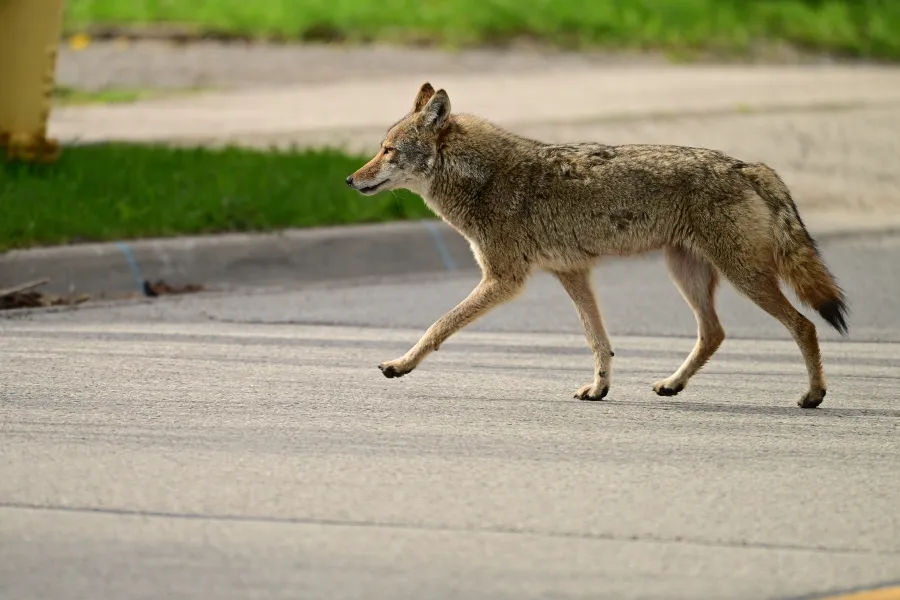
Coyote problems are primarily an outdoor hazard, but they directly impact the safety of your yard, porch, and loved ones. Coyotes will readily establish dens under decks, sheds, or thick brush piles near human homes—especially during pup-rearing season in the spring.
The most important rule when dealing with coyotes is never to run away, feed them, or approach them. Coyotes are naturally cautious around humans, but habituated coyotes can become bold, assertive, and dangerous.
Key Takeaways:
- Urban coyotes rarely invade home interiors, but their presence in residential yards poses severe safety risks to pets and property.
- Recognizing early signs of coyote activity on your property is essential to preventing them from establishing active dens under decks or sheds.
- Distinguishing standard coyote caution from warning signs of severe disease or unusual aggression can protect your household from more dangerous encounters.
- Simple routine adjustments and targeted property modifications serve as the strongest line of defense against recurring coyote visits.
Our Guide to Dealing with Coyotes Safely
Coyotes are highly adaptable wild canids commonly found throughout Xceptiona’s service area, which includes Virginia, Georgia, Louisiana, Florida, Maryland, and Illinois. They can be found in suburban yards, rural lands, and urban parks. Recognized by their bushy tails, pointed ears, and characteristic nocturnal howling, coyotes are smart, opportunistic hunters.
While they play an important role in controlling local rodent populations, their increasing presence in human neighborhoods creates serious safety concerns for homeowners, children, and especially domestic pets.
Jump to a Section:
- What to Do About a Coyote Problem
- Signs of Coyotes on Your Property
- What Are the Risk Factors of Coyotes?
- FAQs About Coyote Control
What Should You Do If You See Coyotes on Your Property?
Seeing a coyote casually wandering through your yard during the day means it is growing comfortable around humans. To prevent them from making your property a permanent hunting ground, you must send an immediate, clear message that your yard is unsafe.
- Haze the Coyote Immediately: Stand tall, wave your arms, shout loudly, or blow an air horn or whistle. Coyotes need to associate humans with scary, unpredictable experiences.
- Stand Your Ground: Never run away. Running can trigger a coyote’s natural predatory chase instinct. Maintain eye contact and make noise until the animal leaves.
- Escort Pets Indoors First: Before attempting to haze a coyote, usher outdoor cats and dogs inside so they are not caught in the middle of a confrontation.
- Call a Professional: If a coyote acts aggressively, lingers continuously, or refuses to leave after hazing, contact our coyote removal experts immediately for assistance.
How Do You Protect Your Pets from Coyotes?
Because pet attacks are the single biggest concern for homeowners living near coyote populations, taking proactive steps to guard your animals is essential. Coyotes view cats and small dogs as natural prey, while larger dogs may be viewed as territorial rivals—especially during winter mating season and spring pup-rearing season.
- Keep Cats Indoors: Free-roaming outdoor cats are extremely vulnerable to coyotes. Keeping cats indoors permanently is the single most effective way to protect them.
- Supervise Outdoor Yard Time: Even inside a fenced yard, small dogs should never be left alone outside, particularly at night, dawn, or dusk when coyotes are most active.
- Upgrade Perimeter Fences: Coyotes can easily jump or scramble over standard 6-foot fences. Add commercial “coyote rollers,” wire overhangs, or outward-angled mesh across the top line to block climbing.
- Inspect the Yard Before Potty Breaks: Turn on floodlights and scan your yard before letting pets out for evening routines.
- Maintain Short-Leash Control: When walking off your property, use a non-retractable leash no longer than 6 feet to keep your pet directly by your side.
What Should You Do If You Encounter a Coyote While Walking Your Dog?
Coming face-to-face with a coyote while out on a neighborhood walk requires quick, assertive action to protect both yourself and your pet.
- Pick Up Small Pets Immediately: Scoop up small dogs or cats right away to keep them out of the coyote’s direct line of sight and strike zone.
- Keep Large Dogs Short-Leashed: Hold large dogs tightly at your side. Do not allow your dog to bark at, challenge, or approach the coyote, as this can escalate territorial aggression.
- Deploy Portable Deterrents: Open an umbrella toward the animal, throw small rocks or sticks near (not directly at) the coyote, or deploy pepper spray if it continues to approach.
- Back Away Slowly: Keep your eyes on the coyote while slowly backing away toward a well-lit area or busy street. Never turn your back.
How Do You Handle a Coyote Den Near Your Home or Under a Shed?
Between March and May, coyotes seek out quiet, sheltered locations to dig dens and raise their pups. They frequently choose spaces beneath decks, sheds, outbuildings, or dense brush piles near residential yards.
- Do Not Approach an Active Den: Parent coyotes are fiercely protective of their pups and will aggressively defend a den site if they feel threatened.
- Identify Den Activity: Look for fresh dirt mounds dug beneath structures accompanied by high-pitched squeaking or adult coyotes patrolling the perimeter.
- Use Mild Deterrents Before Pups Arrive: If you catch a coyote scoping out a den site before giving birth, shining bright lights, playing talk radio, or placing vinegar-soaked rags near the opening can drive them away.
- Call a Professional Wildlife Expert: Once pups are born, DIY eviction becomes dangerous and ineffective. Contact our wildlife removal team to manage denning coyotes safely without putting your family or pets at risk.
Signs of Coyotes on Your Property
Coyotes are elusive and fast, but they leave behind distinct evidence when frequenting a neighborhood. Keep your eyes and ears open for these key signs of coyote activity:
- Nocturnal Vocalizations: High-pitched yips, group howls, and barking echoing nearby, particularly around dusk and throughout the night.
- Distinctive Scat: Dog-like feces containing visible fur, small bones, seeds, or fruit remnants, often deposited in the middle of paths or driveways to mark territory.
- Oval Paw Prints: Compact, four-toed tracks showing prominent claw marks, typically arranged in a straight line (unlike the wider, winding path of domestic dogs).
- Disappearing Pets or Small Wildlife: A sudden decline in neighborhood cats, rabbits, or squirrels, or reports of missing pets nearby.
- Agitated Domestic Pets: Dogs barking obsessively at fence lines or refusing to enter specific parts of the yard.
- Large Den Openings: Freshly excavated holes (roughly 1 to 2 feet wide) dug underneath sheds, decks, tree roots, or steep banks.
- Scavenged Prey Remains: Scattered feathers, animal carcasses, or torn garbage bags left around the yard or perimeter fencing.
- Bold Daytime Sightings: Spotting coyotes walking unbothered through streets, yards, or parks during daylight hours.
What Are the Risk Factors of Coyotes?
While coyote attacks on adult humans are rare, coyotes present serious hazards to domestic pets, livestock, and residential communities. As coyotes adapt to human environments, their natural fear diminishes, leading to bolder behavior and potentially dangerous interactions.
The full range of coyote risk factors includes:
- Pet Injuries and Fatalities: Coyotes actively hunt small pets (cats, small dogs, rabbits) and can easily overpower them in seconds.
- Territorial Conflicts: During mating and denning seasons, coyotes may aggressively attack medium-to-large dogs perceived as territorial rivals.
- Livestock Losses: Coyotes frequently raid backyard chicken coops and prey on small livestock such as goats, sheep, and ducks.
- Zoonotic Disease Spread: Coyotes harbor serious viruses and parasites that can infect pets and humans.
- Habituation and Human Bites: Coyotes that become habituated to human hand-feeding or open garbage lose their fear and may bite or scratch humans.
- Yard Contamination: Coyote waste carries foul odors and dangerous parasite eggs that contaminate soil and turf.
How Big of a Threat Are Coyotes to Domestic Pets?
Pet safety is the most critical issue when dealing with neighborhood coyotes. Understanding how coyotes interact with pets helps mitigate the risk:
- Cats and Small Dogs (Under 25 lbs): Coyotes view small pets purely as prey. A coyote can easily leap a 6-foot fence, snatch a small pet, and jump back over in a matter of seconds.
- Large Dogs (Over 50 lbs): Coyotes view larger dogs as territorial rivals or threats to their pups. Confrontations frequently occur near den sites or when dogs roam off-leash in wooded areas.
- Seasonal Aggression Peaks: From January through March (mating season) and April through June (pup-rearing season), coyotes become much more territorial and aggressive toward all domestic dogs.
Need a Wildlife Removal Estimate?
What Diseases Can Coyotes Transmit?
Coyotes carry several dangerous pathogens that can spread to your family and pets through bites, physical contact, or exposure to contaminated soil and waste:
- Rabies: A fatal viral infection spread through bites that attacks the central nervous system; a critical threat to unvaccinated pets and humans.
- Sarcoptic Mange: A microscopic mite infestation causing severe skin scaling, intense itching, hair loss, and secondary infections; highly contagious to dogs. In northern climates (like Illinois and Maryland), exposure from mange-induced hair loss is often fatal during winter.
- Canine Distemper: A severe viral disease affecting dogs’ respiratory, gastrointestinal, and nervous systems; highly prevalent in wild canine populations.
- Heartworm (Dirofilaria immitis): Coyotes act as primary wild reservoir hosts for heartworm. Mosquitoes feed on infected coyotes, pick up heartworm larvae, and transmit the parasite directly to domestic dogs through subsequent bites. High coyote populations significantly increase local heartworm transmission risks—particularly in warm, mosquito-prone areas across Florida, Louisiana, Georgia, Virginia, and Maryland.
- Echinococcus Tapeworms & Intestinal Parasites: Intestinal tapeworms excreted through wild canid waste. Humans and pets face risk of developing severe tapeworm infection or hydatid cyst disease if they accidentally ingest microscopic eggs lingering in contaminated yard soil, unwashed homegrown vegetables, or outdoor water sources.
- Parvovirus: A resilient and highly contagious virus spread through droppings that causes severe, often fatal gastrointestinal illness in puppies and unvaccinated dogs.
What Does a Sick or Rabid Coyote Look Like?
While healthy coyotes are quick to avoid humans, sick or rabid coyotes display abnormal, unpredictable behavior. Keep an extra distance and keep pets indoors if you observe:
- Complete Lack of Fear: Walking directly toward humans or pets in broad daylight without showing hesitation or caution.
- Aggressive or Unprovoked Behavior: Unprovoked snapping, lunging, or biting at air, trees, or inanimate objects.
- Physical Paralysis or Staggering: Uncoordinated walking, stumbling, dragging hind legs, or appearing physically disoriented.
- Excessive Drooling or Foaming: Heavy salivation resulting from paralyzed throat muscles.
- Severe Hair Loss and Emaciation: A patchy, scabby coat, extreme weight loss, and weakness (commonly seen in advanced sarcoptic mange or severe illness).
Coyote Prevention Tips
Preventing coyotes from frequenting your yard requires removing food attractants, securing your perimeter, and eliminating potential shelters. Follow these proactive property management tips:
- Secure Garbage Containers: Store trash cans inside a garage or shed until collection morning, or use heavy-duty cans with tight, locking lids.
- Eliminate Outdoor Pet Food: Feed domestic animals indoors. If outdoor feeding is unavoidable, clean up food bowls and spills immediately after mealtime.
- Clean Up Natural Attractants: Harvest backyard fruit trees regularly, pick up fallen produce daily, clean grease traps on outdoor grills, and keep compost bins securely enclosed.
- Trim Overgrown Vegetation: Clear thick brush, tall grass, and low-hanging tree branches where coyotes can hide, stalk prey, or establish hidden dens.
- Protect Poultry and Livestock: Fortify chicken coops, rabbit hutches, and livestock pens with heavy hardware cloth and buried wire aprons to prevent digging predators.
- Cease All Wildlife Feeding: Never intentionally feed wild animals, feral cats, or birds. Fallen birdseed draws rodents and small mammals, creating an artificial, high-density hunting ground for coyotes.
- Contact a Wildlife Exclusion Expert: An experienced wildlife exclusion specialist will be able to assess your property for vulnerabilities and recommend long-term fixes to prevent future intrusions.
FAQs About Coyote Control
Coyote activity neighborhoods is a major concern for many homeowners, and we understand the anxiety that comes with protecting your family and pets. We’ve compiled the answers to the most common questions we receive to help you regain peace of mind. Drawing on our extensive experience in wildlife management, this guide provides actionable steps to secure your property and discourage coyote presence.
Is it legal for homeowners to trap, relocate, or shoot coyotes in Virginia?
Relocation is strictly illegal across all of our service states (Virginia, Georgia, Louisiana, Florida, Maryland, and Illinois). State wildlife agencies prohibit relocating coyotes to prevent the spread of diseases like rabies, distemper, and parasites, as well as to avoid transferring pest problems to other properties. Trapped coyotes must either be released on the exact same property where they were caught or humanely euthanized by a licensed professional.
Rules regarding trapping, hunting, and discharging firearms vary significantly by state and local municipality:
| State | Legal Status & Removal Rules | Relocation Permitted? | Trapping & Discharge Restrictions |
|---|---|---|---|
| Virginia | Non-game species. Open season year-round on private land. | No (Prohibited by DWR) | Trapping requires a license or permit except for landowners addressing active damage. Municipal discharge ordinances apply. |
| Georgia | Unprotected species. Year-round trapping and hunting permitted. | No (Prohibited by DNR) | Landowners may trap or dispatch nuisance coyotes. Municipal firearm bans apply in urban/suburban zones. |
| Louisiana | Out-of-season take allowed for nuisance coyotes on private property. | No (Prohibited by LDWF) | Landowners can take coyotes causing damage. Trapping during closed seasons requires a nuisance permit. |
| Florida | Unprotected non-native/established species; open taking permitted year-round. | No (Prohibited by FWC) | Relocation is illegal. Steel-jaw traps are restricted without special FWC permits. Local firearm laws apply. |
| Maryland | Unprotected furbearer; open hunting season year-round on private land. | No (Prohibited by DNR) | Trapping is regulated by seasonal furbearer rules; nuisance removal requires certified Wildlife Control Cooperator authorization. |
| Illinois | Protected furbearer under Wildlife Code; defined hunting/trapping seasons. | No (Prohibited by IDNR) | Removing coyotes outside standard seasons requires an IDNR Nuisance Animal Removal Permit. Municipal discharge bans strictly enforced. |
Note: In all suburban or city environments, local municipal discharge ordinances strictly prohibit firing firearms or air guns within city limits regardless of state hunting laws. Contact Xceptional Wildlife Removal for professional, compliant removal.
Are motion-activated sprinklers, lights, or ultrasonic sound devices effective at keeping coyotes off property long-term?
They work well in the short term, but coyotes quickly learn to ignore them once they realize the noise or light poses no real danger. Motion-activated sprinklers offer the best deterrent because the physical blast of water startles them, but coyotes can learn the spray radius over time. Ultrasonic sound devices are generally ineffective against wild canids. To keep deterrents working, vary their location and combine them with other hazing methods.
Do protective coyote vests or spiked collars actually protect small dogs during an attack?
Yes, protective vests and spiked collars (like CoyoteVest) are surprisingly effective. Coyotes typically attack small prey with a swift bite to the neck or back. Puncture-resistant Kevlar vests outfitted with rigid collar spikes and bright nylon “whiskers” disrupt a coyote’s bite force and make it difficult to grab or swallow the pet. While these vests do not replace active supervision, they buy crucial seconds for an owner to step in and haze the coyote.
Is bear spray or pepper spray effective and safe to carry for coyote self-defense?
Pepper spray and bear spray are very effective, non-lethal tools for deterring bold coyotes. A short burst creates an immediate burning sensation in their eyes, nose, and lungs, sending them running without causing permanent injury.
Standard pocket-sized pepper spray or specialized canine sprays work best for neighborhood walks; just be mindful of wind direction before spraying so you don’t catch yourself or your dog in the mist.
Do coyotes typically hunt alone or in packs when entering suburban yards?
Suburban coyotes usually hunt alone or in mated pairs when entering residential yards. Although coyotes live in close-knit family packs to defend territory, hunting in packs is usually reserved for taking down larger prey like deer in wilderness settings. Because suburban food sources consist mainly of small rodents, fallen fruit, garbage, and small domestic pets, a single coyote can easily handle the catch on its own.
Can specific compost items, vegetable gardens, or landscaping plants unintentionally attract coyotes?
Vegetable gardens, fruit trees, and open compost bins are major coyote attractants. Coyotes are omnivores and will readily eat fallen apples, figs, melons, squash, and berries. Open compost piles containing meat scraps, dairy, eggshells, or rotting food produce strong scents that draw coyotes from a distance.
Even if coyotes aren’t eating your vegetables directly, gardens attract rats, mice, and rabbits—creating an easy, reliable hunting ground right in your yard. Keep compost tightly enclosed and clean up fallen produce daily.
Call Now for Professional Coyote Control & Exclusion
Managing coyotes safely requires specialized tools, professional training, and a deep understanding of urban wildlife behavior. At Xceptional Wildlife Removal, our standard coyote control procedure involves a thorough property inspection to identify active dens and risk factors, followed by humane hazing, targeted exclusion, and long-term perimeter fortification.
Don’t wait for a dangerous encounter to take action. Contact Xceptional Wildlife Removal today to schedule a comprehensive property assessment and keep your family and pets safe.


