
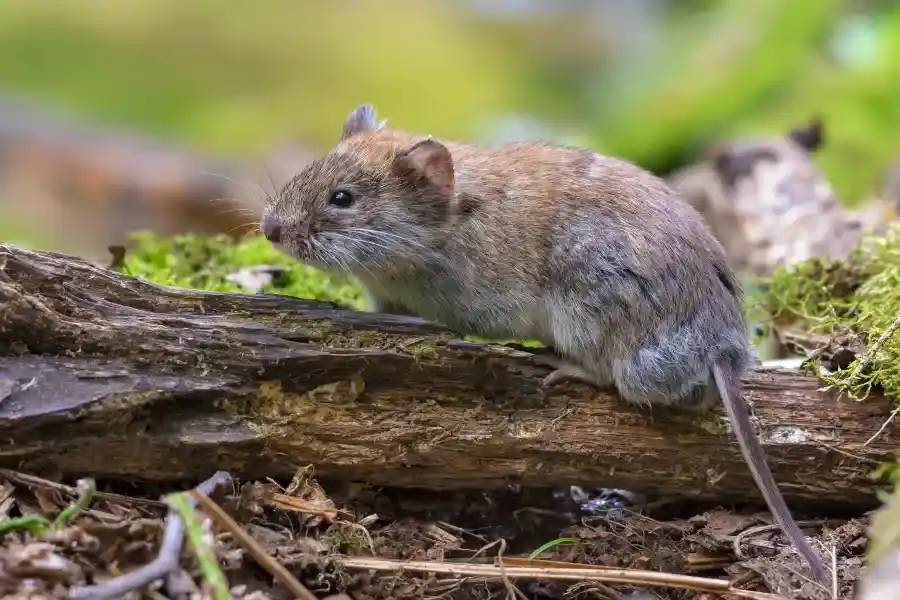
To eliminate voles, you must combine immediate population reduction with physical barriers to protect your landscape and home. The first step is determining where the activity is concentrated. Are they carving visible “highways” across your lawn, eating the roots out from under your garden beds, or tunneling dangerously close to your home’s foundation and crawl space?
Key Takeaways:
- Unchecked vole activity can cause severe, hidden damage to lawns, gardens, and mature landscaping long before an infestation is detected.
- Extensive underground tunneling often extends near home foundations, creating structural hazards and opening entry pathways for secondary pests.
- Beyond physical landscape destruction, voles introduce health risks to pets and families by harboring disease-carrying parasites and transmitting infectious pathogens.
- Simple habitat modifications and physical barriers can discourage early vole activity, but their rapid breeding rate frequently requires targeted professional intervention to fully resolve.
Our Guide to Dealing Voles in Your Yard
Voles are small rodents commonly found across our service regions in Virginia, Georgia, Louisiana, Maryland, and Illinois (as well as select pockets of Florida) that can cause significant damage to lawns, gardens, and landscaping. Often referred to as “meadow mice” or “field mice,” voles are compact with short tails, small ears, and stocky bodies.
Known for creating extensive underground burrow networks and chewing through plant root systems, voles can ruin a manicured lawn or kill mature landscape plants long before a homeowner notices they are there.
Jump to a Section:
- What to Do About a Vole Problem
- Signs of Voles on Your Property
- What Are the Risk Factors of Voles?
- Vole Prevention Tips
- FAQs About Nuisance Voles
What Should You Do If You See Voles on Your Lawn or Garden?
Voles spend most of their lives hidden beneath tall grass, mulch, or snow, making them hard to spot until the damage is done. If you catch sight of voles or notice surface runways cut into your grass, take these immediate steps to control the population:
- Eliminate Dense Cover: Mow your lawn short and clear away tall weeds, thick thatch, and leaf piles where voles feel safe from predators.
- Remove Supplemental Food: Promptly clean up fallen birdseed, dropped fruit from trees, and pet food. Voles thrive on easy food sources.
- Protect Vulnerable Plants: Place wire mesh cylinders (hardware cloth) around the base of young trees and ornamental shrubs to stop bark gnawing.
- Use Traps for Small Infestations: Standard snap traps baited with peanut butter or apple slices can be placed directly along active surface runways, perpendicular to the path.
- Call a Professional: If vole tunnels are widespread across your yard, DIY methods are rarely successful. Contact Xceptional Wildlife Removal to implement a target-driven population control and exclusion strategy.
How Do You Handle Voles Living Near Your Foundation or Crawl Space?
While voles prefer outdoor vegetation, they frequently tunnel alongside house foundations, concrete slabs, patios, and crawl space perimeters. This tunneling can destabilize soil and create entry pathways for other pests.
- Create a Vegetation-Free Barrier: Maintain a 12-to-18-inch strip of bare gravel or river rock directly against your foundation wall. Voles dislike crossing open, gravelly ground.
- Inspect Crawl Space Vents: Ensure ground-level vents and utility penetrations are sealed with 1/4-inch galvanized hardware cloth, not flimsy plastic.
- Do Not Backfill Active Tunnels with Loose Dirt Alone: Voles will easily re-dig through loose soil. Pack tunnels with crushed stone or pea gravel before covering with topsoil.
- Consult an Exclusion Specialist: If voles are nesting beneath a porch, patio, or crawl space, a rodent and wildlife exclusion expert from Xceptional Wildlife Removal can install underground mesh barriers (L-footers) to permanently lock them out.
What Are the Signs of Voles on Your Property?
Because voles are small and active mostly at night, you will likely see their path of destruction long before you see the animal itself.
Keep an eye out for these specific vole warning signs:
- Surface Runways: Grassy lawns marked with 1-to-2-inch-wide bare runways or “highways” carved directly into the turf surface.
- Clean Ground Holes: Small, neat entry holes (about the size of a golf ball) with no dirt mounds built up around them.
- Spongy Lawn Turf: Ground that feels soft or gives way slightly underfoot due to shallow underground tunneling.
- Girdled Bark: Trunk bark on young trees and shrubs gnawed off near the soil line, often showing tiny, paired tooth marks.
- Dying or Falling Plants: Previously healthy perennials, flower bulbs, or garden vegetables suddenly wilting or pulling effortlessly out of the ground with their roots eaten away.
- Snowmelt Revealing Tunnels: In northern service zones like Illinois and Maryland, spring snowmelt suddenly reveals crisscrossing tracks of dead grass and packed dirt built under winter snowpack.
- Small Rice-Shaped Droppings: Clusters of tiny, green-to-brown droppings scattered along active surface runways.
Vole Risk Factors - How Concerned Should You Be?
A few voles might seem harmless, but given their nonstop appetite and propensity to multiply, they can be a severe threat to your property’s landscaping. Beyond destroying turf and killing prized plants, voles also introduce health risks and secondary pest hazards to residential properties.
The full range of vole risk factors includes:
- Tree and Shrub Death: When voles damage plants and girdle tree bark, they cut off nutrient transport, effectively killing mature landscaping.
- Total Garden Loss: Voles eat bulbs, tubered plants, root vegetables, and ornamental flower roots from below, killing entire flower beds in days.
- Lawn Destruction: Surface tunneling destroys root systems, leaving unsightly dead patches that require extensive lawn re-seeding or re-sodding.
- Tripping Hazards and Soil Erosion: Honeycombed tunnel systems can cause soil collapse underfoot, creating uneven terrain and drainage issues around retaining walls.
- Secondary Pest Attraction: Abandoned or active vole burrows invite secondary pests like mice, rats, snakes, and yellowjackets into your yard.
- Parasite Transportation: Voles carry fleas, ticks, and mites right up to your doorstep, increasing parasite exposure for pets and family members.
What Diseases Can Voles Transmit?
Voles carry several infectious pathogens that can infect humans and domestic pets through direct contact, urine, feces, or parasite bites:
- Tularemia: Severe bacterial infection transmitted through contact with infected voles, tick/flea bites, or contaminated soil and water.
- Leptospirosis: Bacterial disease shed in rodent urine that contaminates lawn moisture and standing water, posing a serious threat to dogs.
- Salmonellosis: Intestinal bacteria spread through waste contact, causing severe stomach cramps and fever.
- Tick-Borne Illnesses: Voles host wild tick populations (such as blacklegged ticks), increasing overall tick presence and exposure to illnesses like Lyme disease on your lawn.
Need a Wildlife Removal Estimate?
Do Voles Bite People?
Voles are docile toward humans and will instinctively flee when encountered. However, they possess sharp incisors designed for gnawing wood and roots, and they will bite or scratch if handled, cornered, or accidentally picked up in yard debris. Never attempt to touch or catch a live vole with bare hands.
Vole Prevention Tips
The most effective way to prevent a vole infestation is to make your yard as unwelcoming and exposed as possible. By removing their preferred cover and food sources, you encourage voles to move elsewhere:
- Keep Grass Trimmed Short: Mow lawns regularly, especially right before the first winter snow, as tall grass gives voles cover from hawks and owls.
- Dethatch Your Lawn: Remove thick layers of dead grass and thatch where voles like to nest out of sight.
- Maintain Mulch Boundaries: Keep wood mulch layers no deeper than 2 to 3 inches, and keep mulch pushed back at least 6 inches from tree trunks and house foundations.
- Install Hardware Cloth Barriers: Surround young tree trunks, fruit trees, and garden beds with 1/4-inch galvanized wire mesh buried 6 inches into the soil.
- Clear Yard Debris: Remove brush piles, stacks of firewood, leaf piles, and low-hanging branches resting on the ground.
- Protect Raised Garden Beds: Line the bottom of raised vegetable beds with heavy-duty wire mesh before filling them with soil.
- Manage Bird Feeders: Clean up spilled birdseed daily, or place seed trays beneath feeders to keep fallen grain off the ground.
- Incorporate Vole-Resistant Plants into Your Landscaping: Voles naturally avoid certain plants due to their strong scents, bitter taste, or toxicity. Mix pest-resistant perennials and bulbs—such as daffodils, alliums, crown imperials, and grape hyacinths—around more vulnerable plants to naturally discourage digging and feeding.
- Schedule Professional Exclusion: Work with Xceptional Wildlife Removal to install underground exclusion fencing around vulnerable decks, sheds, and prized landscaping beds.
FAQs About Nuisance Voles
What are the local laws about DIY vole control in VA, GA, LA, FL, MD, IL]?
Vole regulations vary by state across our service areas. In most states (VA, GA, LA, MD, IL), voles are classified as unprotected non-game rodents, meaning property owners are legally permitted to perform lethal DIY trapping or control on their own private land without a special permit. However, relocating trapped live voles to public lands, parks, or off-property is illegal across all of these states without a permit to prevent disease propagation and wildlife displacement.
In Florida, native lawn damage is usually caused by moles or gophers rather than voles, as the rare Florida salt marsh vole is a federally protected endangered species. For a complete summary of rules in your state, refer to our legal matrix below.
| State | Classification | Permit Required for On-Site Control? | Live Off-Site Relocation Legal? | State Wildlife Authority |
|---|---|---|---|---|
| Virginia | Unprotected Non-Game | No | No (Illegal without permit) | VA Dept. of Wildlife Resources (DWR) |
| Georgia | Unprotected Pest | No | No (Illegal without permit) | GA Dept. of Natural Resources (DNR) |
| Louisiana | Non-Game Rodent | No | No (Strictly prohibited) | LA Dept. of Wildlife and Fisheries (LDWF) |
| Maryland | Unprotected Rodent | No | No (Prohibited on public land) | MD Dept. of Natural Resources (DNR) |
| Illinois | Non-Game Rodent | No | No (Illegal without IDNR permit) | IL Dept. of Natural Resources (IDNR) |
| Florida | Protected Species / Rare | N/A (Consult specialist) | No | FL Fish & Wildlife Conservation (FWC) |
Are voles active year-round, or do they hibernate during the winter?
Voles do not hibernate; they are active 365 days a year. Winter can actually be one of their most destructive seasons. Under the protective cover of snowpack (especially in northern service zones like Maryland and Illinois), voles build extensive subnivean (under-snow) tunnel networks where they can gnaw on lawn roots and tree bark entirely hidden from hawks, owls, and other predators.
Are natural repellents like castor oil, cayenne pepper, or essential oils effective against voles?
Natural repellents offer only mild, temporary deterrence and rarely solve a real infestation. While strong scents like castor oil or peppermint spray can temporarily irritate a vole’s senses, routine lawn watering and rain wash them away quickly. Because voles reproduce so rapidly, hungry populations will usually ignore uncomfortable smells to get to a food source.
Can voles enter the interior living spaces, basements, or attics of a home?
It is extremely rare for voles to invade indoor living spaces. Unlike mice or rats, voles depend on roots, stems, and moist soil to survive, so a dry indoor home offers them no real sustenance. While a vole might occasionally wander into a basement, crawl space, or garage through an unsealed ground-level gap, it is usually accidental and they will try to return outdoors.
Can domestic pets like cats or dogs effectively eliminate a vole problem, and is it safe to let them hunt voles?
Pets rarely solve a vole infestation, and allowing them to hunt voles presents health risks. Because female voles can produce dozens of offspring each year, pets simply cannot catch them fast enough to beat their breeding cycle. Additionally, hunting voles exposes cats and dogs to parasites like fleas and ticks, as well as bacterial pathogens like Leptospirosis.
Are over-the-counter poison baits recommended for DIY vole control, or do they pose secondary poisoning risks to wildlife and pets?
DIY poison baits are generally discouraged due to the severe risk of secondary poisoning. If a pet, owl, hawk, or fox catches and eats a vole that has ingested rodenticide, they can easily be poisoned themselves. Unsecured bait pellets can also easily be found and eaten directly by curious dogs, cats, or non-target wildlife.
How do heavy rain, soil flooding, or extreme weather conditions affect vole tunneling and population movement?
Heavy rain collapses shallow burrows and floods underground networks, forcing voles to evacuate onto higher, drier ground. During wet weather—especially during coastal or seasonal rainstorms in Louisiana, Georgia, and Florida—you will often see a sudden spike in vole activity near concrete slabs, retaining walls, covered patios, and home foundations where the soil stays drier and structural overhangs provide cover.
What to Expect from Our Professional Vole Control Services
When DIY methods are not enough, Xceptional Wildlife Removal vole control specialists deliver a systematic, long-term solution to protect your property. Our comprehensive professional service process includes:
- Thorough Property Inspection: Our technicians map active surface runways, identify hidden sub-surface nest sites, and pinpoint vulnerable entry pathways along your foundation, garden beds, and hardscaping.
- Targeted Population Reduction: We deploy commercial-grade trapping systems and strategically placed, tamper-resistant bait stations—kept completely secure from pets, children, and non-target wildlife—to rapidly eliminate active breeding populations.
- Exclusion & Prevention: To ensure voles do not return, we offer expert exclusion services with high-quality products that are designed to last.
Ready to protect your lawn and landscape? Contact Xceptional Wildlife Removal today to schedule your comprehensive vole inspection.


