
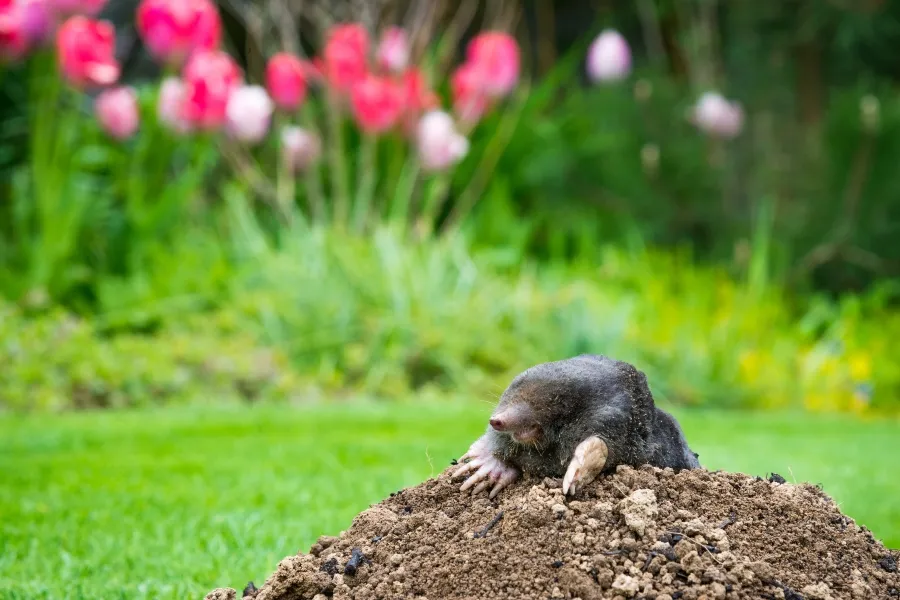
Moles live a specialized subterranean lifestyle, so you will rarely — if ever — find a mole voluntarily wandering into your home’s living areas. However, even when extreme summer heat or deep winter freezes force them into deeper soil layers, their digging can severely damage your turf, disrupt landscaping, and undermine structural features around your property.
Key Takeaways:
- Moles live almost entirely underground and target soil insects rather than eating your garden plants directly.
- While they rarely pose a direct physical threat to humans, their subterranean networks can silently destabilize hardscapes and invite secondary pests.
- Identifying active tunnels requires watching for specific surface signs rather than waiting to catch a glimpse of the animal itself.
- Common DIY quick fixes are often useless or dangerous, making specialized physical barriers and professional trapping the gold standard for control.
- Proactive lawn management can significantly reduce your property’s appeal to tunneling moles before major damage occurs.
Our Guide to Dealing with Moles Around Your Property
In Xceptional Wildlife Removal’s service area, which includes Virginia, Georgia, Louisiana, Florida, Maryland, and Illinois, moles are almost exclusively an outdoor lawn and garden issue.
Tthe Eastern Mole (Scalopus aquaticus) is the primary subterranean pest encountered. In wetter coastal or northern regions (such as parts of Maryland, Virginia, and Illinois), homeowners may also encounter the Star-Nosed Mole (Condylura cristata).
These insectivores spend their entire lives underground hunting for earthworms, grubs, and soil insects. While moles remain active year-round, surface tunneling surges dramatically during the damp spring and fall months in northern zones (IL, MD, VA), while remaining consistently active through mild winter months in southern regions (FL, GA, LA) where topsoil rarely freezes.
Jump to a Section:
- What to Do About a Mole Problem
- Signs of Moles on Your Property
- What Are the Risk Factors of Moles?
- Mole Prevention Tips
- Nuisance Mole FAQs
What to Do About a Mole Problem in Your Yard
While moles do not pose a direct physical threat to humans and rarely bite unless handled, their underground networks can quickly ruin your yard. If you notice fresh molehills or raised ridges on your lawn, take these steps to manage the issue:
- Identify Active Tunnels: Don’t waste time treating old, abandoned runways. Gently step down a section of a raised ridge to flatten it. Check back in 24 hours; if the ridge has been pushed back up, you’ve found an active main highway.
- Avoid Dangerous Myths: Skip home remedies like putting broken glass, chewing gum, or gasoline into mole tunnels. These methods are ineffective, dangerous to the environment, and can injure pets or wildlife.
- Apply Castor Oil Repellents: Commercial castor oil-based sprays coat the mole’s subterranean food supply (earthworms and grubs) with an unpleasant taste and smell, encouraging them to migrate elsewhere.
- Control Excessive Soil Moisture: Overwatering your lawn brings earthworms and soil insects close to the surface, creating an all-you-can-eat buffet for moles. Adjust irrigation schedules to let the topsoil dry out between waterings.
- Call a Professional: Moles are notoriously difficult to eliminate with DIY methods. Professional mole control specialists use subterranean trapping techniques—the single most effective, reliable method for mole control—to remove the animals safely and efficiently.
How Do You Handle Moles Tunneling Under Your Deck, Patio, or Walkway?
When moles tunnel beneath hardscaping like brick pavers, concrete walkways, decks, or patios, they clear away supporting dirt. Over time, rain and foot traffic cause these structures to settle, crack, or collapse.
- Do Not Just Fill the Dirt: Packing dirt back down into active tunnels will only prompt the mole to dig a new path right alongside the old one.
- Install Subterranean Barriers: Dig a trench 12 to 24 inches deep along the perimeter of your deck or patio. Place heavy-duty galvanized hardware cloth (wire mesh) into the trench, bending the bottom 6 inches outward in an “L” shape facing away from the structure before backfilling with dirt or gravel.
- Call a Mole Control Expert: Trapping moles underneath solid structures requires specialized equipment and underground placement skills. A professional can target the specific entry and exit runs beneath your patio safely.
Do Moles Ever Come Inside Your Home?
Moles do not nest inside houses, attics, or wall voids. They require damp soil packed with live earthworms and insects to survive, and they quickly dehydrate and starve in dry indoor environments.
On rare occasions, a mole digging near a home’s foundation may accidentally fall into a subterranean basement window well, an open crawl space, or an unpaved earth cellar floor. If a mole tumbles into a window well or crawl space, cover it with a thick towel or wear heavy leather gloves to pick it up in a small container and release it outdoors near a wooded area—or contact a wildlife professional for quick removal.
What Are the Signs of Moles on Your Property?
Because moles spend roughly 99% of their lives underground, you will rarely catch a glimpse of the animal itself. Instead, you have to look for the distinctive surface damage caused by their relentless excavation.
Keep your eyes open for these primary mole warning signs:
- Volcano-Shaped Dirt Mounds: Distinct, cone-shaped piles of soil (molehills) pushed up from deep underground travel tunnels.
- Raised Surface Ridges: Spongy, long squiggly lines across your lawn where moles have pushed up the turf just below the root line.
- Squishy, Unstable Turf: Walking across your lawn feels soft, hollow, or like walking on a dense sponge.
- Yellowing or Dead Grass Lines: Grass roots severed or dried out by air pockets left directly beneath the subterranean runways turn brown in distinct tracks.
- Dislodged Plant Roots: Garden flowers, shrubs, and seedlings suddenly wilting because their roots were disturbed or exposed to air pockets.
- Intact Plant Tissue: Unlike voles or pocket gophers, moles do not chew on roots, tubers, or garden vegetables. If your plants are being eaten from below, you likely have a rodent problem rather than a mole problem.
- Uneven Paving Stones: Patio bricks, garden stepping stones, or walkway slabs tilting or sinking due to eroded dirt beneath.
- Pet Fixation: Dogs or cats obsessively sniffing, pawing, or digging at specific spots on the lawn where they hear or smell movement under the dirt.
Mole Risk Factors - How Concerned Should You Be?
Moles are not aggressive toward humans and do not pose the same high-level biohazard risks associated with indoor pests like raccoons or rats. However, leaving a mole infestation unchecked on your property can lead to extensive and costly physical damage.
The full range of mole risk factors includes:
- Landscape Destruction: A single mole can dig up to 18 feet of surface tunnels in an hour, quickly ruining expensive sod, manicured turf, and custom landscaping.
- Tripping Hazards: Hollow surface tunnels and hidden molehills create uneven ground, posing ankle-twisting trip risks for children, seniors, and athletes.
- Secondary Pest Invasions: Field mice, voles, and shrews frequently invade active or abandoned mole tunnels. Once inside, these plant-eating rodents use the protected highways to strip root systems, flowers, and vegetable gardens clean.
- Mower Equipment Damage: Hitting raised dirt mounds or dropped pavers with lawnmower blades dulls equipment, hurls rocks, and damages expensive turf-care machinery.
- Structural Undermining: Deep tunneling near retaining walls, slab foundations, and decorative brick borders causes soil erosion, causing structures to crack or sink.
- Irrigation and Utility Disruption: Underground tunneling can expose, bend, or disconnect shallow sprinkler lines, drip systems, and outdoor low-voltage lighting wires.
Do Moles Carry Diseases or Parasites?
Because moles rarely come into direct contact with people or domestic pets, their disease transmission risk to humans is comparatively low. However, as wild mammals living in wild soil, they are not entirely risk-free.
- Ticks and Fleas: Moles host external parasites like ticks, fleas, and mites within their underground nests. These parasites can hitch a ride to the surface and transfer onto outdoor domestic pets.
- Soil-Borne Bacterial Hazards: Molehills expose deep, anaerobic soil layers to the surface. Handling soil contaminated with wild animal waste poses minor bacterial risks, such as exposure to Leptospira or tetanus spores through open cuts.
- Rabies (Extremely Rare): As insectivores, moles are technically susceptible to the rabies virus, but documented cases are extraordinarily rare due to their minimal contact with rabies-vector species like raccoons or skunks.
Need a Wildlife Removal Estimate?
Mole Prevention Tips
The best way to prevent moles is by making your lawn less inviting to them. Try these practical proactive steps:
- Protect Garden Beds with Mesh: Line the bottom and sides of raised garden beds with 1/2-inch galvanized hardware cloth before filling them with soil.
- Avoid Overwatering Your Lawn: Deep, infrequent watering keeps grass healthy while keeping topsoil drier, encouraging earthworms and moles to stay deeper underground away from your turf line.
- Maintain Perimeter Gravel Trenches: Moles dislike digging through dense, coarse materials. Creating a 12-inch deep border filled with crushed stone or gravel around lawn perimeters can deter them from crossing over from neighbor yards.
- Dethatch and Core Aerate Your Lawn: Compacted soil and thick thatch layers trap excess moisture near the surface, creating an ideal feeding environment for grubs and earthworms right along your lawn’s root line. Regular dethatching and aeration improve drainage and reduce the shallow food sources that attract moles.
- Roll and Compact Soft Soil: Use a heavy lawn roller on newly laid sod or soft topsoil to pack the earth down, making it harder for moles to create easy surface runways.
- Address Grub Infestations: While earthworms are a mole’s primary food source, heavy populations of lawn grubs (beetle larvae) add an extra incentive for them to dig up your yard. Treat severe grub infestations in late summer.
- Install Underground Perimeter Fencing: Bury wire mesh vertically 18 to 24 inches deep around sensitive landscape features or garden plots to block mole travel lanes.
- Work with a Professional Exclusion Expert: If you experience recurring issues with moles, our rodent and wildlife exclusion team can perform a thorough assessment and make tailored recommendations to protect your property.
FAQs About Nuisance Mole Removal
At Xceptional Wildlife Removal, we have years of experience helping homeowners and business owners solve mole problems, so we decided to document some of the most common questions we get asked.
If you don’t find your answer below or you’re ready to schedule professional mole removal services to safeguard your property from turf damage, tripping hazards, and secondary pest invasions, don’t hesitate to contact us today!
Is it legal in VA, GA, LA, FL, MD, and IL to trap or remove moles by yourself?
Yes, in most residential settings across our service territory, private property owners can lawfully control or trap moles causing damage to their lawns. However, specific regulations vary across the state jurisdictions we serve:
| State | Trapping Regulation Summary for Moles |
|---|---|
| Virginia | Unprotected non-game species. Landowners may trap moles on their own property year-round without a permit. |
| Georgia | Classified as non-game pests. DIY trapping and lethal subterranean traps are legal without permits. |
| Louisiana | Subterranean pest species. Landowners can control active moles on private land year-round. |
| Florida | Unprotected pest species. Mechanical trapping on private residential lawns requires no special permit. |
| Maryland | Non-game wildlife. Homeowners are permitted to trap moles damaging private turf or gardens. |
| Illinois | Governed by the Illinois Wildlife Code. While property owners can trap moles causing turf damage on their land, relocation regulations and strict rules apply regarding protected non-target species. |
Note: Local municipal regulations or HOA guidelines in Virginia may restrict specific trap types (such as spear or body-gripping scissor traps). Working with a licensed wildlife control operator like Xceptional Wildlife Removal ensures full legal compliance.
Does homeowners insurance cover property or hardscape damage caused by moles?
Standard homeowners insurance policies almost never cover damage caused by moles or other burrowing pests. Insurers classify subterranean tunneling as gradual wear, tear, or maintenance issues, meaning repairs for sunken pavers, cracked patios, or ruined sod come out of pocket.
How many moles are typically present in a single damaged yard?
Usually far fewer than expected—often just one to three moles. Moles are fiercely solitary, territorial animals that aggressively defend their underground tunnels from rivals. Even a yard covered in dozens of surface ridges and mounds is usually the work of a single, highly active mole.
Are castor oil lawn treatments completely safe for dogs, cats, and wildlife?
Commercial castor oil repellents are safe for pets, birds, and beneficial wildlife when applied as directed. Refined castor oil upsets a mole’s digestive system without toxicity. Once liquid sprays dry or granular formulas are watered into the soil, the lawn is safe for pets to use.
How do I tell the physical difference between a mole hill and a gopher mound?
Look at the shape of the mound and where the dirt plug is located:
- Mole hills are symmetrical and volcano-shaped, with dirt pushed straight up out of a central shaft.
- Gopher mounds are crescent or kidney-shaped, with dirt pushed out at a wide angle, leaving a visible plug offset on one side.
Are there specific plants or flowers that naturally deter moles from entering a garden?
Certain strong-scented or bitter-rooted plants can deter moles from sensitive garden beds. However, you shouldn’t rely on these plants as a guaranteed solution. While they may help sometimes, they don’t always.
- Allium family: Garlic, chives, onions, and ornamental alliums.
- Daffodils: Their bulbs contain natural alkaloids that moles instinctively avoid.
- Marigolds: Release strong underground scents that mask insect activity.
- Crown Imperial (Fritillaria imperialis): Bulb roots emit a musk-like odor that drives burrowing pests away.
Can mole tunneling cause damage to underground sewer, electrical, or main utility lines?
Moles cannot chew through metal conduit, heavy utility lines, or main PVC sewer pipes because they are insectivores without rodent gnawing teeth. However, their excavation can clear away soil beneath shallow lines—like sprinkler tubing, drip irrigation, or low-voltage landscape wiring—causing joints to pull apart or wires to sag and become exposed to lawnmower blades.
Need Mole Control for Your Property in Virginia?
Our approach to subterranean pest control focuses on three simple steps: initial inspection, targeted removal, and long-term prevention. By evaluating active underground networks, executing precise subterranean trapping, and establishing physical landscape barriers, we protect your yard from ongoing structural damage. Whether you require fast mole control and removal, expert advice on the best mole repellents, or lasting landscape repair after burrowing pests, our team restores and safeguards your property’s root systems and hardscapes.
Take back control of your lawn—contact Xceptional Wildlife Removal today to schedule a comprehensive property assessment and professional mole exclusion plan in Virginia!


