
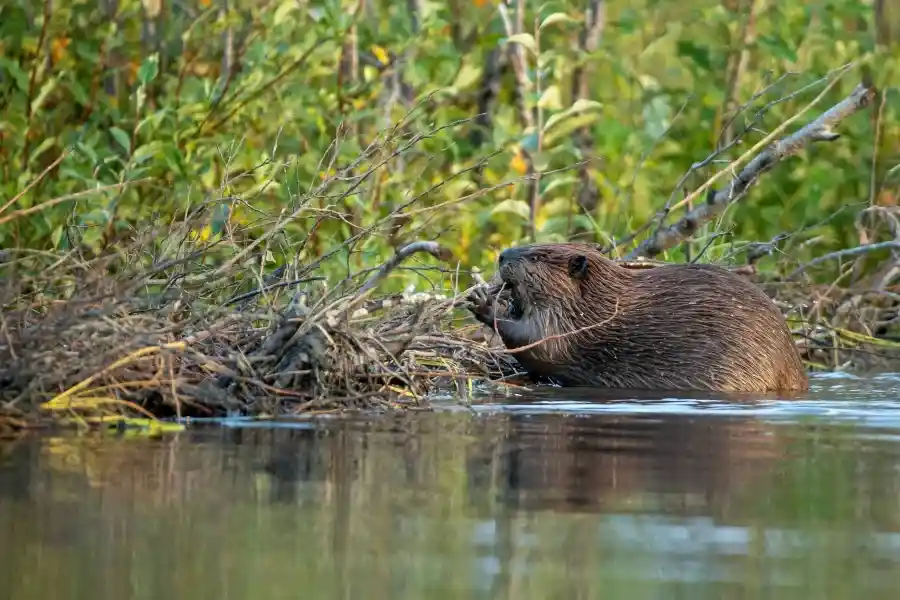
If you suspect a beaver on your property, immediately protect high-value trees by wrapping their trunks four feet high with heavy-duty wire mesh or applying a sand-latex paint mixture to deter chewing. Never manually breach a beaver dam, as the sound of rushing water triggers an aggressive response to rebuild the structure larger within 48 hours.
Keep pets leashed near water edges to avoid territorial attacks, and consult a certified wildlife professional to install flow control devices or manage permit-compliant, humane removal before severe structural flooding occurs.
Key Takeaways:
- While beavers rarely enter homes, their rapid aquatic engineering can cause catastrophic structural flooding, foundation damage, and severe landscape loss in a matter of days.
- Active beaver habitats pose serious biological and physical health risks to humans and pets through dangerous waterborne diseases and territorial aggression.
- Quick DIY fixes like manually tearing down a dam usually backfire, prompting beavers to rebuild larger and stronger barriers within 48 hours.
- Successfully protecting your property requires strategic preventative measures like tree wraps, covert water flow control devices, and professional wildlife management to navigate strict environmental laws.
Our Guide to Dealing with Beavers Safely
Beavers are North America’s largest native rodents, best known for their paddle-shaped tails, large orange incisors, and incredible engineering abilities. They’re a common type of nuisance wildlife in many parts of Xceptional’s service area, which includes Virginia, Georgia, Louisiana, Florida, Maryland, and Illinois.
While their dam-building skills are vital for wild ecosystems, a beaver setting up shop near residential or commercial land can quickly cause catastrophic property damage, severe landscape loss, and major structural flooding.
Jump to a Section:
- What to Do About a Beaver Problem
- Signs of Beavers on Your Property
- What Are the Risk Factors of Beavers?
- Beaver Prevention Tips
- Beaver Control FAQs
What to Do About a Beaver Problem
Unlike raccoons or squirrels, beavers rarely enter the interior living spaces of a house. Instead, they are an outdoor threat with significant structural consequences. Their aquatic construction projects can flood crawl spaces, undermine foundations, collapse driveways, and destroy valuable trees in a matter of days.
If you notice beaver activity on or adjacent to your property, exercise caution. Beavers are wild, territorial animals with powerful jaws capable of inflicting severe injuries.
Not sure if it’s a beaver or another semi-aquatic animal? Look for a flat, paddle-like tail. Nutria and muskrat have long, thin, or rounded tails and cause different types of property damage.
What Should You Do If You See Beavers on Your Property?
If a beaver has taken up residence in a nearby creek, pond, or drainage ditch, take these immediate steps to manage the situation and limit damage:
- Protect High-Value Trees: Wrap the trunks of vulnerable trees in heavy-duty wire mesh or hardware cloth up to a height of 4 feet to prevent beavers from gnawing them down.
- Avoid Approaching the Water at Dusk or Night: Beavers are primarily nocturnal and crepuscular. Approaching their territory in the dark can startle them, triggering defensive behavior or loud warning tail-slaps.
- Keep Pets Leashed: Dogs lured to the water’s edge by beaver activity can easily end up in a fight. Beavers are fast in the water and can cause serious physical trauma with their sharp incisors.
- Check Local Regulations: In many jurisdictions, beavers are protected as furbearers or game animals. Destroying lodges, breaching dams, or trapping animals without proper permits can violate state wildlife laws.
- Call a Wildlife Professional: Attempting to trap or relocate a beaver on your own is dangerous and often illegal. Professional wildlife control teams have specialized equipment, permits, and experience with exclusion and humane removal.
How Do You Handle Beaver Dams and Water Damage?
A beaver dam across a creek, drainage pipe, or culvert can cause water levels to rise rapidly, flooding basements, septic drain fields, and roads.
- Do Not Mechanically Breach a Dam Without a Plan: Tearing down a beaver dam by hand or with equipment usually backfires. Beavers are relentless and will often rebuild the structure—larger and stronger—within 24 to 48 hours.
- Avoid Causing Sudden Downstream Flooding: Rapidly breaking a large dam can send an uncontrolled surge of water downstream, damaging neighboring properties or causing environmental erosion issues.
- Consider Water Control Devices (Pond Levelers): If the beaver cannot be immediately removed, a professional can install hidden flow pipes through the dam (often called “Beaver Deceivers”). These allow water to drain silently to a safe level without alerting the beaver to repair the structure.
- Contact a Beaver Removal Specialist: Managing dammed water requires balancing wildlife regulations, environmental impact, and property protection. Professional beaver control technicians can resolve both the animal problem and the water flow issue safely.
What Are the Signs of Beavers on Your Property?
Beavers leave distinct, unmistakable evidence of their presence long before you ever spot one swimming across a pond.
Keep an eye out for these key signs of beaver activity:
- Hourglass Tree Stumps: Tree stumps cut in a distinct cone or hourglass shape with wide, deep tooth marks.
- Felled Trees: Trees—especially soft-wooded hardwoods like willow, poplar, aspen, birch, and cottonwood—cut down toward the water.
- Stripped Wood (“Beaver White Wood”): Branches and logs in or near the water that have had their outer bark completely peeled away for food.
- Dams and Lodges: Conical piles or long barriers made of sticks, mud, rocks, and plant matter blocking flowing water or standing in a pond.
- Mud Slides and Runs: Smooth, muddy pathways or trenches along stream banks where beavers repeatedly drag logs into the water.
- Unexplained Flooding: Standing water pooling in yards, driveways, fields, or crawl spaces near natural drainage channels.
- Loud Water Slaps: A sudden, sharp sound resembling a gunshot or heavy splash at dusk, created by a beaver slapping its flat tail on the water surface to sound an alarm.
What Are the Risk Factors of Beavers?
While beavers do not chew through attic insulation or nest in chimneys, the scale of damage they cause outdoors rivals almost any other wildlife pest. A single family of beavers can completely alter the topography and water flow of a neighborhood.
The primary risk factors associated with beaver infestations include:
- Structural and Property Flooding: Rising water from beaver dams can submerge foundations, flood basements, destroy septic drain fields, and saturate soil under roadways, causing sinkholes or pavement collapses.
- Hazardous Tree Falls: Beavers cut down trees up to 3 feet in diameter. Partially chewed or undermined trees can fall unpredictably on power lines, homes, cars, or people.
- Landscape and Timber Destruction: Beavers can fell decades-old shade trees and prized ornamental landscaping in a single night.
- Erosion and Soil Instability: Saturation from backed-up water weakens stream banks, leading to massive soil erosion and mudslides.
- Disease Transmission: Beaver activity introduces pathogens into local natural water supplies.
What Diseases Can Beavers Transmit?
Waterways contaminated by beaver feces and urine carry serious health risks for humans and pets who swim in, drink, or handle water near beaver habitats.
- Giardiasis (“Beaver Fever”): A parasitic infection caused by Giardia lamblia cysts shed in beaver feces. Swallowing contaminated pond or stream water leads to severe abdominal cramps, chronic diarrhea, dehydration, and nausea.
- Tularemia (“Rabbit Fever”): A hazardous bacterial infection (Francisella tularensis) spread through direct contact with infected tissue, water consumption, or insect bites. Symptoms include high fevers, skin ulcers, and swollen lymph glands.
- Leptospirosis: Bacteria spread through beaver urine into surrounding soil and water. It enters through small cuts or mucous membranes, leading to kidney damage, liver failure, or meningitis in humans and pets.
- Cryptosporidiosis: A microscopic parasite found in aquatic wildlife waste causing prolonged gastrointestinal illness and severe diarrhea.
- Rabies: While rare in semi-aquatic rodents, rabid beavers lose their natural fear of humans and become exceptionally aggressive, mounting unprovoked attacks in or near the water.
Do Beavers Attack People or Pets?
Beavers are generally docile animals that prefer to swim away from danger, but they become aggressive if they feel cornered, are defending a lodge with young kits, or are infected with rabies.
Equipped with powerful neck muscles and continuously growing incisors up to 2 inches long, a beaver can inflict deep, severe lacerations. Keep dogs well clear of active beaver ponds, as a territorial beaver can easily drown or severely injure a swimming dog.
Beaver Prevention Tips
Long-term beaver management relies on making your trees unpalatable and your waterways difficult to dam.
Need a Wildlife Removal Estimate?
Here are the most effective ways to prevent beaver damage on your property:
- Wrap High-Value Trees: Encase tree trunks in 2×4-inch welded wire mesh or heavy-duty 14-gauge hardware cloth. Secure the wire loosely around the trunk up to a height of 4 feet, leaving room for the tree to grow.
- Apply Sand-Paint Coatings: Coat the bottom 4 feet of mature tree trunks with a mixture of exterior latex paint and coarse masonry sand at a ratio of 20 ounces of sand per gallon of paint (or 5 ounces per quart). Choose a paint color that matches the bark for an aesthetic finish. The abrasive texture deters beavers from chewing without harming mature trees. Note: Do not apply sand-paint to young saplings under an inch in diameter, as the heavy paint layer can smother tender bark.
- Install Culvert Guards: Protect driveway and road culverts with heavy iron grates or fence enclosures to keep beavers from stuffing the pipes with debris.
- Manage Riparian Vegetation: Clear away fallen branches, saplings, and preferred food sources like willow and cottonwood brush along stream banks.
- Plant Non-Preferred Species: When planting new landscaping near water, choose tree species beavers generally avoid, such as cascading conifers, spruce, pine, or elderberry.
- Utilize Flow Control Devices: Install professional-grade underwater intake pipes that prevent beavers from sensing water flow currents, stopping their instinct to build dams.
- Schedule Regular Inspections: Inspect creeks, ditches, and low-lying property edges every spring and fall for early signs of gnawing or stick accumulation.
- Work with a Professional Exclusion Expert: If you experience recurring issues, our wildlife exclusion team can perform a thorough assessment and make tailored recommendations to protect your property.
Beaver Control FAQs
Homeowners frequently ask us about managing beaver activity, so we have gathered some of the most common questions and answers to provide guidance. Here is the essential information you should know, built upon our extensive experience in professional beaver management and wildlife control.
Please contact us if your particular issue is not covered here, or if you need expert assistance with beaver removal! We remain fully prepared to help.
Is DIY beaver trapping and removal legal in Virginia?
Legal rules for DIY beaver trapping and removal vary significantly across our service region. In all states—Virginia, Georgia, Louisiana, Florida, Maryland, and Illinois—trapping laws are strictly enforced to manage wildlife populations, protect non-target species, and prevent humane/environmental violations.
In most of these states, property owners suffering active beaver damage may trap or lethally remove nuisance beavers on their own land, but strict conditions apply:
- Permit & License Requirements: Some states (like Virginia) allow property owners experiencing property damage to lethally remove nuisance beavers without a state permit, whereas other states (like Illinois, Maryland, and Florida) require specific Depredation Permits, Nuisance Wildlife Control Permits, or adherence to strict open seasons for non-commercial trappers.
- Live Relocation Bans: Across virtually all states in our footprint (e.g., Virginia and Illinois), live trapping and relocating beavers off-site to another property or public land is strictly illegal to prevent the spread of waterborne disease and territorial displacement. Trapped beavers must typically be humanely dispatched on-site or handled by a licensed professional.
- Equipment Restrictions & Check Times: Snares, body-gripping traps (Conibear), and foothold traps are subject to rigorous size, location, and daily inspection mandates (e.g., 24-hour trap checks).
Because local municipal and county ordinances differ by geograph, DIY trapping is strongly discouraged. Contacting Xceptional Wildlife Removal ensures compliance with state and municipal wildlife regulations.
State-by-State Beaver Management Regulations Overview
| State | Landowner Trapping/Removal Permits | Relocation Rules | Dam Breaching / Environmental Laws |
|---|---|---|---|
| Virginia | No kill permit needed for landowners addressing active damage; year-round open trapping in select counties. | Prohibited (Virginia Code forbids live relocation). | State DEQ/Army Corps permits required if dam breaching alters regulated wetlands. |
| Georgia | Year-round open trapping season for beavers; no bag limit. | Restricted/Prohibited without explicit DNR authorization. | Uncontrolled breaching that causes downstream flooding or siltation violates state environmental codes. |
| Louisiana | Beavers classified as non-game quadrupeds; open nuisance taking allowed for landowners experiencing damage. | Prohibited without LDWF permit. | Waterflow modifications must comply with local levee districts and DNR waterbody regulations. |
| Florida | Trapping allowed year-round with legal sets, but strictly regulated trap types/water submergence rules apply. | Requires FWC permit; live relocation off-property generally restricted. | Wetland protection rules apply via FDEP and Water Management Districts. |
| Maryland | Requires a Landowner Nuisance Wildlife Permit or licensed Wildlife Control Cooperator outside normal trapping seasons. | Prohibited (MD DNR prohibits live relocation of furbearers). | Breaching dams in protected trout streams or tidal wetlands requires MDE authorization. |
| Illinois | Requires a Nuisance Animal Removal Permit from IDNR outside of the open trapping season. | Prohibited (Illegal to release furbearers on public land or unapproved private land). | Office of Water Resources (IDNR) permits required for major stream flow disruptions. |
Does standard homeowners insurance cover property or water damage caused by beaver dams?
Short answer: usually no. Standard homeowners policies typically exclude damage caused by wild animals, as well as exterior water damage resulting from natural surface flooding.
Insurance carriers classify beaver activity under two major exclusion categories:
- Pest and Wildlife Exclusions: Standard policies treat damage from rodents or wild animals as a maintenance issue rather than a sudden, accidental event.
- Surface Water and Flooding Exclusions: Water backing up from a creek, stream, or pond due to a beaver dam is legally defined as “surface water” or flooding. Standard home insurance does not cover overland flood damage unless you have a separate flood insurance policy through the National Flood Insurance Program (NFIP) or a private flood insurer.
If a dam backs up water into your septic drain field or plumbing system, repairs generally require a specific water backup endorsement added to your policy.
What time of year are beavers most active and most likely to begin new dam construction?
Beavers are active year-round, but their dam-building and tree-felling activity dramatically spikes in autumn (late August through November), with a secondary surge in early spring.
- The Fall Push (Peak Construction): As temperatures drop, beavers work around the clock to reinforce dams and raise water levels before winter freezes the surface. They cut down large volumes of trees to build an underwater “food cache”—a massive pile of nutrient-rich branches anchored in the deep water near their lodge so they can eat beneath the ice.
- Spring Dispersal (New Territories): In April and May, two-year-old sub-adult beavers are pushed out of their family lodges to find their own territories. This seasonal migration leads to fresh dam construction in previously unaffected streams and drainage ditches.
Are commercial chemical repellents, taste deterrents, or predator urine sprays effective against beavers?
No, liquid repellents and predator urine are largely ineffective against beavers.
While predator urine (coyote or wolf) or taste deterrents might work on deer or rabbits, they fail with beavers for two primary reasons:
- Water Exposure: Beavers spend most of their time in aquatic environments, so rain, splashes, and humidity quickly wash away chemical sprays and scent granules.
- Overriding Instinct: A beaver’s drive to build dams and secure wood is a deeply entrenched survival mechanism. Scent deterrents rarely overcome their instinct to manipulate their habitat.
The only effective texture-based deterrent is sand-paint: mixing 20 ounces of coarse masonry sand per gallon of exterior latex paint and applying it to the lower 4 feet of mature tree trunks. The grit creates an abrasive surface that deters chewing, without harming the tree or washing away in rain.
How do you safely sanitize standing water or soil contaminated by beaver waste to protect against pathogens like Giardia?
Chemical disinfectants like bleach do not work effectively on soil, so the most reliable sanitization method is drainage and direct exposure to sunlight.
Because organic matter in soil instantly neutralizes chemical disinfectants (such as chlorine bleach), trying to spray or soak contaminated dirt is largely ineffective. To clean up a contaminated zone safely:
- Eliminate Standing Water: Remove the beaver dam or install flow pipes to drain pooled water. Giardia cysts thrive in cold, wet environments but perish quickly when dried out.
- Maximize UV and Air Exposure: Trim overhanging branches or brush to allow direct sunlight to hit the saturated ground. Ultraviolet (UV) radiation from natural sunlight destroys Giardia cysts and bacteria in dry topsoil over a few weeks.
- Use Protective Gear: When working around recent beaver sites, always wear waterproof boots, heavy rubber gloves, and eye protection to prevent splash exposure to pathogens like Leptospira or Francisella tularensis.
How long does it take a beaver colony to abandon a site once flow control devices or tree wraps are installed?
It generally takes 2 to 6 weeks for a beaver colony to give up and migrate once flow control devices (pond levelers) and tree protection are properly in place.
Beavers are remarkably persistent. During the first 1 to 2 weeks after a flow device is installed, they will frantically attempt to plug every visible leak or cover the device with mud and sticks. However, pond levelers silently drain water from underwater intakes that beavers cannot sense or block.
When the water level drops below a safe threshold—exposing their lodge entrances and making them vulnerable to predators—and all nearby high-value food trees are wrapped in wire mesh, the location loses its survival value, forcing the colony to pack up and move upstream or downstream.


