
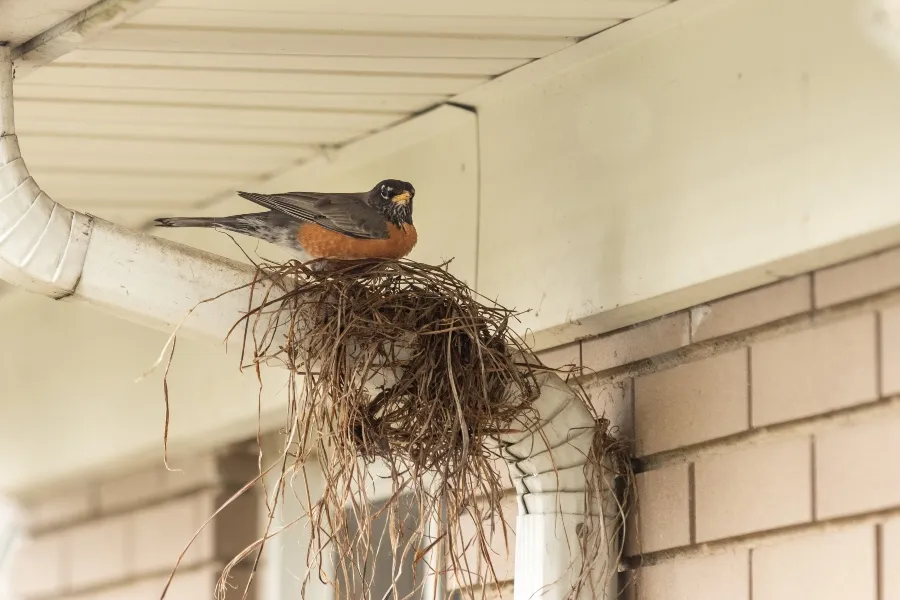
If you have a bird problem, first identify the species before taking action, as many wild birds are protected by federal law and cannot be harmed or displaced if actively nesting. Next, eliminate attractants by securing trash, removing feeders, and draining standing water.
For roosting areas, you may consider humane deterrents like bird spikes, netting, or vent covers. If birds are nesting in vents or under solar panels, hire a licensed wildlife professional to safely and legally resolve the infestation.
Key Takeaways:
- Many common bird species are federally protected, meaning DIY removal methods can easily result in significant legal violations.
- A bird infestation carries severe hidden risks, including unseen structural damage, property fire hazards, and serious respiratory diseases.
- Properly timing the removal of nesting birds is vital to avoid trapping them inside, which creates severe biohazards and health risks.
- Effective bird prevention requires eliminating subtle property attractants before roosting habits become permanent.
- Handling bird nests in high-risk areas like vents or chimneys carries significant health and safety hazards that often warrant professional intervention.
Our Guide to Dealing with Nuisance Birds in Safely
Birds are a common sight, but when they choose your property to roost or nest, they can quickly go from pleasant wildlife to a serious hazard. From corrosive droppings on roofs and patios to nests clogging exhaust vents, nuisance birds can cause expensive structural damage, fire hazards, and significant health risks for homeowners.
Jump to a Section:
- What to Do About a Bird Problem
- Signs of Birds in Your House or Property
- What Are the Risk Factors of Nuisance Birds?
- Birds and Solar Panels
- Bird Prevention Tips
- FAQs About Nuisance Birds
What to Do About a Bird Problem
Dealing with a bird problem is a unique balancing act. Unlike many other pests, your exact strategy must depend on the specific bird species you are dealing with.
The very first step in any bird control effort must be species identification. Many wild bird species in the United States—including woodpeckers, barn swallows, chimney swifts, and most songbirds—are protected under federal laws like the Migratory Bird Treaty Act (MBTA), as well as state wildlife protection codes across Virginia, Georgia, Louisiana, Florida, Maryland, and Illinois. It is illegal to harm these birds, destroy their active nests, or remove their eggs without specific state and federal permits. Unprotected species generally include nonnative invasive birds, such as European Starlings, House Sparrows, and Pigeons.
Common Nuisance Birds in VA, GA, LA, FL, MD, and IL
Bird control regulations and common wildlife species vary across our regional service areas (VA, GA, LA, FL, MD, and IL). Understanding which birds are invading your property—and their legal status—is essential before attempting any remediation.
Non-Protected Invasive Species (Can Be Removed Year-Round)
These nonnative species are not protected by federal or state wildlife laws and can be legally managed, harassed, or excluded at any time:
- Pigeons (Rock Doves): Common in urban and suburban areas across all six states; frequent rooflines, ledges, and solar panel arrays.
- European Starlings: Aggressive cavity nesters across all service regions; frequently invade dryer vents, soffits, and attic spaces.
- House Sparrows: Common nuisance birds in residential neighborhoods; build messy nests in exhaust fan vents, gutters, and light fixtures.
- Monk Parakeets (Local Concern): Invasive feral parrots establishing feral colonies in suburban areas of Illinois (e.g., Chicago region) and Florida, nesting on utility poles and roof structures.
Protected Native Species (Require Permits or Timing-Specific Exclusion)
These native birds are protected under the Migratory Bird Treaty Act (MBTA) and state laws in VA, GA, LA, FL, MD, and IL. Active nests with eggs or live chicks cannot be moved or destroyed:
- Woodpeckers (Downy, Hairy, Red-bellied, Pileated): Common across eastern forests; cause structural damage by pecking wood siding, stucco, and fascia boards.
- Barn Swallows: Build mud nests under eaves, porch roofs, and bridges across all six states; nests cannot be knocked down while active.
- Chimney Swifts: Nest inside open masonry chimneys and flues throughout eastern and central states during spring and summer migration.
- Gulls (Ring-billed, Herring, Laughing): Severe roof and commercial building nuisance, particularly in coastal and waterfront regions of Maryland, Virginia, Florida, Louisiana, and near Lake Michigan in Illinois.
- Fish Crows & American Crows: Roost in large, noisy flocks across southern and mid-Atlantic states (FL, GA, LA, VA, MD), causing extensive guano accumulation.
| State | Primary Protected Wildlife Laws | High-Risk Local Nuisance Birds | State-Specific Considerations |
|---|---|---|---|
| Virginia | VA Wildlife Code (4.1-100) / MBTA | Woodpeckers, Swallows, Chimney Swifts, Gulls | Strict protection for nesting migratory waterfowl and swifts in chimneys. |
| Georgia | GA Code Title 27 / MBTA | Starlings, Pigeons, Woodpeckers, Crows | High humidity accelerates mold/pathogen growth in guano deposits. |
| Louisiana | LA RS 56 (Wildlife & Fisheries) / MBTA | Pigeons, Sparrows, Swallows, Waterfowl | High coastal bird populations; nesting under solar panels is common year-round. |
| Florida | FWC Chapter 68A-16 / MBTA | Woodpeckers, Gulls, Swallows, Monk Parakeets | FWC imposes strict penalties for disturbing active nests; tropical heat exacerbates mite infestations. |
| Maryland | MD Natural Resources Code / MBTA | Woodpeckers, Chimney Swifts, Gulls, Starlings | Coastal/Chesapeake Bay regions face severe gull roosting on residential rooflines. |
| Illinois | IL Wildlife Code (520 ILCS 5/) / MBTA | Pigeons, Starlings, Woodpeckers, Monk Parakeets | Seasonal nesting peaks in spring; chimney swifts and swallows frequent urban rooflines. |
What Should You Do If You See Nuisance Birds on Your Property or Roof?
If birds are gathering on your roof, ledges, or yard, taking quick, non-lethal action will keep them from establishing a permanent roosting site:
- Identify the Species First: Before taking any action, confirm what species of bird is causing the problem to ensure you stay compliant with federal and state wildlife protection laws in VA, GA, LA, FL, MD, or IL.
- Remove Food Sources: Eliminate wild bird feeders, secure trash bins, and never leave pet food outside. Seed spills attract large flocks of nuisance species like starlings and pigeons.
- Eliminate Water Supplies: Empty standing water from birdbaths, clogged gutters, and low spots on flat roofs.
- Use Humane Tactile and Visual Deterrents: Install physical barriers like bird spikes, slide gels, or tension wire along ledges and rooflines. Visual deterrents like reflective tape or owl decoys can work temporarily, but birds quickly get habituated to static objects.
- Call a Wildlife Professional: If birds are congregating in large numbers or aggressively defending territory, contact our bird control experts. We can provide compliant, humane harassment and bird exclusion solutions.
How Do You Handle Birds Living in Exhaust Vents, Attics, or Chimneys?
When birds move into your home’s structural openings—like bathroom fan vents, dryer exhausts, soffits, or chimneys—it creates an urgent issue that requires careful handling.
- Listen and Inspect: Listen for high-pitched chirping during feeding times to confirm if active chicks are inside.
- Maintain Structural Access: Keep the entry point open while birds are active inside. Sealing adults or flightless chicks within wall voids leads to starvation, creating severe biohazards, foul odors, and legal liability under federal and state protection laws.
- Time the Remediation: Wait until the young transition to active foraging outside the structure before blocking access or clearing debris.
- Clean and Sanitize the Area: Once the entry point is clear, wear protective gear (including an N95 respirator and gloves) to safely remove nest debris and sanitize the area from dangerous pathogens and bird mites.
- Install Heavy-Duty Exclusion Covers: Seal the entry point immediately using vent covers designed for pest prevention, chimney caps, or heavy-gauge wire mesh. Avoid plastic vent covers, as birds and rodents can tear right through them.
- Call a Bird Removal Expert: Removing bird nests from tight vents or high chimneys poses personal safety and health risks. Professional bird control specialists have the safety gear, legal knowledge, and equipment to handle the job safely.
Can Nuisance Birds Damage Solar Panels?
With the soaring popularity of residential solar across sun-rich states like Florida, Georgia, Louisiana, Virginia, Maryland, and Illinois, we keep getting more and more calls about nuisance birds causing issues with them. Rooftop solar panel arrays create an ideal microclimate for nuisance birds, offering shelter from rain, heat, and predators. However, allowing birds to nest beneath your panels leads to costly system damage and performance drops.
Risks of Nesting Under Solar Panels
- System Efficiency Drops: Bird droppings covering panel surfaces block sunlight and directly reduce energy output. Additionally, packed nesting material under the array restricts airflow, leading to overheating and reduced panel efficiency.
- Electrical Failures and Fire Hazards: Birds frequently peck at or chew solar wiring, exposed junction boxes, and microinverters, causing electrical short circuits and serious fire risks.
- Corrosive and Structural Damage: Concentrated uric acid in bird guano degrades panel framing, mounting hardware, and roof shingles beneath the array. Humidity in southern markets accelerates this decay.
- Voided Equipment Warranties: Fire or wiring damage caused by wildlife is rarely covered by standard solar warranties, and improper nest removal can void manufacturer guarantees.
Solar Panel Bird Prevention Tips
- Install Solar Panel Critter Guards: Enclose the entire outer perimeter of the array with heavy-gauge, PVC-coated wire mesh. Ensure your installer uses specialized, non-drilling solar clips to secure the mesh without puncturing panel frames or voiding warranties.
- Clean and Inspect Regularly: Have solar panels inspected twice a year to spot early nest-building activity before birds damage underlying wiring.
- Keep Branches Trimmed: Prune back tree branches within 10 feet of your roofline to remove convenient launching perches above the solar array.
What Are the Signs of Birds in Your House or Property?
Birds leave distinct warning signs when they begin using a structure for roosting or nesting. Catching these signs early can save thousands of dollars in structural repairs and cleanup.
- Accumulation of Droppings: Heavy white, chalky droppings (guano) concentrated on roofs, walls, window sills, sidewalks, or attic floors.
- Venting or Eaves Rustling: Frequent scratching, flapping, or high-pitched chirping sounds coming from exhaust vents, chimneys, soffits, or wall voids.
- Visible Nest Material: Twigs, grass, straw, string, or pine needles poking out of bathroom vents, dryer exhausts, roof gutters, or eave gaps.
- Pungent Musky Odors: Strong ammonia-like smells coming from accumulated waste and decaying nesting material inside vents or attics.
- Feathers and Debris: Excess feathers, eggshell fragments, or dropped food gathering near potential entry points or directly beneath roosting spots.
- Presence of Bird Mites: Tiny, speck-like parasites crawling out of vents, onto interior walls, or near light fixtures close to a nest site.
- Structural Damage: Chipped stucco, damaged roof shingles, pecked wooden siding (often from woodpeckers), or bent vent flappers.
- Blocked Gutters: Water overflowing from gutters caused by packed nesting material obstructing downspouts.
Need a Wildlife Removal Estimate?
Bird Risk Factors - How Concerned Should You Be?
A bird problem is far more than a minor annoyance. Bird droppings, nesting materials, and parasites pose severe health risks and can cause thousands of dollars in property damage if left unaddressed.
The full range of bird risk factors includes:
- Corrosive Structural Damage: Bird droppings contain uric acid, which eats through paint, roofing materials, wood, masonry, and metal over time.
- Fire Hazards: Birds frequently build dry, highly flammable nests out of twigs and straw inside active chimneys, electric light fixtures, and heat-generating exhaust vents.
- HVAC and Air Quality Contamination: Nests built near air intakes or inside ventilation systems contaminate indoor air with dust, dander, and airborne spores.
- Parasite Infestation: Bird nests are breeding grounds for bird mites, bed bugs, fleas, and ticks, which can migrate into living spaces and bite human occupants once the birds leave.
- Gutter and Roof Damage: Nesting debris clogs gutters and downspouts, leading to water backing up under roof shingles, rotten fascia boards, and basement flooding.
- Slip and Fall Hazards: Wet, fresh bird droppings on walkways, steps, and patios create slick, dangerous conditions for foot traffic.
- Secondary Pest Attraction: Abandoned nests and dead chicks attract secondary pests such as carpet beetles, dermestid beetles, and flies.
- Airborne Pathogen Exposure During Cleanup: Always dampen bird droppings/guano before cleanup. Never dry-sweep or vacuum dry bird droppings. Lightly mist the area with a water-and-disinfectant solution prior to removal to prevent dangerous fungal spores, such as Histoplasma capsulatum, from becoming airborne and causing serious respiratory infections.
What Diseases Can Birds Transmit?
Bird guano and nesting materials carry hazardous bacteria, fungi, and parasites. Disease transmission can occur through direct contact, contaminated food/water, or by simply inhaling airborne dust spores from dried droppings in confined spaces like attics and crawlspaces.
- Histoplasmosis: A severe respiratory infection caused by inhaling spores from a fungus that thrives in bird and bat droppings. Can lead to serious lung damage.
- Cryptococcosis: A fungal disease spread through dried pigeon droppings that can cause respiratory illness and, in severe cases, affect the central nervous system.
- Psittacosis (Parrot Fever): A bacterial infection transmitted by inhaling dust from dried bird droppings or secretions; causes pneumonia-like symptoms.
- Salmonellosis: Intestinal bacteria spread through bird droppings contaminating outdoor surfaces, patio furniture, or garden fruits.
- E. Coli Infection: Transmitted when bird waste enters open water sources or touches outdoor food preparation areas.
- Avian Influenza (Bird Flu): A viral disease carried by wild birds that can spread to domestic poultry and, in rare instances, transmit to humans.
- Candidiasis: A yeast or fungal infection spread by birds that affects the skin, mouth, respiratory system, and intestines.
Bird Prevention Tips
Preventing a bird problem requires making your structure uninviting by removing access to food, water, and easy nesting shelter:
- Cover All Vent Outlets: Install sturdy, metal pest-proof vent covers over all exhaust outlets (dryer, bathroom, kitchen fans).
- Cap Chimneys: Secure all chimney tops with heavy-gauge stainless steel mesh chimney caps.
- Block Off Ledges: Apply stainless steel bird spikes, bird wire, or sloping ledge covers to narrow roof ledges, window sills, and commercial signage.
- Net Off Open Spaces: Use commercial-grade bird netting to prevent birds from flying into eave recesses, under decks, or into open rafters.
- Eliminate Bird Feeders: Remove wild bird feeders and seed stations, which draw unwanted flocking species directly to your home.
- Keep Trees Trimmed: Trim tree branches back at least 6 to 10 feet from your roofline to reduce convenient landing perches and roof access.
- Clean Roofs and Gutters Regularly: Keep gutters clear of leaves and debris so birds cannot easily find built-in nesting platforms or water sources.
- Seal Exterior Gaps: Inspect soffits, fascia boards, and rooflines; seal any gaps larger than half an inch with silicone caulk or copper mesh.
- Call a Professional Bird Exclusion Expert: If you experience recurring issues, our bird exclusion team can perform a thorough assessment and make tailored recommendations to protect your property.
FAQs About Nuisance Birds
Property owners in Virginia frequently ask us about nuisance bird issues, so we have gathered some of the most common questions and answers to provide assistance. Here is the essential information you should know, built upon our deep industry experience in resolving bird infestations and preventing future nesting.
Does homeowners insurance cover structural damage or cleanup costs caused by nuisance birds?
Standard homeowners insurance policies generally exclude damage, nesting cleanup, and biohazard remediation caused by birds or other wildlife, as insurers view infestations and animal waste as preventable maintenance issues. However, if bird activity leads to a sudden, covered loss—such as a nest catching fire in a light fixture or an unblocked gutter causing sudden water damage to an interior wall—the resulting secondary damage itself may be covered.
What are the legal penalties or fines for accidentally destroying an active nest protected under the Migratory Bird Treaty Act?
Under the Migratory Bird Treaty Act (MBTA), harming a protected bird or destroying an active nest containing eggs or live chicks is a federal misdemeanor. Unintentional or intentional violations can result in criminal fines of up to $15,000 per violation and up to six months in prison for individuals, with even steeper fines applied to commercial entities.
How long does it usually take for bird fledglings to leave the nest so I can safely seal off a vent?
For most common backyard songbirds, baby birds remain in the nest for 7 to 21 days after hatching. Total duration from egg laying to complete departure is typically 3 to 5 weeks. Once fledglings are regularly leaving to forage with their parents, entry points can be cleaned, disinfected, and permanently sealed.
What should I do if a bird flies directly into my home’s living space?
First, immediately turn off all ceiling fans to avoid severe injury. Close interior doors to trap the bird in a single room, then dim interior lights and pull shades over small windows. Open the largest exterior door or window in that room wide; birds instinctively fly toward bright daylight. Give the bird space and time to navigate out on its own rather than chasing or cornering it.
How do I eliminate bird mites that have migrated into my house after a nest is removed?
Start by removing and disposing of the bird nest completely, then sanitize the surrounding area. Vacuum carpets, baseboards, and furniture thoroughly, emptying the vacuum bin into an outdoor trash bag immediately.
While bird mites bite humans out of desperation, they cannot reproduce on human blood and naturally die off within 2 to 3 weeks without a bird host. Targeted insecticidal sprays or professional pest control can clear an active indoor infestation faster.
Will birds return to the exact same nesting spot on my house year after year if I don’t block access?
Yes. Many bird species exhibit strong site fidelity, meaning they return to previous successful nesting locations season after season. If a pair successfully hatches young in your dryer vent or soffit, they (or their offspring) will return the following spring unless you permanently block access using heavy-gauge metal mesh, chimney caps, or specialized vent covers.
What should I do if I find a sick or injured nuisance bird on my property?
Avoid handling the bird with bare hands, as sick wildlife can carry pathogens, mites, or bite defensively. Keep pets and children away from the area and contact a local licensed wildlife rehabilitator or animal control agency for guidance. If the bird is in immediate danger (e.g., near traffic or a neighborhood cat), wear thick gloves, gently cover it with a towel, and place it in a dark, ventilated cardboard box in a quiet space until a professional can assist.
Ready to Protect Your Property with Professional Bird Control?
Resolving a nuisance bird issue requires more than temporary scare tactics—it demands a legal, long-term exclusion strategy executed by trained wildlife specialists. At Xceptional Wildlife Removal, we provide end-to-end, humane bird control services tailored to your property’s unique architecture and local wildlife regulations.
Our 4-Step Bird Control and Exclusion Process:
- Comprehensive Property Inspection: Our certified wildlife technicians perform a thorough site assessment to identify the exact bird species, locate hidden nest sites in vents, soffits, or solar arrays, and evaluate structural entry points.
- Species-Compliant Removal: We verify local and federal protection laws (including the Migratory Bird Treaty Act) to ensure all active nests, eggs, or fledglings are handled strictly within legal and humane guidelines.
- Professional Remediation & Restoration: Once birds are cleared, we safely execute guano biohazard cleanup using HEPA-filtered equipment and industrial-grade disinfectants to eliminate dangerous airborne fungal spores (Histoplasma) and parasite infestations like bird mites.
- Permanent Exclusion & Prevention: We install commercial-grade physical barriers—including stainless steel chimney caps, heavy-duty vent covers, custom solar panel critter guards, and discrete bird netting—to guarantee birds cannot return to your roof or home.
Don’t wait for corrosive droppings, blocked vents, or damaged solar wiring to result in expensive structural repairs or health risks. Partner with a licensed, fully insured humane wildlife management company that gets the job done right the first time.
Call Xceptional Wildlife Removal today to schedule a free bird inspection on your property – our expert bird removal and exclusion services are available in Virginia, Georgia, Louisiana, Florida, Maryland, and Illinois!


