
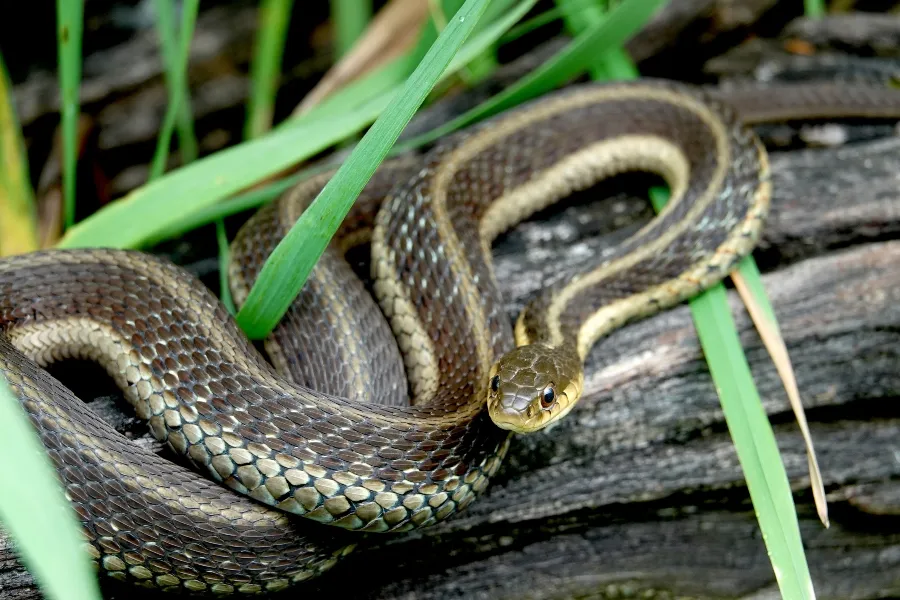
If you spot a snake on your property, the most important thing you can do is freeze, step back, and give it space. Maintain a safe distance of at least six to eight feet, and immediately usher children and pets inside to prevent any accidental confrontations. Most snakes are just passing through seeking food or shade, so if it is outdoors, simply leave it alone and ensure it has a clear escape route to slither away on its own.
Above all, never attempt to poke, catch, or kill the snake yourself, as forcing a confrontation is the leading cause of snakebites. If you suspect the snake is venomous, if it has entered your house or crawlspace, or if it simply refuses to leave your yard, keep an eye on its location from a safe distance and call a professional wildlife removal specialist right away to handle it safely.
Key Takeaways:
- A persistent snake presence is rarely a coincidence, as it almost always signals an underlying rodent problem that is actively attracting predators to your property.
- Quiet warning signs and subtle shifts in pet behavior can reveal a snake hiding in your home long before you ever see one.
- Common first-aid myths can actually worsen a snakebite injury, making immediate professional medical care and proper handling protocols essential.
- Securing structural gaps and modifying outdoor habitats serve as your strongest defense for keeping snakes away for good.
Our Guide to Dealing with Snakes on Your Property Safely
Snakes play an important role in the ecosystem by keeping rodent populations under control, but finding one on your property or inside your home can be alarming. While most snake species encountered around homes are non-venomous and generally harmless to humans, some pose serious safety risks.
Regardless of where you see a snake, the first and most critical step is identification. You must determine whether you are dealing with a harmless, non-venomous snake or a potentially dangerous venomous species. Always maintain a safe distance—never attempt to pick up, poke, or corner a snake to get a closer look. If you cannot safely identify the snake from several feet away, assume it could be venomous until proven otherwise.
Jump to a Section:
- What to Do About a Snake Problem
- Signs of a Snake in Your House or Property
- What Are the Risk Factors of Snakes?
- Snake Prevention Tips
- FAQs About Nuisance Snakes
What to Do About a Snake Problem
It makes a big difference what kind of snake problem you have. Is there a snake resting in your yard or under a deck? Or has one found its way into your living space, crawl space, or attic?
And, of course, what kind of snake is it? These are the types you’re most likely to find in your home if you live in Xceptional’s service area, which includes Virginia, Georgia, Louisiana, Florida, Maryland, and Illinois.
Common Venomous Snakes in Virginia, Georgia, Louisiana, Florida, Maryland, and Illinois
- Pit Vipers (Viperidae)
- Eastern Copperhead (Agkistrodon contortrix): Found across VA, GA, LA, FL, MD, IL. Recognized by hourglass/Hershey’s-kiss pattern.
- Northern / Western Cottonmouth (Water Moccasin) (Agkistrodon piscivorus / leucostoma): Common near water sources in GA, LA, FL, VA, and southern IL. Dark, heavy-bodied with white mouth lining.
- Timber Rattlesnake (Crotalus horridus): Found in wooded/mountainous terrain across VA, GA, LA, FL, MD, IL.
- Eastern Diamondback Rattlesnake (Crotalus adamanteus): Prominent across coastal GA, FL, and southern LA.
- Pygmy Rattlesnake / Dusky Pygmy (Sistrurus miliarius): Small, heavy-bodied rattlesnake found in GA, FL, LA.
- Eastern Massasauga Rattlesnake (Sistrurus catenatus): Rare, federally protected pit viper found in wetland areas of IL.
- Elapids (Elapidae)
- Eastern Coral Snake (Micrurus fulvius): Distinct red, yellow, and black bands (“red touching yellow kill a fellow”). Native to coastal GA, FL, and LA.
Common Non-Venomous Snakes in VA, GA, LA, FL, MD, and IL
- Eastern / Black Rat Snake (Pantherophis alleghaniensis / obsoletus): Excellent climber; common in attics, sheds, and walls across all six states.
- Garter Snake (Thamnophis sirtalis): Harmless, striped ground dweller common in gardens across VA, GA, LA, FL, MD, IL.
- Black Racer (Coluber constrictor): Fast-moving, slender black snake common in yards and brush.
- Eastern Kingsnake (Lampropeltis getula): Immune to pit viper venom; actively hunts copperheads and rattlesnakes.
- Water Snakes (Nerodia spp. – Northern, Banded, Broad-banded): Frequently confused with Cottonmouths, but completely non-venomous and harmless to humans.
- Corn Snake / Red Rat Snake (Pantherophis guttatus): Docile rodent predator common in GA, FL, LA, VA.
What Should You Do If You See Snakes on Your Property?
Most outdoor snake sightings are temporary. Snakes are cold-blooded creatures that move around seeking food, water, or warm spots to regulate their body temperature.
If you spot a snake in your yard or garden, follow these steps:
- Keep Your Distance: Stand back at least six to eight feet. Snakes will not attack humans unless they feel cornered, provoked, or stepped on.
- Keep Pets and Children Away: Secure dogs, cats, and small children indoors immediately to prevent accidental confrontations.
- Identify from a Distance: Take a photo from a safe distance with a zoomed lens if you need help identifying the species.
- Give It an Escape Route: If the snake is out in the open, leave it alone. In most cases, it will move along on its own once it realizes humans are nearby.
- Avoid Killing the Snake: Attempting to kill a snake significantly increases your risk of getting bitten. Furthermore, non-venomous snakes act as natural pest control against rodents and disease-carrying ticks.
- Call a Professional: If the snake is venomous, persistent, or causing distress, contact our wildlife removal team. We can safely capture and relocate the snake away from your property.
How Do You Handle a Snake Living Under Your Patio, Deck, or Shed?
The cool, dark, and sheltered spaces beneath decks, patios, sheds, and porches offer ideal habitats for snakes—and the rodents they hunt.
- Do Not Block the Exit Immediately: Sealing a snake inside or under a structure without removing it first can force it deeper into your home’s foundation or crawl space looking for another way out.
- Eliminate Prey Sources: Snakes stay where there is food. If snakes are living under your deck, you likely have a mouse or rat population nearby. Addressing rodent activity will often cause snakes to leave on their own.
- Modify the Habitat: Remove leaf litter, stacked firewood, and heavy brush surrounding the perimeter of the deck or shed to make the area less attractive.
- Use Physical Exclusion: Once you are sure the snake has vacated the area, install heavy-gauge hardware cloth or wire mesh around the base of the deck or shed. Dig a shallow trench, bury the bottom edge of the wire 6 inches deep, and securely fasten it to the structure frame.
- Call a Snake Removal Expert: If you suspect a venomous snake or a large infestation under a structure, let a professional snake control company safely handle the extraction and exclusion process.
How Do You Get Rid of a Snake Inside Your Home?
Finding a snake inside your living space is an urgent situation. Indoors, snakes can easily become trapped, disoriented, and defensive.
- Isolate the Room: Clear all people and pets out of the room where the snake was spotted. Close all interior doors leading into the room, and block the gap under the door with rolled-up towels to contain the snake.
- Maintain Visual Contact (if Safe): If you can do so safely from across the room, keep an eye on where the snake goes so you can point out its exact location to a technician.
- Do Not Try to Catch It: Trying to trap a snake with blankets, tongs, or bare hands is the leading cause of snakebites.
- Call Professional Wildlife Control Immediately: Contact a professional wildlife technician to safely capture and remove the snake from your home.
Signs of a Snake in Your House or Property
Snakes are quiet, low-profile creatures that rarely leave obvious messes behind. However, they do leave distinct evidence if they have settled on your property or inside your crawl spaces, walls, or attic.
Watch for these warning signs:
- Shed Snake Skins: As snakes grow, they shed their skin in one intact piece (or large papery fragments). Finding shed skins in gardens, near foundation gaps, in crawl spaces, or in attics is a definitive sign of snake activity.
- Slither Trails / Tracks: In dusty areas, loose dirt, or sand, look for distinct S-curved drag lines or smooth paths pushed through dust along wall bases.
- Snake Droppings: Snake waste resembles bird droppings in that it often contains a dark segment paired with a chalky white liquid or solid mass (uric acid). Upon closer inspection, snake feces often contain trace amounts of rodent fur or bones.
- Unusual Musky Odors: Certain snake species emit a heavy, unpleasant musky scent when frightened or when nesting in confined spaces like crawl spaces, cellars, or attics.
- Faint Rustling Noises: While snakes don’t make loud thumping sounds, you may hear light rustling, scraping, or slithering noises coming from inside walls, ceiling insulation, or under floorboards.
- Pet Agitation: Dogs and cats have sharp instincts and may bark, growl, or stare intently at floor vents, baseboards, or low gaps in cabinet bases.
- Sudden Drop in Rodent Activity: If you previously had an active mouse or rat problem that suddenly seems to have vanished without traps, a snake may have taken up residence to feed on them.
What Are the Risk Factors of Snakes?
While many snakes are non-venomous and beneficial to the environment, having them inside human living spaces presents real risks. It is important to evaluate both physical safety hazards and health risks.
The full range of snake risk factors includes:
- Bite Hazards: Venomous or non-venomous, any snake will bite if handled, stepped on, or cornered.
- Secondary Bacterial Infections: Bites from non-venomous snakes carry bacteria that can lead to localized infections, tissue swelling, and tetanus.
- Indication of Existing Pest Problems: A snake presence inside a structure almost always points to an underlying rodent infestation that lured the snake indoors.
- Psychological Stress: Discovering snakes inside a home can cause severe anxiety and fear for homeowners and family members.
- Pet Danger: Dogs and cats are naturally curious and often attack snakes, putting domestic pets at high risk for severe or fatal venomous bites.
Need a Wildlife Removal Estimate?
Snake Bite Health Risks: Venomous vs. Non-Venomous
Understanding the difference between venomous and non-venomous risks is vital for proper safety and emergency response.
Venomous Snake Bites
Venomous snakes possess specialized glands and hollow teeth (fangs) designed to inject toxic venom. A bite from a venomous snake is a medical emergency that requires immediate emergency care (calling 911 or visiting an emergency room). Effects can include severe localized pain, rapid tissue necrosis, systemic internal bleeding, neurological dysfunction, respiratory failure, or fatal complications if left untreated.
Non-Venomous Snake Bites
Non-venomous snakes do not possess venom glands, but they do have multiple rows of small, sharp teeth designed to hold prey. While their bites are not toxic, they can be painful and cause puncture wounds. Mouth flora in wild snakes carries bacteria—including Salmonella—which can lead to secondary skin infections or blood poisoning if the wound is not cleaned thoroughly.
Salmonellosis Exposure
Like many reptiles, snakes naturally carry Salmonella bacteria in their digestive tracts and on their skin. Coming into direct contact with a snake, its droppings, or items contaminated by snake waste can spread salmonellosis to humans, causing severe gastrointestinal illness, fever, and abdominal cramps.
What to Do If Someone Is Bitten by a Snake
If a human or pet is bitten by a snake, act immediately:
- Keep the Victim Calm: Staying calm slows heart rate and delays the spread of venom throughout the bloodstream.
- Call 911 Immediately: Treat every unknown bite as a potential medical emergency.
- Keep the Bite Location Below the Heart: Position the bitten limb so it stays lower than the heart.
- Remove Tight Items: Quickly remove rings, watches, or tight clothing around the bite area before swelling begins.
- DO NOT Attempt “DIY” First Aid: Never cut the wound, attempt to suck out venom, apply ice, pressure bandages, or use a tourniquet. These methods increase tissue damage and worsen outcomes.
- Note the Snake’s Appearance: Safely take a mental note (or safe photo) of the snake’s color and pattern to help medical professionals administer the proper antivenom quickly.
Snake Prevention Tips
Preventing snake problems comes down to two simple strategies: eliminating their food supply (rodents) and removing their access to shelter through wildlife exclusion. Here are some specific things you can do if you’re having recurring issues with snakes:
- Control Rodent Populations: Eliminate mice and rats by keeping outdoor food secured, sealing garbage cans, and scheduling routine rodent control. Without a food source, snakes will look elsewhere.
- Keep Vegetation Trimmed: Mow your lawn regularly and keep grass short. Avoid low-hanging ground cover, thick ivy, or overgrown brush where snakes can hide unnoticed.
- Clear Outdoor Clutter: Remove piles of stacked lumber, flat rocks, landscape timbers, fallen branches, and clutter from around your home’s foundation.
- Elevate Firewood: Store stacked firewood on metal racks elevated at least 12 inches off the ground and away from exterior walls.
- Check Door Seals and Screens: Install durable door sweeps on garage doors and exterior entries. Repair torn window screens and foundation vent covers.
- Eliminate Standing Water: Repair leaky outdoor spigots, clear clogged gutters, and drain birdbaths or plant saucers to eliminate water sources.
- Install Snake-Proof Fencing: For properties near heavily wooded areas, consider specialized snake mesh fencing installed flush with the ground and angled outward at a 30-degree angle to block entrance.
- Protect Weep Holes and Foundation Gaps: Inspect your home’s exterior, paying close attention to foundation walls, basement windows, crawl space vents, and weep holes on brick veneer homes. Install specialized, breathable weep hole covers or copper mesh to block snake entry without trapping interior moisture, and use silicone caulk or heavy hardware cloth to seal all other exterior gaps larger than 1/4 inch.
FAQs About Nuisance Snakes
Property owners frequently ask us about snakes, so we have gathered some of the most common questions and answers to provide assistance. Here is the essential information you should know, built upon our deep industry experience in handling snakes.
Please contact us ASAP if your particular issue is not covered here, or if you need expert assistance with snake removal! We remain fully prepared to help.
Is it legally permissible to kill or relocate native snake species found on private property?
State laws vary significantly depending on where your property is located across our service region:
| State | Non-Venomous Native Snakes | Venomous Snakes | Relocation Laws |
|---|---|---|---|
| Georgia | Strictly Illegal to Kill or Harm (O.C.G.A. § 27-1-28). Protected as non-game wildlife. | Allowed if posing an immediate physical danger. | Relocation off private property requires state permits. |
| Illinois | Protected under the IL Wildlife Code. Killing threatened species (e.g., Massasauga) is a criminal offense. | Protected on public land; lethal force allowed on private property only for immediate threats. | Relocation across property lines requires state permits. |
| Maryland | Protected. Illegal to kill, possess, or harass native snakes without state permits. | Protected unless posing an active threat to personal safety. | Must be handled by state-permitted wildlife control technicians. |
| Virginia | Protected. Illegal to kill snakes unless posing an immediate threat to health or property. | Allowed if actively threatening safety on private land. | Must be relocated within the same property or transferred by licensed experts. |
| Florida | Protected from unauthorized harvesting or cruelty. | Allowed to dispatch on private land if posing an immediate threat. | Relocation onto public lands or unpermitted private lands is prohibited. |
| Louisiana | Protected against inhumane harm or commercial take without permit. | Allowed to dispatch on private land if posing a safety risk. | Translocation off-site requires licensed wildlife handling. |
In all states, hiring a licensed wildlife control technician ensures compliant, safe, and legal extraction and relocation.
Do store-bought chemical repellents or mothballs effectively keep snakes away?
Short answer: No. Commercial chemical repellents, sulfur powders, and mothballs are largely ineffective against snakes. While snakes rely on their Jacobson’s organ to sense chemicals, field tests show they easily crawl over treated areas without hesitation. Furthermore, mothballs release hazardous vapors that are toxic to pets, children, and beneficial wildlife, making physical barriers and habitat cleanup far safer and more effective choices.
Are snakes able to climb brick walls, trees, or gutters to access attics and upper floors?
Yes, many snakes are remarkably skilled climbers. Species like rat snakes can scale rough vertical surfaces—such as brick, stucco, stone, and gutter downspouts—by using specialized belly scales to catch micro-ridges in the surface. Overhanging tree branches also act as natural highways to roofs, where snakes can slip into attics through unsealed soffit gaps, fascia boards, or roof vents.
Can snakes enter a home through plumbing vents, drains, or toilet bowls?
While rare, it does happen. Snakes seeking moisture or chasing rodents can crawl into open plumbing stack vents on the roof and travel down into the home’s piping, occasionally popping up in a toilet bowl. They can also enter ground-level floor drains via damaged sewer or septic lines. Capping roof vents with wire mesh screening eliminates this entryway completely.
How can you tell if a shed snake skin came from a venomous or non-venomous species?
Examine the underside of the tail section past the vent (anal plate). Across most of North America, venomous pit vipers (such as rattlesnakes, copperheads, and cottonmouths) feature a single, solid row of scales extending all the way down the underside of the tail. Non-venomous species typically display a split, double row of scales.
Important Exception: Coral snakes are highly venomous, but because they belong to the elapid family rather than pit vipers, they possess divided (double) tail scales—making their shed skins structurally identical to many harmless species. Because of exceptions like this, and the fact that shed skins stretch up to 30% larger than the actual snake, scale inspection is not a 100% foolproof safety check. If you find a shed skin on your property, treat the area with caution and contact a professional for positive identification.
How long can a snake survive trapped inside a house or wall cavity without food or water?
Thanks to their slow metabolism, a snake can go months without food, making water the critical factor. In a dry indoor environment or wall cavity, most snakes succumb to dehydration within two to six weeks. However, if they find a source of moisture—like condensation on AC lines, a dripping pipe, or a damp crawl space—they can comfortably survive indoors for several months.
Call Xceptional Wildlife Removal Professional Snake Removal & Exclusion in Virginia
Managing a snake issue on your property requires a balanced approach that addresses both the immediate visitor and the underlying attractants. Our expert wildlife removal technicians provide a safe, humane, and comprehensive solution to restore your peace of mind through a proven 3-step process:
- Thorough Property Inspection: We inspect your home, crawl space, deck, and perimeter to identify active snake entry points, lingering shed skins, and underlying pest or rodent infestations driving predator activity.
- Capture & Relocation: Using professional-grade handling equipment and strict safety protocols, our licensed technicians humanely capture and relocate venomous and non-venomous snakes far away from your residential area.
- Complete Wildlife Exclusion: We permanently seal foundation gaps, weep holes, soffits, and utility penetrations with heavy-duty mesh to guarantee long-term protection against recurring snake infestations.
Whether you need urgent emergency venomous snake removal or want to invest in proactive full-home snake-proofing, our team delivers reliable, long-lasting defense for your home and yard. Contact our local wildlife control specialists today to schedule your comprehensive snake inspection. Our snake removal services are available throughout our service area, which includes Virginia, Georgia, Louisiana, Florida, Maryland, and Illinois.


