
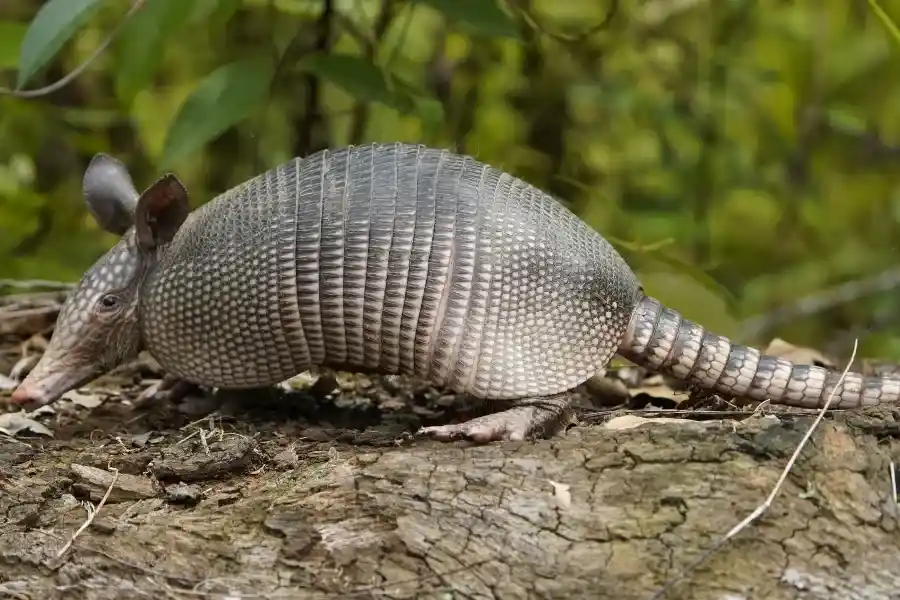
Always approach an armadillo situation with caution. While they are not aggressively hostile, they possess powerful claws designed for heavy digging and can carry serious transmissible diseases.
Key Takeaways:
- While armadillos may appear harmless, their persistent burrowing can secretly undermine concrete foundations, decks, and underground utility lines overnight.
- Directly confronting or handling an armadillo presents unexpected safety risks due to their startling vertical jumping reflex and potential to transmit serious zoonotic diseases.
- Standard pest baits and immediate burrow-blocking attempts frequently backfire, often causing structural damage or secondary pest problems inside the property.
- Successfully keeping armadillos away relies on specific soil and habitat modifications, underground physical barriers, and specialized professional exclusion techniques.
Our Guide to Dealing with Armadillos Safely
Armadillos are one of the most unique nuisance animals you can find, instantly recognizable by their bony, armor-like shell and relentless digging habits. Primarily active at night and during cooler twilight hours, these armored excavators can transform a pristine lawn into a miniature minefield overnight while hunting for grubs, earthworms, and underground insects.
Jump to a Section:
- What to Do About an Armadillo Problem
- Signs of an Armadillo on Your Property
- What Are the Risk Factors of Armadillos?
- Armadillo Prevention Tips
- Frequently Asked Questions
What to Do About an Armadillo Problem
It makes a big difference where your armadillo problem is concentrated. Are they simply passing through your yard to forage for food, or have they established deep burrows beneath your deck, patio, or home foundation? On rare occasions, a disoriented armadillo might even wander into an open garage or shed.
Not sure if it’s an armadillo or another digging pest? Make sure you know what you’re dealing with by visiting our Armadillo Identification page.
What Should You Do If You See Armadillos on Your Property?
Seeing an armadillo tearing up your lawn can be frustrating, but confronting the animal directly is not recommended. When startled, armadillos have a unique defense reflex: they can leap straight up into the air up to three or four feet, which can injure anyone standing too close.
If you notice armadillos frequenting your yard, take these initial steps:
- Keep Your Distance: Avoid getting close or attempting to corner the animal. Their sharp digging claws can inflict deep scratches if they panic.
- Reduce Soil Moisture: Armadillos dig for food in soft, damp dirt. Temporarily tone back lawn watering so the soil hardens, making grubs harder to reach.
- Eliminate Access to Food: Apply eco-friendly pest treatments to your lawn to diminish their main food supply. Earthworms, ants, and grubs are some of their most important foods.
- Use Motion-Activated Deterrents: Infrared-triggered sprinklers can startle armadillos and drive them off. However, like many wild animals, armadillos may eventually get used to these devices.
- Avoid Standard Baits: Unlike raccoons or opossums, armadillos rarely take standard food bait because they feed on live underground insects. DIY trapping often fails without professional directional fencing.
- Call a Professional: Contact our Xceptional Wildlife Removal wildlife removal team. We utilize specialized live-capture funnel traps and directional guide boards to safely remove armadillos without harm.
How Do You Handle an Armadillo Burrowing Under Your Patio, Deck, or Foundation?
An armadillo digging under structural slabs, decks, or porches poses a real threat to your property’s stability. Their burrows can extend 5 to 15 feet horizontally and several feet deep.
- Inspect the Burrow Carefully: Check near the entrance during early morning hours to see if fresh dirt has been kicked out. Never reach inside or crawl near the opening.
- Do Not Seal the Hole Immediately: Blocking an active burrow with the armadillo inside will cause the animal to dig new, destructive exit paths under your structure—or die inside, creating severe odor and pest issues.
- Check for Young: Armadillos typically give birth to genetically identical quadruplets in early spring. If young are present in the burrow, evicting the mother alone can lead to orphaned offspring decaying beneath your home.
- Use One-Way Exclusion Doors: If you are certain there are no offspring, install a heavy-gauge one-way door over the main entrance so the armadillo can exit to forage but cannot re-enter.
- Install an L-Shaped Wire Mesh Barrier: Once the burrow is verified empty, install an exclusion barrier around the perimeter of the deck or slab. Use heavy hardware cloth buried at least 12 to 18 inches down, with a 90-degree bend extending outward 6 to 12 inches to prevent them from digging under the barrier.
- Call a Wildlife Removal Expert: Professional services are the fastest, safest way to ensure an armadillo leaves – and expert wildlife exclusion ensures they stay gone for good.
How Do You Get Rid of an Armadillo Inside Your Home or Garage?
Armadillos have remarkably poor eyesight and hearing. Occasionally, one will wander through an open garage door, open shed, or basement door in search of shelter.
- Isolate the Animal: Close all interior doors leading into your main living quarters to keep the armadillo contained in the garage or outer room.
- Create an Exit Path: Open all exterior-facing doors wide and clear a direct path outside. Block off tight corners where the animal might hide.
- Do Not Corner It: Armadillos will wildly thrash, jump, or run straight into objects (or people) when trapped in enclosed spaces.
- Call Professional Wildlife Control: If the animal hides behind boxes or equipment, call armadillo removal professionals to safely extract it using protective equipment and specialized capture nets or cages.
Signs of an Armadillo on Your Property
Because armadillos are primarily nocturnal, you are far more likely to see the destruction they leave behind than the animal itself. Recognizing their distinct damage patterns helps confirm their presence early.
Look for these unmistakable armadillo warning signs:
- Shallow, Cone-Shaped Holes: Dozens of small, funnel-shaped holes (1 to 3 inches deep and 3 to 5 inches wide) scattered across your lawn and garden beds.
- Large Burrow Entrances: Deep, round burrow holes measuring 7 to 10 inches in diameter, typically located near tree roots, rock piles, concrete slabs, decks, or dense brush.
- Uprooted Plants and Flowers: Gardens, flower beds, and mulch piles systematically uprooted as the animal probes the topsoil for earthworms and insects.
- Cracked Concrete and Sagging Decks: Driveways, walkways, patio slabs, or retaining walls cracking or settling due to extensive underground burrowing beneath the foundations.
- Distinctive Paw Tracks: Four-toed front tracks and five-toed hind tracks accompanied by sharp claw marks and often a thin drag line in soft mud left by their tail.
- Damaged Underground Lines: Punctured or torn low-voltage garden lighting wires, drip irrigation lines, or flexible drain pipes buried near topsoil.
- Grunting Sounds at Night: Soft snuffling, grunting, or rustling noises in brush near the perimeter of your yard late at night.
What Are the Risk Factors of Armadillos?
While armadillos do not hunt humans or domestic pets, their presence introduces significant property damage and health hazards. Ignoring an armadillo problem can quickly turn a minor lawn issue into a costly home repair bill.
The main risks associated with armadillos include:
- Structural Undermining: Deep burrowing strips supporting soil from beneath concrete patios, driveways, house foundations, and retaining walls, leading to expensive structural collapse or cracking.
- Tripping Hazards: Dozens of deep, hidden cone holes throughout a yard pose severe ankle-sprain hazards for adults, children, and running pets.
- Landscape Destruction: A single armadillo can root up an entire manicured lawn in a matter of days, killing turfgrass and destroying costly garden plants.
- Underground Utility Damage: Their sharp claws easily slice through shallow underground sprinkler lines, fiber-optic lines, and exterior electrical wiring.
- Pet Confrontations: Curious dogs that corner an armadillo risk getting gouged by sharp claws, while the armadillo’s sudden high-jumping reflex can startle and injure pets.
- Parasite Transport: Armadillos bring fleas, ticks, mites, and tapeworms into your yard, which can easily transition to domestic pets.
What Diseases Can Armadillos Transmit?
Armadillos carry several serious zoonotic pathogens that can affect humans and domestic animals through direct handling, contact with contaminated soil, or parasite vectors.
- Hansen’s Disease (Leprosy): Armadillos are one of the only wild mammals known to harbor Mycobacterium leprae, the bacterium that causes leprosy. Transmission to humans can occur through direct handling of the animal or contact with soil contaminated by their bodily fluids and feces.
- Rabies: Though significantly less common in armadillos than in raccoons or skunks, armadillos are mammals and can contract and transmit the rabies virus through bites or saliva contact with broken skin.
- Salmonellosis: Armadillos carry Salmonella bacteria in their intestinal tracts, contaminating topsoil and lawn areas through their feces.
- Chagas Disease: Armadillos serve as natural hosts for the parasite Trypanosoma cruzi, which causes Chagas disease. Triatomine bugs (kissing bugs) feed on burrowing armadillos and can subsequently bite humans or pets.
- Leptospirosis: A bacterial infection spread through armadillo urine that contaminates damp lawn soil and standing water, posing severe liver and kidney risks to dogs and humans.
- Sporotrichosis: A fungal disease that can thrive in armadillo burrows and infect humans through skin abrasions during yard work.
Do Armadillos Attack or Bite People?
Armadillos do not actively attack humans or pets. They have very small, peg-like molars deep in their mouths and lack sharp front biting teeth, making biting an extremely rare defense mechanism for them.
However, armadillos are far from harmless. Their primary defensive weapons are their heavy, razor-sharp claws used for digging through hard soil and roots. If an armadillo is picked up, cornered, or stepped on, it will kick and thrash violently, easily slicing through skin and clothes. Additionally, their sudden 3-to-4-foot vertical jump when startled can hit a person or pet directly in the face or chest with their heavy armor plate.
Armadillo Prevention Tips
Long-term armadillo control requires making your property unappealing and inaccessible to burrowing wildlife. Removing food sources and blocking subterranean entry points are your best defenses.
Need a Wildlife Removal Estimate?
Take these proactive measures to protect your lawn and home:
- Eliminate Underground Food Sources: Treat your turfgrass to reduce pests, especially grubs (beetle larvae) and earthworms—two of the armadillo’s primary food sources.
- Install In-Ground L-Fencing: Surround decks, sheds, and low porches with heavy hardware cloth. Dig a trench 12 to 18 inches deep, place the wire mesh inside, and angle the bottom 6 to 12 inches outward away from the structure before backfilling.
- Clear Dense Cover: Remove low-hanging brush, tall weeds, rock piles, and leaf litter. Armadillos prefer setting up burrows in covered, shaded zones.
- Modify Lawn Watering Schedules: Avoid overwatering your lawn, especially in the evening. Moist soil draws earthworms and grubs closer to the surface, signaling an easy meal for foraging armadillos.
- Secure Perimeter Fencing: Ensure yard fencing sits flush against the ground. For persistent problems, bury the bottom edge of fence wire 6 to 12 inches underground.
- Fill Vacant Burrows Immediately: Fill old, inactive burrows tightly with coarse gravel or heavy rocks before topping with dirt to deter new armadillos from reusing the tunnel system.
- Set Up Motion Sprinklers: Place motion-activated water sprinklers near flower beds or along fence lines to surprise and deter visiting armadillos late at night.
FAQs About Nuisance Armadillos
To help homeowners and businesses resolve issues with armadillos, our Xceptional Wildlife Removal team has put together some common questions and answers based on our extensive regional experience.
Please call or email us if you’re looking for professional help or you can’t find the answer to your question here.
Is it legal in Virginia to trap and relocate an armadillo on your property by yourself?
Regulations vary by state across our service areas, but in most cases, off-site DIY relocation is illegal without specific wildlife permits.
- Florida & Georgia: Off-site relocation onto public lands or unapproved private property is strictly illegal to prevent habitat disruption and disease spread (such as Hansen’s disease/leprosy). Trapped animals must either be released on the same continuous property or humanely euthanized by a licensed professional.
- Illinois: Armadillos are protected under state wildlife regulations; trapping requires a Class A Nuisance Wildlife Control permit or an IDNR permit, and relocation off-property is prohibited.
- Virginia, Maryland, & Louisiana: While trapping on private property for nuisance mitigation is allowed, live relocation across county boundaries or onto public property is restricted or prohibited.
Because of these complex regulations and disease exposure risks, contacting Xceptional Wildlife Removal for professional trapping and legal exclusion is strongly advised.
Does homeowners insurance typically cover structural foundation or property damage caused by armadillo burrowing?
Short answer: no. Standard homeowners insurance policies generally include an “animal, vermin, or rodent exclusion” clause. Insurance companies view damage caused by digging wildlife, insects, or pests as a routine maintenance issue rather than a sudden, accidental event.
Because of this, cosmetic lawn damage, ruined landscaping, and structural settling or foundation cracking caused by armadillo burrows must almost always be paid for out of pocket. The only rare exception occurs if an armadillo punctures a main plumbing or utility line that subsequently causes sudden, covered water damage inside the home—and even then, the insurer typically covers the water damage cleanup, not the repair of the burrow or animal exclusion.
Can armadillos climb trees, retaining walls, or chain-link fences to enter a fenced yard?
Yes, surprisingly well. While armadillos look clumsy and heavily armored, they are remarkably agile when motivated by food or shelter.
Using their long, powerful digging claws for leverage, armadillos can scramble over low chain-link fences, wooden privacy fences, and stone retaining walls up to three or four feet high. They cannot climb smooth, vertical surfaces like trees or slick vinyl, but any surface with texture, gaps, or footholds gives them enough traction to pull themselves over. If a fence can’t be climbed, their second instinct is to push through loose gaps or simply dig underneath it.
How far from their main burrow do armadillos typically travel each night in search of food?
An armadillo typically ranges within a home territory of 2 to 10 acres, traveling anywhere from half a mile to two miles in a single night while foraging.
Because armadillos hunt by constantly weaving back and forth with their noses to the ground, sniffing out insects in a serpentine pattern, a single animal can easily cross multiple residential boundaries in one evening. They frequently maintain up to 5 to 10 different burrows scattered across their feeding range, moving from one shelter to another depending on where they end up at daybreak.
What specific vaccinations or health precautions should I discuss with my vet if my pet comes into contact with an armadillo or its burrow?
If your pet corners an armadillo or digs around an active burrow, bring up these specific health precautions with your veterinarian:
- Leptospirosis Vaccination: Leptospirosis is a dangerous bacterial infection spread through soil and standing water contaminated by wild animal urine. Discuss whether your pet needs this core/lifestyle vaccine or a booster.
- Rabies Booster: While rabies is relatively rare in armadillos compared to raccoons or skunks, any physical encounter warrants verifying that your pet’s rabies vaccination is up to date.
- External and Internal Parasite Control: Armadillos are heavy carriers of fleas, ticks, mites, and tapeworms. Ensure your pet is on active flea/tick preventative and ask about a dewormer if they ingested dirt or debris near a burrow.
- Wound Cleaning and Fungal Screening: Armadillos carry bacterial pathogens and fungal spores (such as Sporothrix) in their burrows and on their sharp claws. Have your vet inspect any scratches, cuts, or eye irritations immediately.
Do armadillos hibernate during the winter, or are they a threat to my lawn year-round?
Armadillos do not hibernate. Because they lack thick fur and have virtually no body fat insulation, they must remain active to feed year-round.
However, their seasonal behavior shifts significantly based on regional temperatures:
- Spring and Summer (All States): They are almost strictly nocturnal, coming out during cool night hours to dig in soft, irrigated soil.
- Late Fall and Winter (VA, MD, IL, and Northern GA/LA): To avoid freezing temperatures, they shift their activity schedule to mid-day and late afternoon when the sun warms the soil enough for insects to move near the surface. In warmer climates like Florida, nighttime foraging continues year-round.
While lawn damage may slow down during freezing snaps, armadillos remain a constant threat whenever the ground is soft enough to dig.
What is the proper procedure for safely removing and disposing of a dead armadillo found on my property?
Because armadillos carry transmissible bacteria (including Mycobacterium leprae and Salmonella), handling a carcass requires strict safety precautions:
- Gear Up with PPE: Put on heavy-duty rubber or leather gloves and a protective face mask to avoid breathing in airborne particulates or soil dust.
- Never Touch Bare-Handed: Use a long-handled shovel to pick up the animal. Avoid using your hands even while wearing gloves if possible.
- Double-Bag the Carcass: Place the animal inside a heavy-duty contractor trash bag, seal it tightly, and then place that bag inside a second sealed trash bag.
- Dispose Properly: Check local city regulations in your area. In most residential areas, double-bagged carcasses can go directly into your exterior household waste bin, buried at least 2 to 3 feet deep well away from water sources, or picked up by municipal animal control.
- Sanitize Equipment: Thoroughly spray down the shovel, surrounding grass, or concrete with a solution of 1 part household bleach to 9 parts water, and wash your hands thoroughly with soap and warm water immediately after.
Professional Armadillo Removal Made Simple
When armadillos start tearing up your yard, surface-level fixes won’t solve the problem. Because armadillos hunt for live insects, effective management requires a tailored combination of wildlife control techniques.
Here is how our team restores your property:
- Thorough Inspection: We assess your property to locate active burrows, target damage zones, and evaluate structural risks.
- Humane Removal: We utilize specialized capture methods to safely remove active armadillos from your yard in compliance with all local state wildlife laws.
- Professional Exclusion: We secure vulnerable areas using subterranean barriers and fill old burrows to ensure long-term protection.
Don’t let armadillos ruin your landscaping or compromise your property. Call Xceptional Wildlife Removal today to schedule an appointment with the wildlife control experts that provide lasting protection.


