
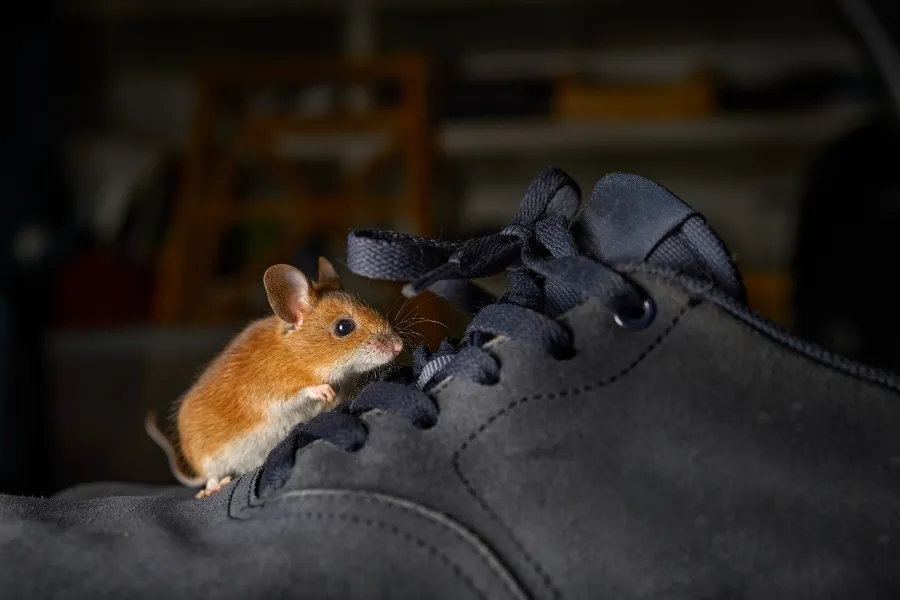
To get a wild animal out of your garage, the most effective response is to reduce panic and allow the intruder’s natural instincts to take over. Rather than trapping or confronting the animal, your primary goal is to make the garage feel calm, unthreatening, and easy for the animal to leave.
By eliminating startling noises, dimming harsh interior lights, and providing a bright, unobstructed opening to the outside, you’re providing a simple pathway back to safety. A trapped animal is driven by fear, so giving it space, quiet, and a stress-free environment will often encourage it to vacate peacefully on its own terms.
Key Takeaways:
- The easiest way to remove wildlife from your garage is to give the animal a clear exit.
- A wildlife intruder’s species determines both its behavior and its potential safety risks, ranging from minimal threats to high rabies risks like bats, raccoons, skunks, and foxes across our service states.
- Certain critical situations—such as nesting mothers, signs of disease, state-protected species (like bats), or trapped structural pests—require immediate professional wildlife intervention rather than DIY methods due to state wildlife laws.
- Cleaning up after an animal infestation demands strict protective gear and specific disinfection techniques to avoid inhaling hazardous pathogens like Histoplasmosis, Hantavirus, or Raccoon Roundworm.
- Long-term prevention relies on closing entry gaps, removing food sources, and securing storage to permanently keep wildlife out of your space.
A garage is essentially an open invitation to local wildlife: it offers shelter from the elements, zero foot traffic for long stretches, and often comes with a steady supply of pet food, birdseed, or edible trash.
Whether you’re dealing with a raccoon picking through a garbage bin, a disoriented bat in the rafters, or a squirrel panicking in a corner, an unexpected animal demands a prompt and methodical response. Here’s what we recommend.
Jump to a Section:
- Immediate Action: What to Do Right After You Find Wildlife in Your Garage
- Regional Wildlife Laws & State Comparison Chart
- Identifying Your Intruder and Species-Specific Protocol
- What to Do If the Animal Doesn’t Immediately Leave
- When to Skip DIY and Call Professional Wildlife Control
- How to Clean Up Wildlife Droppings in a Garage Safely
- Prevention and Exclusion Checklist
- FAQs About Garage Wildlife
Immediate Action: What to Do Right After You Find Wildlife in Your Garage
When you discover an animal in your garage, your priority is to prevent it from entering your living space and encourage a safe, self-directed exit.
- Secure the Home Interior: Immediately lock all doors connecting the garage to your house. Place rolled towels or draft stoppers at the base of interior doors to block small pests, snakes, or bats from slipping underneath.
- Clear Pets and Children: Move family members and pets indoors and keep them away from the garage. An excited dog or curious child will panic the animal, drastically increasing the risk of bites or defensive attacks.
- Create a Clear Exit Path: Fully open the main overhead garage door. If you can do so safely without getting close to the animal, move large objects out of the direct path to the driveway.
- Leverage Natural Light and Quiet: Turn off all interior garage lights, shut off loud appliances, and step away. Animals naturally move toward light and quiet. During the day, the daylight from the open door will guide them out. For nocturnal animals discovered during the day, keep the path open and allow them to exit undisturbed as dusk approaches.
- Observe from a Safe Distance: Watch the garage exit from a window inside your home or from a safe distance down the driveway. Allow 1 to 2 hours of complete quiet for the animal to leave.
Regional Wildlife Laws & State Comparison Chart
Wildlife management regulations vary significantly across Virginia, Georgia, Louisiana, Florida, Maryland, and Illinois. In all six states, trapping, translocating, or releasing Rabies Vector Species (RVS) away from the property is strictly regulated or prohibited by state wildlife agencies to prevent disease spread. Furthermore, bat species across all six states are protected under state and federal law, prohibiting lethal control or exclusion during maternity seasons (typically mid-April/May through mid-August).
| State | Primary Rabies Vector Species (RVS) | Notable Wildlife Hazards | State Wildlife Agency Regulations to Note |
|---|---|---|---|
| Virginia | Raccoons, Skunks, Foxes, Bats, Coyotes | Copperheads, Timber Rattlesnakes, Cottonmouths | Illegal to relocate wildlife off the property without a permit. RVS cannot be trapped and released elsewhere. |
| Georgia | Raccoons, Foxes, Skunks, Bats, Coyotes | Copperheads, Cottonmouths, Rattlesnakes, Coral Snakes | Relocation of trapped wildlife requires state authorization. Bats are protected; non-lethal exclusion required outside maternity season. |
| Louisiana | Raccoons, Skunks, Foxes, Bats, Coyotes, Nutria | Cottonmouths, Copperheads, Rattlesnakes, Coral Snakes | Nutria and invasive species are regulated. Trapping/relocating wild mammals is restricted by LA Dept. of Wildlife & Fisheries. |
| Florida | Raccoons, Bats, Foxes, Skunks, Coyotes | Eastern Diamondback, Cottonmouth, Coral Snake, Pygmy Rattlesnake | Florida Fish and Wildlife (FWC) strictly regulates bat exclusions (moratorium April 15–Aug 15). Relocation of wildlife off-site is restricted. |
| Maryland | Raccoons, Skunks, Foxes, Bats, Coyotes | Copperheads, Timber Rattlesnakes | MD DNR mandates that trapped RVS must be released on-site or euthanized humanely by licensed professionals; relocation prohibited. |
| Illinois | Raccoons, Skunks, Bats, Foxes, Coyotes | Copperheads, Cottonmouths, Timber & Massasauga Rattlesnakes | IDNR rules require permits for trapping/relocating fur-bearing mammals. RVS relocation is strictly limited due to rabies control. |
Identifying Your Intruder and Species-Specific Protocol
Wildlife species react to confinement in markedly different ways. Accurately identifying your intruder is critical—it dictates both the risks involved and the specific strategy required to encourage a safe, unassisted exit.
| Animal Type | Common Signs and Behavior | Recommended Strategy | Risk Level and Vector Status |
|---|---|---|---|
| Raccoon | Active at night, vocal (growling/chattering), bold, may forage in trash or climb rafters. | Open the main door at dusk, turn off interior lights, and clear the area entirely. | High (Primary rabies vector across VA, GA, LA, FL, MD, IL; severe bite/latrine risk). |
| Squirrel / Chipmunk | Frantic chattering, rapid erratic running along walls/rafters, active during the day. | Open the main door during daylight, close internal house doors, and leave the area quiet. | Low (Rarely carry rabies, but sharp teeth cause severe bites and gnaw damage). |
| Opossum | Slow-moving, may bare teeth, hiss, or play dead (catatonic state) when threatened. | Open the door and give them space. They are non-aggressive and will leave quietly. | Very Low (Low body temperature makes rabies extremely rare). |
| Bat | Hanging from rafters, flying in tight circles, unable to launch easily from the floor. | Open exterior doors/windows at dusk, close house interior doors, and wait. Never handle directly. | High (Primary rabies vector; protected species across all service states requiring legal exclusion). |
| Snake | Coiled in cool corners, under storage bins, or near lawn equipment. | Maintain a safe distance. Do not attempt to move it; contact a professional for identification. | Varies (Venomous species like Copperheads, Cottonmouths, and Rattlesnakes present severe hazards). |
| Skunk / Fox | Burrowing along foundations, strong musk odor (skunk), nocturnal foraging. | Provide an undisturbed exit path at night. Keep distance to avoid spraying or bites. | High (Designated Rabies Vector Species in VA, GA, LA, FL, MD, and IL). |
| Stray Dog / Cat | Hiding under vehicles, cornered, defensive barking or hissing. | Do not approach. Contact neighbors or municipal Animal Control rather than wildlife removal. | Moderate to High (Bite risk with unknown vaccination status). |
What to Do If the Animal Doesn’t Immediately Leave Your Garage
If an open door doesn’t motivate the animal to leave after a few hours, it’s time to consider additional measures. Provided you aren’t dealing with a sick, injured, or nursing animal—scenarios that demand an immediate call to a wildlife removal specialist—you can encourage a stubborn intruder to vacate using passive eviction.
By systematically disrupting its comfort with light, sound, and scent, you turn a quiet refuge into an inhospitable environment, prompting the animal to relocate on its own terms.
Strategic Deterrents: Making the Environment Uncomfortable
Wild animals seek out garages because they are dark, quiet, and sheltered. Reversing these three conditions triggers their natural flight instinct.
- Visual Disruption (Bright Light): Position bright, multi-directional LED work lights or heavy-duty floodlights pointed toward the animal’s hiding spot (e.g., behind shelving, under workbench cabinets, or up in the rafters). Continuous illumination eliminates dark sanctuary zones. Avoid high-heat halogen bulbs near flammable garage storage, fuel cans, or dry cardboard.
- Auditory Disruption (Human Presence): Place a portable Bluetooth speaker or radio near the entry/hiding zone. Play talk radio, news programs, or vocal podcasts continuously at moderate-to-high volume. Wild animals perceive human voices as an immediate predatory threat—far more effectively than music alone.
- Olfactory Disruption (Scent Deterrents): Place rags soaked in cider vinegar or commercial predator scents (such as fox or coyote urine) near—but never blocking—the animal’s escape path.
Safety Note: Never use concentrated ammonia or mothballs. Ammonia fumes can trap or asphyxiate small animals in confined spaces, and mothballs contain toxic chemicals that pose health risks to human household members and pets.
How to Safely Leave Your Garage Door Open for Wildlife Overnight
Leaving a main overhead garage door wide open overnight invites secondary wildlife intruders, stray domestic animals, and home security risks. We recommend the Gap and Wedge method:
- Prop the Main Door: Open the overhead garage door approximately 6 to 12 inches—just high enough for raccoons, opossums, or squirrels to squeeze under, but too narrow for human entry or larger animals.
- Block and Lock: Place a heavy concrete cinder block or solid wooden wedge under the center of the door to prevent it from closing or being forced upward.
- Disengage the Automatic Opener: Pull the emergency manual release cord (the red handle) to disconnect the door from the electric trolley. This prevents automated timers or accidental remote activations from crushing the exit gap or trapping the animal.
- Maintain an Obstacle-Free Path: Ensure no lawn equipment, vehicle tires, or storage totes block the bottom opening on either side.
How to Confirm the Animal Has Left
Before closing the garage door completely, you must verify that the animal has actually left without trapping it inside or sealing new structural entry points.
- The Flour Trap Test: Dust a thin, smooth layer of flour, cornstarch, or loose soil along the concrete floor directly inside the 6-to-12-inch door gap. Inspect the powder at dawn. Outward-facing paw prints confirm the animal exited.
- The Paper Barrier Test: Loosely stuff crumpled newspaper or painter’s tape into suspected structural gaps, soffit entry points, or side doors. If the paper remains undisturbed for 24 to 48 hours, the space is clear.
Need a Wildlife Removal Estimate?
What If the Animal Still Won’t Leave?
Allow 24 to 48 hours for passive eviction methods to work. If track testing shows no movement, or if you observe defensive behavior, vocalizing young, or structural chewing, discontinue DIY efforts.
At this stage, certified pest exclusion specialists will install one-way exclusion doors — specialized funnel devices that allow wildlife to exit the garage structure safely to forage but prevent re-entry.
Professionals can also inspect high-elevation entry points along the roof line to prevent long-term zoonotic contamination risks, such as Histoplasmosis (common in fungal-rich soil and bat/bird droppings across the Mississippi and Ohio River basins), aerosolized Hantavirus from rodent urine, or exposure to Baylisascaris procyonis (raccoon roundworm) eggs in hidden latrines.
When to Skip DIY and Call Professional Wildlife Control
Contact a professional wildlife control technician immediately if you encounter:
- Nesting Mothers and Babies: If an animal has established a nest in your insulation, storage boxes, or rafters, driving the adult away will leave offspring behind. Orphaned young will perish inside, creating severe odor and secondary pest problems.
- Signs of Disease or Abnormal Behavior: Animals exhibiting neurological distress—such as unprovoked aggression, wandering in circles, extreme confusion, or an unusual lack of fear around humans—may carry rabies or distemper. Do not approach them.
- Animals Trapped in Structural Cavities: Creatures stuck inside wall cavities, drop ceilings, chimney flues, or deep inside a vehicle engine bay cannot escape on their own and require specialized extraction.
- High-Risk Species & Protected Wildlife: Bats, venomous snakes, and designated Rabies Vector Species require specialized personal protective equipment (PPE), trained handling, and strict compliance with state wildlife laws in Virginia, Georgia, Louisiana, Florida, Maryland, and Illinois.
How to Clean Up Wildlife Droppings in a Garage Safely
Once you have verified that the animal is gone, proper cleanup is essential to protect your family from pathogens and assess any hidden structural damage.
- Wear Proper Gear: Put on disposable nitrile gloves, eye protection, and an N95 respirator mask (or HEPA respirator) before cleaning. Never sweep or vacuum dry droppings, as this can kick up dangerous airborne spores (Histoplasma capsulatum) and viruses.
- Disinfect Thoroughly: Saturate droppings, urine trails, and nesting areas with a commercial disinfectant or a 10% bleach-water solution. Allow it to sit for 10 to 15 minutes before wiping it up with disposable paper towels.
- Dispose of Waste Safely: Seal all paper towels, droppings, and contaminated cardboard into heavy-duty plastic bags, double-bag them, and place them in an outdoor waste bin.
- Inspect for Hidden Damage: Check electrical wiring, air ducts, drywall, and vehicle engine components for gnaw marks. Chewed electrical wiring is a serious fire hazard that requires immediate attention from a certified electrician.
Prevention and Exclusion Checklist
Keep wild animals out of your garage for good by completing this routine maintenance checklist:
- Upgrade the Bottom Door Seal: Install a heavy-duty, reinforced rubber weather seal along the bottom of your garage door to close gaps larger than ¼”.
- Seal Structural Gaps: Use heavy galvanized steel hardware cloth (wire mesh) and silicone sealant to cover vents, soffits, fascia gaps, and utility openings.
- Trim Overhanging Trees: Cut back tree branches at least 6 to 8 feet away from your garage roof to block easy access points for climbing pests like squirrels and raccoons.
- Secure Food and Attractants: Store birdseed, pet food, and grass seed in airtight metal containers rather than plastic bags or open bins.
- Lock Up Trash: Store municipal garbage and recycling cans inside durable enclosures or use heavy-duty locking lids.
- Elevate Storage: Keep cardboard boxes off the floor and transition to sealed plastic totes to eliminate dark, covered nesting sites.
FAQs About Garage Wildlife
What should I do if an animal gets into my vehicle’s engine bay or cabin while parked in the garage?
Pop the hood or open the vehicle doors, leave the garage door wide open, and step away to give the animal a clear escape path. Do not start the engine, as moving belts and heat can injure or kill the animal and cause severe electrical or mechanical damage to your vehicle.
If the animal refuses to leave or has chewed through wiring, contact a professional wildlife technician before driving.
What are the specific signs that an animal in the garage is carrying rabies versus just being panicked or confused?
Panicked animals typically make frantic attempts to hide or escape, make loud defensive sounds (hissing, chattering), and react directly to your movements. Rabid or diseased animals often exhibit neurological symptoms: unprovoked aggression, wandering aimlessly in circles, severe disorientation, paralysis or weakness in the hind legs, excessive salivation/foaming, or an unusual lack of fear toward humans.
If you observe any of these symptoms, keep all doors locked and call animal control or wildlife services immediately.
What should I do if a bird flies into my garage and cannot find its way back out through the open door?
Birds naturally fly upward toward light when panicked, often trapping themselves near the ceiling or rafters. Turn off all garage lights and close any small side doors or windows, leaving only the main overhead garage door fully open to daylight.
If the bird remains stuck near the ceiling, hang a dark sheet or tarp over high windows or skylights so the open door is the only light source, then leave the garage quiet for 30 to 60 minutes.
What precautions should I take if I have electric vehicle charging cables or solar battery setups stored in the garage?
Rodents, squirrels, and raccoons frequently chew on rubber and plastic insulation, which can expose high-voltage wiring and create severe fire or shock hazards. Inspect all EV charging cables, wall boxes, and battery wiring for gnaw marks before plugging in or operating your equipment.
Protect exposed cables by running them through heavy-duty rigid conduit, storing portable chargers in sealed hard-shell plastic cases, and unplugging nonessential equipment until the animal is removed.
Need Professional Wildlife Removal? Call Us Now
When DIY methods fail or safety risks require immediate expert intervention, Xceptional Wildlife Removal provides fast, certified wildlife removal in Virginia, Georgia, Louisiana, Florida, Maryland, and Illinois – as well as expert structural exclusion.
Our technicians will safely remove the animal and can also install custom one-way eviction doors, seal roofline access points, and help with ongoing prevention. From nesting raccoons to bat colonies, we deliver permanent, humane solutions tailored to your home. Call us today to schedule a free garage wildlife inspection.


