
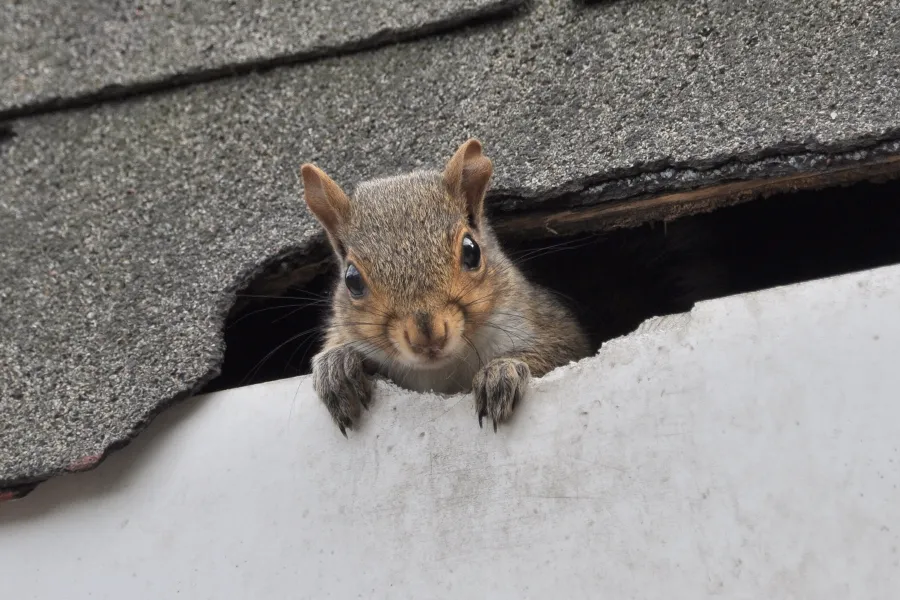
You likely have an animal in your house if you notice unexplained scratching or thumping noises (especially at night or early morning), dark pellet-like droppings, chewed wood or wires, torn insulation, unusual pet behavior directed at walls or ceilings, or persistent foul odors near vents and crawl spaces.
Key Takeaways:
- Early Warning Signs: Unexplained noises, physical damage, and unusual odors indicate that a wild animal may have taken up residence in your home.
- Timing Matters: Paying close attention to the timing of noises and specific types of property damage helps reveal which animal species has moved inside.
- Pet Detection: Household pets often detect hidden wildlife inside walls or ceilings long before human residents notice any signs.
- Structural Vulnerabilities: Wild intruders can squeeze through surprisingly small exterior gaps, making rooflines, vents, and foundation openings primary access points.
- State Legal Compliance: Resolving an infestation permanently requires professional humane removal, structural repairs, biohazard cleanup, and strict adherence to state-specific wildlife protection and maternity season laws across Virginia, Georgia, Louisiana, Florida, Maryland, and Illinois.
Discovering that a wild animal has taken up residence inside your home is alarming. Beyond the noise and foul odors, wildlife intruders pose serious health risks and can cause thousands of dollars in structural damage to insulation, wiring, and roofing in Virginia.
Jump to a Section:
- The Big 5 Signs You Have Wildlife Indoors
- Species Identification Cheat Sheet
- Regional State Comparison: Wildlife Threats & Legal Regulations
- Common Entry Points and Risk Areas
- Signs of an Animal Infestation FAQs
- What to Do Next: Inspection and Exclusion
The Big 5 Signs You Have Wildlife Indoors
When wild animals move into an attic, wall void, chimney, or crawl space, they leave distinct physical and sensory signatures. Identifying these warning signs early prevents severe structural damage and health hazards.
1. Auditory Cues (What You Hear)
Sound is often the very first indicator of an animal infestation. The timing and nature of the noise provide immediate clues about the species involved:
- Nighttime Scratching, Scurrying, Or Squeaking: Indicates nocturnal pests such as mice, rats, bats, flying squirrels (common in VA, GA, LA, FL, MD, IL), or roof rats (primarily FL, GA, LA).
- Heavy Thumping, Loud Vocalizations, Or Chittering At Night: Typical of larger nocturnal mammals, primarily raccoons, opossums, or armadillos (in lower crawl spaces across GA, LA, FL).
- Daytime Scampering And Gnawing: Points directly to diurnal animals, most commonly eastern gray squirrels, fox squirrels, or chipmunks.
- Rustling, Flapping, Or High-pitched Chirping: Often heard near exhaust vents, chimneys, or eaves, signaling birds, bats, or invasive lizards like iguanas (in southern FL).
2. Visual Damage and Nesting Material (What You See)
Wildlife constantly alters their environment to build nests and forge entry paths:
- Chewed Surfaces: Tooth marks on wood fascia, drywall, PVC pipes, or electrical wiring indicate gnawing rodents or squirrels.
- Torn Insulation: Disturbed, flattened, or missing fiberglass insulation in the attic suggests animals are tunneling or clearing space for offspring.
- Nesting Debris: Piles of shredded paper, cardboard, dried grass, leaves, straw, or twigs gathered in corners, soffits, or vents.
- Grease Marks (Rub Lines): Dark, oily smudges along baseboards, rooflines, wall studs, or entry holes caused by oils and dirt in animal fur (common with roof rats and bats).
3. Waste and Odors (What You Smell and Find)
Accumulated waste causes noticeable odors and structural damage over time:
- Foul Urine Smells: Ammonia-like odors concentrated near ceiling corners, attic access panels, or crawl space vents.
- Decay Odors: A heavy, lingering smell of decomposition indicating an animal has died inside a wall void, duct, or crawl space.
- Visible Droppings: Pellets, scat, or guano left along travel routes, near food sources, or scattered across attic floors.
4. Exterior Entry Points
Inspect the exterior perimeter and roofline for signs of forced entry:
- Bent or torn soffit vents, gable screens, or aluminum ridge caps
- Dislodged roof shingles, tile openings, or chewed fascia boards
- Uncapped chimneys or damaged crawl space vent covers and skirting
- Piles of droppings or nesting debris sticking out of dryer and bathroom exhaust vents
5. Pet Reactions
Household pets usually detect wildlife long before humans do. Pay attention if your dog or cat:
- Stares intently at a specific spot on a wall, ceiling, or baseboard
- Barks, growls, or paces nervously near attic access hatches, cabinets, or crawl space access points
- Whines or scratches frantically at baseboards or sealed vents
Species Identification Cheat Sheet
Use this reference table to match the specific signs you are seeing and hearing to the most common indoor wildlife intruders across our service areas.
| Animal | Primary Sounds | Physical Damage and Signs | Droppings and Waste | Common Indoor Locations |
|---|---|---|---|---|
| Raccoons | Heavy thumping, loud chittering, growls, or crying juvenile noises at night. | Ripped roof shingles, torn soffits, destroyed insulation, large entry holes (4+ inches). | Large scat (2–3 inches long) similar to small dog feces, often in centralized latrines in attics. | Attics, chimneys, large ceiling voids. |
| Tree Squirrels (Gray, Fox) | Rapid daytime scampering, running across ceilings, rhythmic gnawing. | Chewed fascia wood, gnawed entry holes (2–3 inches), chewed electrical wiring, stored nuts. | Oval dark brown pellets (1/2 inch) scattered along travel paths. | Attics, eaves, fascia boards, wall voids. |
| Flying Squirrels | High-pitched chirping, nocturnal scurrying, gliding/thumping overhead at night. | Small chewed entry gaps high up near rooflines, soiled attic insulation, centralized nesting areas. | Small, rounded dark pellets clustered near communal latrine sites. | Upper attic sections, soffits, wall voids. |
| Roof Rats / Norway Rats | High-pitched squeaking, light scratching, and running inside walls at night. | Chewed wiring, PVC pipe damage, shredded insulation, dark grease rub marks along wall edges. | Small dark pellets (1/2 inch pointed for roof rats; up to 3/4 inch blunt for Norway rats). | Wall voids, attics, drop ceilings, basements (Norway rats), high rooflines (Roof rats). |
| Bats (Evening, Big/Little Brown, Mexican Free-tailed) | High-pitched clicking, squeaking, or flapping inside walls near dusk and dawn. | Dark oily stains around small gaps (1/2 inch) in siding, rooflines, or gable vents. | Guano piles accumulated directly beneath roosts; dark, dry, brittle pellets with metallic insect wings. Safety Note: Never disturb dry guano without protective equipment. |
Attics, gable vents, wall voids, chimneys. |
| Armadillos (GA, LA, FL) | Scrape marks against foundation, faint rustling in low crawl spaces or under porches. | Deep burrows dug underneath foundation footings, crawl space skirting, or slabs. | Small, soil-covered, clay-like pellets deposited in burrows or yard turf. | Crawl spaces, under decks/porches, foundation voids. |
| Snakes | Faint rustling/sliding sounds in insulation or wall voids; generally silent. | Shed skin husks in rafters or insulation; sudden drop in rodent activity; drag marks in dust. | Dark tubular droppings capped with white, chalky uric acid, containing fur or bone fragments. | Basements, crawl spaces, wall voids, subfloors, appliance housings. |
| Chimney Swifts & Birds | Early morning chirping, wing fluttering, scratching in ductwork or flues. | Straw, twigs, grass jammed into vents/flues. Swifts construct saliva-bound nests directly on flue tiles. | White, liquid-like splatters (uric acid) beneath entry points, on roofs, or in ducting. | Exhaust vents, chimneys, porch roofs, soffit voids. |
Regional State Comparison: Wildlife Threats & Legal Regulations
Because local laws and wildlife species vary across our service territory, Xceptional Wildlife Removal follows strict state and federal guidelines to ensure safe, legal, and humane wildlife control.
Need a Wildlife Removal Estimate?
| State | Primary Nuisance Species | Key Legal Regulations & Blackout Dates | Notable Regional Considerations |
|---|---|---|---|
| Virginia | Bats (Big/Little Brown), Gray/Flying Squirrels, Raccoons, Opossums | Bat Maternity Season: Illegal to exclude or trap bats from April 15 to September 1 without special DNR authorization. | Heavy bat activity in rural/suburban attics; high prevalence of rabies-vector species (raccoons, skunks, foxes) requiring strict handling protocol. |
| Georgia | Roof Rats, Bats (Evening/Free-tailed), Raccoons, Armadillos | Bat Maternity Season: Exclusion blackout period is April 1 to August 15. Armadillos and raccoons require specific trapping permits or licensed operator handling. | Roof rats thrive year-round in coastal/southern regions; armadillos pose significant structural burrowing risks under crawl space foundations. |
| Louisiana | Roof Rats, Nutria, Bats, Raccoons, Armadillos, Venomous Snakes | Bat Maternity Season: Exclusion blackout period runs April 15 to August 15. Nutria are classified as invasive agricultural/property pests. | High humidity accelerates biohazard odor and mold risks from wildlife waste; elevated crawl space structures attract nutria, armadillos, and reptiles. |
| Florida | Roof Rats, Bats (Velvety/Free-tailed), Iguanas, Armadillos, Raccoons | Bat Maternity Season: Strict exclusion ban from April 15 to August 15. Iguanas are classified as invasive and cannot be relocated or released alive. | Severe roof rat pressure year-round; tile roofs present unique high-elevation entry points; heavy invasive species regulations enforced by FWC. |
| Maryland | Bats, Flying Squirrels, Raccoons, Norway Rats, Opossums | Bat Maternity Season: Exclusion blackout period is March 1 to September 1. Special DNR permits required for protected species. | High density of historic and multi-story homes with chimney and roofline vulnerabilities; strict DNR wildlife relocation restrictions. |
| Illinois | Norway Rats, Tree Squirrels, Bats (Little Brown/Big Brown), Raccoons | Bat Maternity Season: Exclusion blackout period is May 15 to August 15. IDNR permit required for trapping/relocating protected furbearers. | Extreme cold winters drive heavy rodent and raccoon activity into attics and subfloors; Norway rats dominate urban/suburban lower-level structures. |
Common Entry Points and Risk Areas
Animals need only a remarkably small opening to gain access to your living spaces or attic.
- Roofline and Soffits: Squirrels and raccoons easily chew through rotted fascia boards or push through plastic soffit vents.
- Exhaust and HVAC Vents: Unscreened dryer, kitchen, and bathroom exhaust vents offer birds, rodents, and squirrels direct access into ductwork.
- Gable and Ridge Vents: Bats and mice squeeze through gaps as small as a quarter-inch in aluminum or wooden attic vents.
- Foundation and Crawl Space Doors: Gaps under crawl space access doors, cracked foundation vents, or open utility line penetrations invite mice, rats, opossums, and armadillos into lower levels.
- Chimneys: Uncapped chimney flues act as natural traps or nesting sites for raccoons, squirrels, and migratory birds like Chimney Swifts.
Legal Note on Chimney Swifts & Migratory Birds
Chimney Swifts are federally protected under the Migratory Bird Treaty Act (MBTA). It is a federal offense to remove, disturb, or destroy an active Chimney Swift nest or its eggs/chicks during nesting season (typically spring through late summer). If Swifts take up residence in your flue, entry points can only be capped or modified after the birds have naturally migrated in the autumn.
Signs of an Animal Infestation FAQs
Does homeowners insurance cover structural damage, rewiring, or biohazard cleanup caused by wildlife infestations?
In almost all cases, no. Standard homeowners insurance policies explicitly exclude damage caused by rodents, vermin, birds, and wild animals. Insurance carriers view animal infestations as preventable maintenance issues rather than sudden, accidental losses, meaning animal removal, entry sealing, insulation replacement, and biohazard cleanup are out-of-pocket expenses.
- Standard Exclusions: Policy provisions exclude repairs for chewed electrical wiring, torn insulation, soiled drywall, and urine or feces damage remediation from mice, rats, raccoons, squirrels, bats, or opossums.
- The Only Major Exception (Secondary Perils): Insurance generally only steps in if hidden animal damage directly triggers a separate, covered peril. For example, if a rodent chews through wiring and causes an electrical fire, or chews a PEX pipe causing a sudden major water burst, the resulting fire or water damage is typically covered—though the cost to fix the chewed wire/pipe or remove the pest remains excluded.
What are the specific human health risks and diseases associated with indoor wildlife waste?
Accumulated wildlife droppings, urine, and nesting debris introduce several serious pathogens into living spaces and ventilation systems across our service territory:
- Histoplasmosis: A respiratory infection caused by inhaling airborne spores of the fungus Histoplasma capsulatum, which thrives in dried bat guano and bird droppings. Disturbing dry waste in attics or ductwork can disperse spores throughout the home.
- Hantavirus Pulmonary Syndrome (HPS): A severe, potentially fatal respiratory disease transmitted by inhaling dust contaminated with urine or droppings from infected wild mice and rats (such as deer mice or cotton rats).
- Leptospirosis: A bacterial infection spread through soil or water contaminated with infected animal urine (commonly from rats, raccoons, or opossums). It can cause kidney or liver damage if it enters through skin abrasions or mucous membranes.
- Baylisascaris (Raccoon Roundworm): Raccoon feces often contain roundworm eggs that remain infectious in attic insulation or soil for years. Ingestion of microscopic eggs can cause severe neurological or organ damage.
- Salmonellosis: Bacteria carried by rodents and birds that contaminate surfaces, food prep areas, and air ducts, causing severe gastrointestinal illness.
Which specific materials are best for permanently sealing entry points?
Wild animals like squirrels and rats have powerful jaws capable of chewing through soft metals, plastics, and standard building supplies. Permanent exclusion requires industrial-grade materials:
- Heavy-Gauge Steel Mesh / Hardware Cloth: ¼” or ½” galvanized steel mesh is the gold standard for capping soffit vents, ridge gaps, and crawl space openings. Animals cannot chew through galvanized steel wire.
- Metal Flashing and Sheet Metal: Heavy aluminum or galvanized steel flashing should be installed over chewed wood fascia, roof valleys, and roofline corners to prevent re-entry.
- Copper Mesh / Stainless Steel Mesh: Tightly packed copper or stainless steel mesh is ideal for filling narrow gaps around exterior pipe penetrations, weep holes, and utility lines before sealing.
- Polyurethane Foam + Metal (Not Spray Foam Alone): Standard expanding spray foam offers zero protection against rodent teeth—they will chew right through it. Use expanding foam only after packing the gap with steel mesh, or use specialized rodent-block foams impregnated with coarse fibers.
- Silicone and Elastomeric Sealants: High-grade exterior silicone or polyurethane sealants should be applied over metal patchwork to weather-seal gaps and block scent trails that attract other animals.
If you’re not sure how to best use these materials, consider giving Xceptional Wildlife Removal a call. We’ll create a custom rodent and wildlife exclusion plan tailored to your home, using the best, most durable products.
What seasonal factors drive animals indoors during specific times of the year in our regions?
Wildlife activity follows predictable seasonal cycles, driving animals into homes primarily for shelter, breeding, or extreme weather survival:
- Autumn (Preparation for Cold Weather): In states with freezing winters like Illinois, Maryland, and Virginia, dropping temperatures force mice, rats, squirrels, and raccoons to actively seek warm overwintering sites in attics and crawl spaces.
- Late Winter to Early Spring (Birthing and Nesting Season): Pregnant females across all service regions seek warm, dark, predator-free locations to build nests and raise offspring. Raccoons, squirrels, and opossums frequently breach roofs, chimneys, and soffits during this window to give birth.
- Spring to Summer (Bat Maternity Blackout Seasons): Female bats form maternity colonies in warm, elevated spaces like attics and gable vents to give birth to pups. Federal guidelines and state law in VA, GA, LA, FL, MD, and IL strictly regulate or prohibit bat exclusion during these months until pups are mature enough to fly.
- Midsummer Heat Waves & Humidity: In southern zones like Florida, Georgia, and Louisiana, extreme heat and heavy precipitation drive roof rats, snakes, and armadillos inside seeking cool crawl spaces, subfloors, and shaded areas near sweating AC condensate lines.
What to Do Next: Inspection and Exclusion
Attempting DIY removal with off-the-shelf traps or sealants often backfires. Sealing an entry hole without verifying the attic is clear can trap animals inside—causing them to chew through interior drywall out of desperation, or die inside wall voids, resulting in severe rot, biohazards, and persistent odors.
That’s why the best solution is working with an experienced wildlife control specialist from Xceptional Wildlife Removal. With our team, you’ll get a complete solution from a certified pro who follows our proven three-step process:
- Comprehensive Inspection: Locating all active entry points across your roofline, foundation, and vents, identifying the exact species, checking for dependent offspring, and assessing structural damage.
- Humane Removal and Exclusion: Utilizing professional-grade one-way exclusion doors, heavy-gauge steel mesh, custom vent covers, and specialized chimney caps so animals can leave safely but cannot return—all in compliance with local state wildlife regulations.
- Sanitation and Repair: Removing contaminated insulation, neutralizing hazardous waste pathogens with biohazard treatments, and restoring damaged structural components.
If you suspect an animal has made its way inside your house in Virginia, Georgia, Louisiana, Florida, Maryland, or Illinois, contact Xceptional Wildlife Removal today for a thorough perimeter-to-attic inspection before the damage escalates.


