
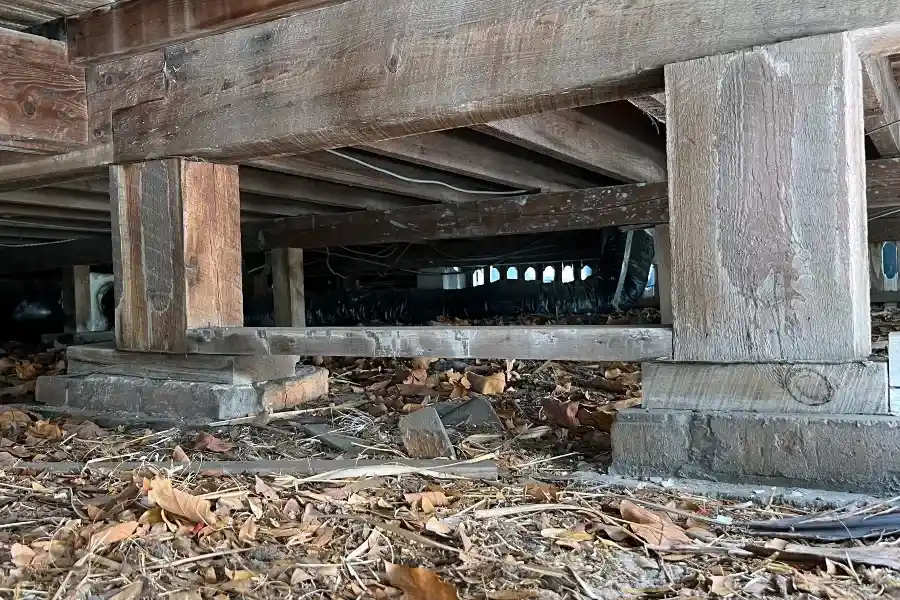
Hearing sudden scratching, heavy thumping, or strange noises coming from beneath your porch can be alarming, but acting quickly prevents costly structural damage and health risks.
To safely and permanently reclaim your outdoor space, follow this simple four-step process:
- Identify the species to tailor your strategy to their specific behaviors and active hours.
- Locate entry points using the paper or flour test before sealing any openings.
- Evict humanely using noise, lights, or a one-way exclusion door (in accordance with state wildlife regulations).
- Prevent future entry by installing an L-footer wire mesh underground barrier depth-adjusted for your local winter frost line.
Key Takeaways:
- Uninvited wildlife beneath a porch can cause structural damage and pose serious health risks to household members and pets.
- Eviction tactics must be carefully matched to the specific animal’s active hours and natural behavioral patterns.
- Property owners must exercise extra caution during spring and summer nesting seasons (which can start as early as late winter in Southern states like Florida and Louisiana) to avoid accidentally trapping dependent young.
- Effective long-term prevention demands specialized underground barrier installations using heavy-duty materials, extending below the local frost line (12 inches in southern regions up to 36–48 inches in Illinois and Maryland).
- Complex situations involving protected species (such as armadillos, gopher tortoises, or protected bats/birds), high-risk disease vectors (rabies, histoplasmosis, or roundworm), or unreachable spaces require licensed professional intervention by Xceptional Wildlife Removal.
Hearing sudden scratching, heavy thumping, or strange noises coming from under your porch can be alarming. Beyond the loss of peace and quiet, an uninvited wild animal can cause structural damage, create foul odors, and pose health risks to your family and pets.
Step #1 - Identify the Species
Before taking action, you must figure out who has moved in. Different species require different eviction strategies, active times, and safety precautions depending on whether you live in northern or southern regions of our service area.
| Animal | Common Signs and Noises | Odor and Waste | Active Hours | Primary Regional Range |
| Raccoon | Heavy thumping, loud chattering, growling, or high-pitched squeaks (babies). Large entry holes. | Piles of tubular droppings; strong, musty scent. | Night (Nocturnal) | Statewide (All States) |
| Skunk | Mild faint scratching, shallow cone-shaped holes dug in the surrounding lawn. | Distinct, overpowering musky odor. | Night (Nocturnal) | Statewide (All States; striped skunk common, spotted skunk regional) |
| Opossum | Hissing or clicking noises when startled; generally quiet. Slow movement. | Foul-smelling, variable waste; damp, messy nests. | Night (Nocturnal) | Statewide (All States) |
| Nine-Banded Armadillo | Deep, rounded burrows under porch edges; rapid scraping/clattering noises; uprooted turf. | Mild odor; loose dirt packed at entryways. | Night / Dusk | FL, GA, LA, and expanding into southern IL, VA, MD |
| Groundhog (Woodchuck) | Large mounds of excavated dirt right at the porch edge. Chewed wood. | Minimal odor near entry; waste buried in burrows. | Day (Diurnal) | VA, MD, IL, GA (North/Piedmont), absent/rare in South FL/Coastal LA |
| Rats / Mice | Fast, light scurrying, squeaking, tiny gnaw marks around baseboards. | Small dark pellets; stale, musty odor. | Night (Nocturnal) | Statewide (All States; Roof rats prevalent in FL, GA, LA; Norway rats prevalent in IL, MD, VA) |
| Stray Cat / Stray Kittens | Meowing, fighting noises, visible food scraps brought under the deck. | Strong ammonia urine smell. | Any time | Statewide (All States) |
Step #2 - Locate Entry Points
Never attempt to corner, handle, or seal a wild animal inside its burrow without absolute proof it has vacated the space. Doing so risks severe property damage, inhumane trapping, and aggressive confrontations with protective mothers.
Instead, follow this field-tested, humane wildlife removal sequence from Xceptional Wildlife Removal to safely evict nocturnal pests, skunks, armadillos, and raccoons from beneath your deck.
The Paper or Flour Test
Before sealing any opening, you must confirm whether the entry point is actively being used and verify the animal is outside when you work.
- Locate all potential entry gaps around the perimeter of the deck or porch.
- Cover the main entry hole loosely with wadded newspaper or smooth a layer of flour across the ground in front of the opening.
- Check the spot after 24 hours.
- If the paper is pushed away or tracks are visible in the flour, the entry point is active. If undisturbed for 48–72 hours, the cavity may be empty.
Step #3 - Evict Using Humane Deterrents or a One-Way Exclusion Door
Gentle Eviction Tactics (Humane Harassment)
Wild animals choose space under your porch because it is dark, quiet, and safe. By making the space bright, noisy, and smelly, you can encourage them to leave on their own.
- Light: Place a bright, weather-resistant LED light or battery-powered strobe light near the entry point pointing under the porch.
- Sound: Place a portable radio under the porch tuned to a talk radio or news station. Leave it running 24/7 at a moderate volume.
- Scent: Place rags soaked in cider vinegar or commercial predator urine near (not inside) the entry point. Avoid using ammonia; while often recommended as a DIY deterrent, its harsh fumes can cause severe respiratory damage—especially to trapped young—and its chemical profile can unpredictably trigger defensive or territorial responses rather than driving the animal away.
- Timing: Apply these tactics right before the animal’s active hours (e.g., dusk for raccoons, skunks, and armadillos; morning for groundhogs).
Install a One-Way Exclusion Door
If mild harassment does not work, a one-way exclusion door is the most effective DIY tool.
- Block off all secondary gaps around the porch using temporary wooden panels or wire mesh.
- Mount a commercial one-way exclusion door directly over the primary entry point.
- Ensure the door swings outward only, allowing the animal to push its way out to forage but preventing re-entry.
- Leave the door in place for several days while monitoring for signs of activity.
Be Sure to Do a Post-Eviction Inspection
Before permanently sealing the perimeter, inspect the space beneath your porch for hidden structural and system hazards. Wild animals—particularly raccoons, rats, and squirrels—frequently chew through flexible HVAC ductwork, compromise subfloor insulation, and gnaw on low-voltage or main electrical wiring, creating immediate fire and energy-efficiency risks.
Shine a high-lumen flashlight along joists, foundation openings, and utility runs to verify no wiring is stripped or ductwork punctured; if you detect compromised utilities or chewed electrical lines in your home, contact a licensed electrician, HVAC technician, or Xceptional Wildlife Removal to repair the damage before installing your final exclusion barrier.
Step #4 - Long-Term Prevention through Exclusion
Once you are 100% sure the space under your porch is empty, you must install permanent exclusion barriers. Standard wood lattices or cheap fencing will not stop persistent diggers like groundhogs, armadillos, and skunks.
Underground Trenching (The "L-Footer" Technique)
Animals like groundhogs, armadillos, and skunks are expert diggers. Simply placing wire down to the dirt line is not enough.
- Dig a trench surrounding the open perimeter of your porch.
- In warm climates (FL, GA, LA): Dig at least 12 inches deep and 12 inches wide.
- In colder climates subject to deep freezing (IL, MD, VA): Dig 12 to 24 inches deep (or down to the local frost line depth) to ensure frost heave does not dislodge the wire and pests cannot dig under freezing soils.
- Attach heavy-duty, galvanized wire mesh (such as 1/2-inch hardware cloth) to the base of the porch structure.
- Extend the mesh down into the trench, bending the bottom 12 inches outward at a 90-degree angle to form an “L” shape facing away from the porch.
- Backfill the trench with dirt and gravel. When an animal tries to dig down at the base of the porch, the horizontal mesh stops them in their tracks.
Need a Wildlife Removal Estimate?
Recommended Materials
- Use 16-gauge or 19-gauge galvanized 1/2-inch hardware cloth, steel flashing, heavy-duty concrete screws, and staples.
- Avoid plastic mesh, chicken wire (animals chew through or bend it easily), and expandable spray foam (which pests chew through instantly).
Environmental Modifiers
- Keep trash cans secured with tight-fitting lids or lock them in a garage.
- Clean up fallen birdseed from feeders daily.
- Never leave pet food or water bowls outside overnight.
- Trim back low-hanging shrubbery and brush near the base of the deck to eliminate natural cover.
Important Safety Risks and Regulatory Considerations
Successful wildlife control under a porch demands equal attention to structural exclusion, state statutory compliance, and biosafety. Beyond the physical work of driving an animal out, you are dealing with state wildlife laws and health hazards that carry real liabilities.
CRITICAL WARNING: Watch for Baby Animals
Nesting seasons vary significantly across our service area:
- Southern States (FL, GA, LA): Nesting season starts as early as late January through July due to milder winters.
- Mid-Atlantic & Midwest States (VA, MD, IL): Nesting season typically spans March through July.
If you evict an adult female and seal the deck while her offspring are under the porch, the babies will starve. This creates severe humaneness concerns, extreme odors, and will motivate the mother to tear through your porch or home siding to reach her young. Always inspect for nests before sealing!
Potential Health Hazards
- Animal-Borne Diseases: Raccoons carry roundworm (Baylisascaris procyonis), which can contaminate soil through feces. Skunks, raccoons, and foxes are primary rabies vectors across VA, MD, GA, FL, LA, and IL. In southern states (FL, GA, LA), armadillos can harbor Mycobacterium leprae (leprosy). In Midwestern and Mid-Atlantic regions, accumulated bird/bat droppings can harbor Histoplasma capsulatum (histoplasmosis).
- Parasites: Fleas, ticks (such as Blacklegged and Lone Star ticks common in our service territories), and mites living on wildlife often migrate into homes or onto domestic pets once the host animal leaves.
State-by-State Wildlife Legal & Frost Line Reference
Relocation and trapping laws, rabies vector designations, and construction frost lines vary across our service regions. Consult the table below before attempting any trapping or structural exclusion in Fredericksburg, VA:
| State | Primary Wildlife Regulatory Agency | Trapping & Relocation Laws | Key Protected / Restricted Species | Concrete Footer / Exclusion Trench Depth |
| Virginia | Virginia Department of Wildlife Resources (DWR) | Illegal to trap and relocate wildlife off-property without a permit. Animals trapped must be released on-site or euthanized. | Rabies vectors (raccoons, skunks, foxes); non-game protected species. | 18 – 24 inches |
| Georgia | Georgia Department of Natural Resources (DNR) | Trapping requires compliance with DNR guidelines. Relocation off-property is restricted/prohibited for rabies vectors. | Rabies vectors; gopher tortoises (do not disturb burrows); protected bats. | 12 inches (North GA up to 18″) |
| Louisiana | Louisiana Department of Wildlife and Fisheries (LDWF) | Nuisance wildlife permits required for off-site release. Unlicensed transport of rabies vectors prohibited. | Protected reptiles/birds; black bear territory restrictions where applicable. | 12 inches |
| Florida | Florida Fish and Wildlife Conservation Commission (FWC) | Live trapping allowed, but captured rabies vectors must be released on the same contiguous property or euthanized. Relocation across county boundaries prohibited. | Gopher tortoises (strictly protected; mandatory buffer zones), burrowing owls, Florida bonneted bat. | 12 inches |
| Maryland | Maryland Department of Natural Resources (DNR) | Trapping regulated strictly; rabies vector species cannot be relocated off-site. On-site release or professional euthanasia required. | Rabies vectors (raccoons, skunks, foxes); protected migratory species. | 24 – 30 inches |
| Illinois | Illinois Department of Natural Resources (IDNR) | Requires an IDNR Nuisance Wildlife Control Permit to trap/relocate off-site. Unlawful to release trapped wildlife on public lands without permission. | Protected furbearers; threatened/endangered bats and reptiles. | 36 – 48 inches |
FAQs About Wildlife Under Your Porch
What specific homeowners insurance policies or claims cover the structural damage caused by animals under a porch?
Most standard homeowners insurance policies (HO-3) exclude damage caused by wild animals, rodents, or pests under the “vermin and bird/pest” exclusion clause.
However, insurance may cover sudden and accidental secondary damage resulting from the infestation—such as a chewed wire that causes a fire or a burst pipe damaged by burrowing. If the structural damage to your porch is severe, review your policy’s specific exclusions regarding wild animals or contact your local insurance agent to see if secondary damage repairs qualify for a claim.
How can a homeowner safely clean, sanitize, and neutralize soil or surfaces contaminated by feces and urine under the porch after an eviction?
Before entering the area, equip yourself with an N95 respirator mask, rubber gloves, and eye protection to avoid inhaling airborne pathogens like raccoon roundworm spores, histoplasmosis spores, or hantavirus. Do not sweep or vacuum dry droppings, as this aerosolizes bacteria and fungal spores.
Instead, heavily spray contaminated surfaces and soil with an EPA-registered disinfectant or a 1:9 bleach-to-water solution. Let it sit for 15 minutes, remove solid waste using disposable tools, seal it in double plastic bags for trash disposal, and spray the ground a final time to neutralize lingering odors and bacteria.
What steps should be taken if an animal dies beneath the porch during the eviction process or before entry points are sealed?
If an animal dies under your porch, address it immediately to prevent foul odors and secondary pest infestations (such as flies or maggots). Put on heavy rubber gloves and a respirator mask, locate the carcass, and place it into a heavy-duty, double-bagged trash bag.
Check your local municipal or county animal control guidelines for proper disposal, as some jurisdictions in VA, GA, LA, FL, MD, and IL require deep burial, incineration, or designated drop-offs rather than standard household trash pickup. Once removed, thoroughly saturate the entire area with an enzyme-based biohazard cleaner to eliminate organic rot and scent marks.
How do you distinguish between animal noises occurring under the porch versus inside a crawlspace, foundation wall, or home interior?
Listen closely to the location, timing, and nature of the sound. Noises coming from under a porch generally sound grounded, hollow, and localized to the outdoor perimeter, often accompanied by dirt-scratching or outdoor debris movement.
If the sound resonates loudly inside your living space, echoes upward through floorboards, or travels vertically along wall studs, the animal has likely breached your crawlspace, band joists, or wall cavities. Additionally, check interior vents and crawlspace access doors for gnaw marks, droppings, or daylight leaks to verify whether the pest has moved indoors.
Can structural modifications, such as converting an open porch into a closed deck with solid concrete footers, prevent recurring issues permanently?
Yes, replacing open lattice or timber skirting with a continuous concrete footer, brick-and-mortar knee wall, or stone veneer creates a permanent, impenetrable barrier against burrowing wildlife.
A solid masonry foundation eliminates the need for wire mesh trenching and removes the dark, hollow cavity that attracts nesting animals in the first place. When building or modifying a porch structure], ensure concrete footers extend below your local frost line (12 inches in FL/LA/GA up to 36–48 inches in IL and parts of MD/VA) to prevent both frost-heave settling issues and ambitious diggers like groundhogs and armadillos from tunneling underneath.
When to Call a Professional Wildlife Removal Expert at Xceptional Wildlife
When a DIY eviction poses safety or legal risks, hiring a licensed wildlife control professional from Xceptional Wildlife] is the safest path forward. Consider bringing in a certified pest removal specialist under the following circumstances:
- You suspect there is a mother with a litter of baby animals under the structure.
- You are dealing with aggressive animals or high-risk rabies vectors (raccoons, skunks, or foxes). (Note: Seeing nocturnal animals during the day in the spring or summer is not necessarily a sign of rabies, as mothers forage around the clock to feed young; however, daytime activity paired with confusion, staggering, or unprovoked aggression strongly signals illness and requires immediate professional intervention.)
- You encounter regulated or state-protected species such as Gopher Tortoises (FL/GA) or protected bat species.
- The area under your deck is inaccessible or structurally compromised.
- You want a permanent, guaranteed exclusion system installed with a warranty].
Reclaiming your outdoor living space requires more than a temporary fix — it demands an engineered solution. Our licensed wildlife control specialists at Xceptional Wildlife] combine certified, humane trapping methods with rodent and wildlife exclusion to permanently secure your home.
Don’t wait for uninvited wildlife to cause costly damage. Contact Xceptional Wildlife] today to schedule a professional wildlife inspection in Fredericksburg, VA and keep your property pest-free for good!


