
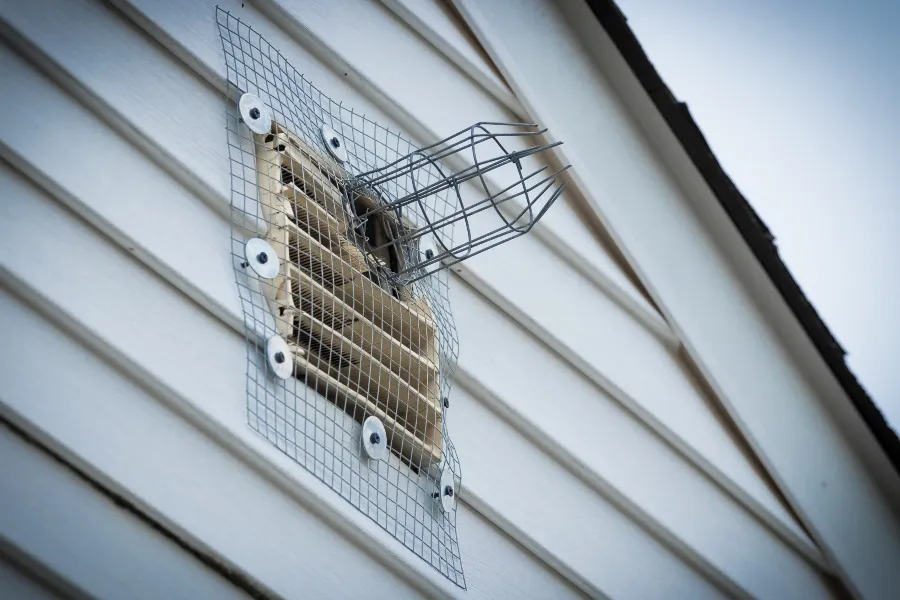
Wildlife management for homes and businesses is the practice of humanely evicting urban animals and permanently sealing structural entry points to protect property and health. Unlike short-term trapping or extermination, it focuses on long-term animal proofing to keep nuisance wildlife in their natural habitat and out of human structures.
By permanently blocking how animals enter a building, exclusion solves the root cause of an infestation, keeping wildlife in their natural habitat and out of your home.
Key Takeaways:
- Standard trapping alone creates a recurring, costly cycle because unsealed entry gaps invite new wildlife into empty nesting spaces.
- Effective exclusion requires a comprehensive approach that pairs species-specific barrier materials with humane eviction techniques and hazard remediation.
- Wildlife management services include a thorough inspection, humane eviction and removal if animals are present, a comprehensive exclusion strategy, and remediation and sanitization.
- State regulations in regions like Virginia, Georgia, Louisiana, Florida, Maryland, and Illinois mandate specific handling rules and seasonal restrictions for protected species and rabies vector species (RVS).
- Attempting do-it-yourself exclusion carries serious risks, including accidentally trapping animals inside walls or exposing occupants to dangerous biohazards.
It’s not the animal’s fault when it wanders into a home or business. It’s most likely following its instincts, searching for food or warm shelter. Yet when urban wildlife in Virginia — such as raccoons, squirrels, bats, opossums, or rodents (and regional pests like armadillos or nutria) — invade human structures, they bring noise, foul odors, biohazards, and significant structural damage.
It’s a dangerous situation for you, your family, and the wildlife. Professional animal control for homes and businesses offers a full-cycle solution that mitigates risks for all parties. Learn more about our specialized Virginia service area coverage to see how Xceptional Wildlife Removal protects local properties.
Jump to a Section:
- How Does Wildlife Pest Management Work?
- Exclusion vs. Traditional Trapping – Which Is More Important?
- Is Repair, Remediation, and Sanitization Always Necessary After an Animal Infestation?
- Can You DIY Wildlife Management Or Should You Hire Professional Services?
- What to Look for When Choosing Residential or Commercial Wildlife Management Services
How Does Wildlife Pest Management Work?
Wildlife removal and management services provided by Xceptional Wildlife Removal are customized to the specific requirements of each property, as eviction, prevention, and remediation needs differ significantly depending on the animal.
To ensure you get the best possible long-term protection, professionals typically follow a proven four-step methodology.
Step #1: Comprehensive Exterior and Interior Inspection
A technician conducts a top-to-bottom assessment of the structure, inspecting rooflines, soffits, fascia, ridge vents, foundation walls, crawlspaces, and utility penetrations to map out every active and potential entry gap.
Step #2: Humane Eviction and Removal
Before any structure is sealed completely, animals currently residing inside must be humanely evicted. Professionals install one-way exclusion doors or valves on active entry points, allowing animals to exit to forage while preventing re-entry. If you suspect you have a raccoon in the attic or need targeted squirrel control, exploring dedicated species-specific removal guides can help you understand their unique behavioral patterns.
Note About Mating Seasons and Regional Blackout Windows: During spring and summer birthing windows (maternity season), technicians must verify no flightless or mobile-dependent offspring are present before installing one-way devices.
In addition, state wildlife agencies enforce strict seasonal Bat Exclusion Blackout Windows. Installing one-way exclusion devices on roosting bats during maternity season traps flightless pups inside, leading to severe odor, biohazard risks, structural infestation, and heavy state or federal regulatory fines.
| State | Bat Exclusion Blackout Window (No One-Way Doors / Exclusion) | Primary Wildlife Regulatory Agency |
|---|---|---|
| Florida | April 16 – August 14 | Florida Fish and Wildlife Conservation Commission (FWC) |
| Georgia | April 1 – July 31 | Georgia Department of Natural Resources (DNR) |
| Louisiana | May 1 – August 15 | Louisiana Department of Wildlife and Fisheries (LDWF) |
| Virginia | May 1 – August 31 | Virginia Department of Wildlife Resources (DWR) |
| Maryland | March 2 – August 31 (Exclusion permitted Sept 1 – March 1) | Maryland Department of Natural Resources (DNR) |
| Illinois | Mid-May – Mid-August (Species-dependent restrictions) | Illinois Department of Natural Resources (IDNR) |
Sealing or installing exclusion doors while helpless litters are inside risks trapping young animals—causing fatal starvation, severe decomposition odors, and secondary pest infestations, as well as driving desperate mother animals to cause destructive structural damage trying to claw back inside.
Step #3: Structural Sealing and Barrier Installation
Once the building is confirmed clear of wildlife, animal-proofing technicians seal all entry gaps using animal-proof materials such as galvanized steel hardware cloth, metal flashing, chew-proof silicone sealants, and concrete mortar.
Need a Wildlife Removal Estimate?
Step #4: Repair, Remediation and Sanitization
The final stage involves removing hazardous droppings, replacing contaminated insulation, treating the area with enzyme-based disinfectants, and repairing structural damage caused by gnawing or nesting.
Exclusion vs. Traditional Trapping - Which Is More Important?
Both have a place in modern pest control for commercial buildings and residential properties in Virginia.
Relying solely on nuisance animal removal without investing in long-term rodent and wildlife exclusion creates an endless, costly cycle. Furthermore, state laws across Virginia, Georgia, Louisiana, Florida, Maryland, and Illinois heavily restrict or prohibit relocating Rabies Vector Species (RVS)—such as raccoons, skunks, and foxes—off-site to prevent disease spread. Reviewing our Xceptional Wildlife Removal wildlife control pricing breakdown can help illustrate the long-term cost differences between temporary trapping and permanent structural sealing. The table below illustrates why exclusion is the superior approach to long-term property protection.
| Feature / Metric | Trapping and Relocation Only | Comprehensive Pest Exclusion Services |
|---|---|---|
| Long-Term Effectiveness | Low; dynamic territories mean new animals fill the vacancy quickly. | High; physically prevents any new animals from gaining entry. |
| Primary Focus | Reactive; removes the animal currently inside the structure. | Proactive; fixes the structural vulnerabilities of the building. |
| Humaneness & Compliance | Moderate to Low; relocation causes stress and may be legally restricted by state wildlife codes. | High; animals are safely evicted into their natural exterior environment in compliance with state laws. |
| Overall Cost-Efficiency | Low over time; requires repeated service calls every time a new pest enters. | High; a one-time structural investment backed by long-term warranties. |
| Structural Protection | None; entry points remain open to weather, moisture, and pests. | Maximum; seals gaps against wildlife, insects, and draft air leaks. |
Is Repair, Remediation, and Sanitization Always Necessary After an Animal Infestation?
Yes, repair, remediation, and sanitization are essential after any wildlife infestation. Simply removing the animal and sealing entry points leaves behind invisible health risks, structural hazards, and chemical signals that invite future pest problems.
Here is why completing this final step is critical for property safety and value:
- Elimination of Disease and Biohazards: Nuisance wildlife leave behind urine, feces, shed fur, and parasites (such as fleas, ticks, and mites). Accumulations of raccoon, bat, or rodent droppings harbor dangerous airborne pathogens—including Histoplasma capsulatum spores and Hantavirus—that can circulate through a building’s HVAC system long after the animal is gone.
- Removal of Pheromone Trails: Animals use scent markers to establish territory, map routes, and attract mates. Residual pheromones in attic insulation or crawlspaces act as a beacon, attracting new wildlife to chew through unsealed areas or linger around the exterior of your property.
- Restoration of Thermal Efficiency: Rodents and larger mammals frequently shred attic insulation to build nests, or compress it by walking over it. Damaged insulation leads to thermal bridging, forcing your heating and cooling systems to work harder and driving up utility bills. Professional attic restoration replaces contaminated insulation to restore your home’s energy efficiency.
- Prevention of Secondary Structural Damage: Trapped moisture from animal waste degrades drywall, warps wood framing, and encourages mold growth. Timely cleanup and structural repair halt wood decay and prevent costly repairs down the road.
Wildlife cleanup and remediation involves removing droppings with HEPA-filtered equipment, treating affected surfaces with EPA-registered enzyme disinfectants to neutralize scent markers, removing ruined insulation, and repairing chewed wiring or structural framing.
Can You DIY Wildlife Management Or Should You Hire Professional Services?
Effective exclusion involves far more than applying standard caulk around ground-level window frames. While basic property maintenance tasks—such as trimming overhanging tree branches or securing trash bins—are manageable DIY projects, full-scale wildlife control carries operational, legal, and health risks that require professional intervention.
- Risk of Trapping Animals Inside: Sealing an entry point while animals (or dependent offspring) remain inside forces them to chew through drywall and woodwork to escape, or leads to fatal starvation inside wall cavities—creating severe odor and secondary pest infestations.
- Safety and Health Hazards: Navigating steep rooflines, extension ladders, and cramped attics presents serious physical risks. Furthermore, nuisance wildlife transmits zoonotic diseases—including rabies, hantavirus, histoplasmosis, and leptospirosis—through airborne particles, droppings, urine, and ectoparasites.
- Hidden Access Points: Animals exploit secondary openings, such as roof-ridge gaps, soffit intersections, and unsealed flashing, which are virtually invisible without specialized equipment and trade expertise.
- State Legal Compliance: Operating without appropriate state nuisance wildlife permits or violating protected bat exclusion periods can result in substantial state fines from wildlife management agencies.
What to Look for When Choosing Residential or Commercial Wildlife Management Services
When vetting local wildlife management pros in Virginia, look beyond basic licensing for clear signs of structural expertise. Specialized exclusion technicians operate like building contractors who understand animal biology—not standard exterminators who rely on temporary traps.
Here are some important criteria to evaluate prospective providers:
- State Licensing & Regulatory Permits: Confirm Xceptional Wildlife Removal or your chosen provider holds valid commercial nuisance wildlife permits from your local state authority (e.g., FWC in FL, GA DNR, LDWF in LA, VA DWR, MD DNR, or IDNR in IL).
- Structural Warranties: Choose companies that back their physical exclusion work with clear, written guarantees against re-entry.
- Maternity Season Awareness: Ensure technicians strictly observe state bat blackout periods and inspect for immobile offspring before installing one-way doors during spring birthing windows.
- Humane Eviction Devices: Confirm the use of species-appropriate one-way doors and exclusion valves that allow self-eviction.
- Full-Cycle Remediation: Select teams equipped to handle everything from initial inspections to attic sanitization and repair.
- Biohazard Cleanup Standards: Verify they use HEPA-filtered vacuuming and EPA-registered enzyme disinfectants to eliminate pathogens and scent trails.
Looking for help with wildlife management in Virginia for your home or business? Reach out to Xceptional Wildlife Removal today and schedule an expert inspection.


