
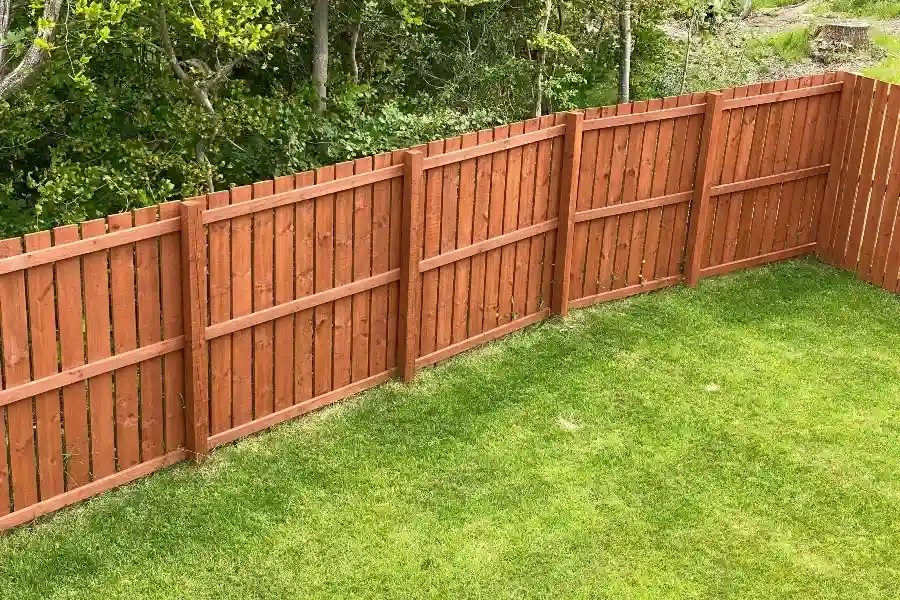
Keeping wild animals like raccoons, skunks, deer, armadillos, and burrowing rodents out of your yard requires a long-term strategy that targets the root causes of pest infestations.
While temporary sprays and scare tactics offer short-term relief, true backyard wildlife exclusion relies on eliminating primary food and water attractants, removing nesting harborages, and installing durable physical dig barriers. By addressing why animals enter your property in the first place, you can protect your garden, turf, and home from destructive outdoor pests.
Key Takeaways:
- Securing waste, managing pet food, harvesting produce, and eliminating standing water removes the primary drivers that attract animals to a yard.
- Eliminating harborages through debris removal, strategic vegetation trimming, and sealing ground-level voids removes safe nesting and resting sites.
- Physical exclusion mechanisms, such as species-tailored fencing and subterranean L-foot mesh aprons, serve as the most dependable defense against intruding species.
- Temporary sensory deterrents like sprays, lights, and noise makers lose efficacy over time due to weather degradation and animal habituation.
- Wildlife mitigation requires specialized strategies based on animal behavior, considerations for spring nesting seasons, and awareness of specific state wildlife legal protections (such as strict trapping rules for armadillos, nutria, and protected game species across Virginia, Georgia, Louisiana, Florida, Maryland, and Illinois).
- Complex infestations, potential disease risks (like rabies, leptospirosis, and raccoon roundworm), and deep subterranean proofing often necessitate professional intervention and specialized equipment.
A healthy, well-maintained yard is an outdoor oasis for homeowners, but it is equally attractive to local wildlife. Raccoons, skunks, deer, squirrels, opossums, armadillos, nutria, and burrowing rodents frequently turn private properties into foraging grounds and nesting sites. Left unchecked, wild animals can destroy gardens, tear up turf, chew through electrical wiring, spread parasites like fleas and ticks, and pose physical risks to domestic pets.
Jump to a Section:
- The 3 Pillars of Wildlife Exclusion for Your Yard
- Regional Wildlife Identification and Control Strategy Matrix
- State Legal Protections and Wildlife Trapping Regulations
- Deterrents and Repellents: What Works vs. What Doesn’t
- How to Deter Wild Animals with Temporary Deterrents vs. Permanent Exclusion
- How to Keep Wild Animals Out of Garden and Landscape Zones
- When to Call a Professional Wildlife Control Specialist
- FAQs About Keeping Wildlife Out of Your Yard
The 3 Pillars of Wildlife Exclusion for Your Yard
Wild animals operate on simple survival logic: they want maximum resources for the least amount of effort and risk. When a yard provides easy food, standing water, or safe shelter, it becomes a high-value target. Removing these three necessities changes that equation, forcing animals to move on and search for easier grounds elsewhere.
1. Eliminating Food and Water Sources to Deter Yard Pests
Food is the primary driver of wildlife activity. Even small, unintentional food sources can attract animals from miles away.
- Secure Trash and Compost: Use heavy-duty plastic or metal trash cans with tight-fitting, locking lids. Fasten cans to a post or store them inside a garage or shed until the morning of pickup. Avoid adding meat, dairy, or cooked foods to open compost piles.
- Manage Pet Food and Bird Feeders : Feed domestic pets indoors. If outdoor feeding is necessary, remove all food bowls immediately after mealtime. Clean up spilled birdseed daily, or hang feeders on poles equipped with baffles at least 5 feet off the ground and 10 feet away from tree branches.
- Maintain Fruit Trees and Vegetable Gardens: Harvest ripe produce promptly. Routinely clear fallen fruit, nuts, and berries from the ground before nocturnal foragers arrive.
- Eliminate Standing Water: Fix leaky outdoor spigots, turn over empty planters, and refresh birdbaths frequently. Eliminate low spots in the yard where water pools after rain—this is especially vital in coastal and southern regions (FL, GA, LA, MD, VA) to prevent mosquito breeding and discourage thirsty animals like nutria, raccoons, and opossums.
2. Removing Harborage and Shelter Sites
Wild animals seek quiet, covered areas to rest, escape predators, and raise their young. Eliminating these shelter opportunities reduces the likelihood that they will set up residence.
- Clear Yard Debris: Promptly remove brush piles, fallen logs, and overgrown vegetation. Store firewood on elevated racks at least 12 inches off the ground and away from exterior walls.
- Trim Overhanging Vegetation: Keep tree limbs trimmed back at least 8 to 10 feet from rooflines, fences, and structures to prevent climbing animals like squirrels and raccoons from accessing elevated entry points.
- Block Ground-Level Void Spaces: Inspect deck bottoms, sheds, porches, and crawl space vents. Seal open foundations using heavy-duty hardware cloth anchored securely to prevent animals like armadillos, groundhogs, skunks, and rats from nesting underneath.
3. Backyard Pest Exclusion via Physical Barriers
Physical exclusion is the single most effective method for keeping wildlife out of specific zones, such as gardens or the entire yard boundary.
- Perimeter and Garden Fences: Install fencing tailored to the specific target species. For large animals like white-tailed deer, fences must reach 8 feet in height. For smaller animals, standard chain-link or wood privacy fencing with minimal gap spacing works well.
- Subterranean Dig Barriers (L-Foot Aprons): Burrowing pests like skunks, groundhogs (common in IL, MD, VA), armadillos (FL, GA, LA, and expanding north), and rats easily dig under standard fences. Bury 1/2-inch galvanized hardware cloth 12 to 18 inches deep, bending the bottom 12 inches outward into an “L” shape facing away from the protected area. When an animal tries to dig down at the fence line, it hits the metal mesh and stops.
Regional Wildlife Identification and Control Strategy Matrix
Effective wildlife control comes down to targeted strategy rather than broad-spectrum solutions. Because animals respond differently to barriers, scents, and physical deterrents, matching the right fix to the specific intruder across our service states (VA, GA, LA, FL, MD, IL) is critical. Use the diagnostic matrix below to map observed property damage to its species-level exclusion tactics.
| Wildlife Species | Regional Presence (States) | Primary Signs of Presence | Top Attractant | Most Effective Barrier / Strategy |
|---|---|---|---|---|
| Raccoons | All (VA, GA, LA, FL, MD, IL) | Overturned trash cans, rolled-back sod, heavy droppings near logs/decks | Pet food, accessible garbage, grubs in lawns | Heavy-duty trash locks, 1/2-inch hardware cloth around deck bases, lawn grub treatments |
| Skunks | All (VA, GA, LA, FL, MD, IL) | Shallow cone-shaped holes in turf, faint musk odor, burrowed dirt near foundations | Lawn grubs, insects, accessible low crawl spaces | Subterranean L-foot mesh aprons around structures, eliminating lawn insect populations |
| Nine-Banded Armadillos | Primary: FL, GA, LA Expanding: VA, IL |
Deep cone-shaped holes, uprooted gardens, large burrows under concrete slabs | Soil invertebrates, earthworms, grubs | Subterranean L-foot mesh aprons (18 inches deep), concrete footings under decks |
| Groundhogs (Woodchucks) | IL, MD, VA | Large burrow entrances (10-12 in.) near structures, chewed garden crops | Vegetable gardens, clover, alfalfa, succulent plants | Heavy 1-inch mesh fencing buried 12 inches deep with 12-inch L-foot apron and 4-foot height |
| Nutria | LA, MD, VA, FL | Eragrostis/marsh erosion, deep burrows along ponds/drainage ditches | Aquatic vegetation, roots, lawn grasses near water | Bulkhead repairs, heavy wire mesh shoreline armoring, drainage pipe grates |
| Deer (White-Tailed) | All (VA, GA, LA, FL, MD, IL) | Cleanly nipped foliage (no jagged edges), trampled garden beds, elevated droppings | Hostas, ornamental shrubs, fruit trees | 8-foot high perimeter fencing, polypropylene mesh tree wraps, deer-resistant plantings |
| Squirrels / Chipmunks | All (VA, GA, LA, FL, MD, IL) | Chewed wooden structures, dug-up bulb beds, missing birdseed | Bird feeders, acorns/nuts, potted plant soil | Tree branch pruning (10-ft clearance), wire mesh bulb cages, baffle-equipped bird feeders |
| Voles / Moles / Gophers | Moles/Voles: All Gophers: Parts of IL, FL, LA |
Raised surface ridges in lawn (moles), open surface runways (voles), fan-shaped dirt mounds (pocket gophers) | Soil invertebrates/worms (moles), roots/bulbs/grass (voles and gophers) | Underground wire mesh baskets for plant roots, raised garden beds with wire mesh bottoms |
| Opossums | All (VA, GA, LA, FL, MD, IL) | Disappeared pet food, stolen fruit, denning under low-clearance decks | Fallen fruit, outdoor pet food, easily accessible shelter | Securing structure perimeters, clearing ground fruit, eliminating outdoor food bowls |
State Legal Protections and Wildlife Trapping Regulations
Wildlife protection laws vary significantly by state across our service footprint. Unlawful trapping, relocation, or lethal control can result in severe state and federal fines.
| State | Primary Wildlife Agency | Trapping & Relocation Regulations | Key Protected / Special Status Species |
|---|---|---|---|
| Virginia | Virginia Department of Wildlife Resources (DWR) | Relocation of trapped wildlife off-property is generally prohibited without a permit to prevent disease transmission (e.g., Rabies Vector Species). | Protected bats, songbirds, black bears. Commercial Nuisance Wildlife Control Operator permit required for hired removal. |
| Georgia | Georgia Department of Natural Resources (GADNR) | Relocation of rabies vector species (raccoons, foxes, skunks) off-property is illegal. Nuisance wildlife permits required for trapping out of season. | Protected bat species, Eastern indigo snake, alligator snapping turtle. |
| Louisiana | Louisiana Department of Wildlife and Fisheries (LDWF) | Nutria are an invasive species encouraged for harvest/removal. Relocation of native fur-bearing mammals is restricted. | Alligators (regulated harvest only), Louisiana black bear (protected status varies), protected bats. |
| Florida | Florida Fish and Wildlife Conservation Commission (FWC) | Relocation of trapped rabies vector species off-property or onto public land is illegal. Non-native species (e.g., iguanas, nutria) must be humanely euthanized or kept in approved captivity; release is illegal. | Key deer, gopher tortoises (strict burrow protection laws), protected bat species. |
| Maryland | Maryland Department of Natural Resources (DNR) | Trapping requires a permit or Wildlife Control Cooperator authorization. Relocation of raccoons, skunks, and foxes off-site is restricted due to rabies prevention. | Nutria (target of eradication programs), protected bat species, Maryland darter, bog turtle. |
| Illinois | Illinois Department of Natural Resources (IDNR) | A Class3 Wildlife Control Operator permit or DNR Nuisance Animal Removal Permit is required to trap and remove furbearing animals. Off-site relocation requires written landowner permission or permit. | Protected bat species, Franklin’s ground squirrel, endangered/threatened turtles and snakes. |
Deterrents and Repellents: What Works vs. What Doesn't
Store-bought repellents and hazing devices are popular quick fixes. While these products can disrupt pest activity in the short term, they should not be treated as a permanent shield. Think of them as useful temporary bridge solutions — holding animals at bay while you implement structural barriers and remove primary attractants.
Active Deterrent Methods
- Motion-Activated Sprinklers: These devices hook up to a garden hose and spray a burst of water when motion is detected. They are highly effective at startling medium-to-large animals (like deer, raccoons, and armadillos) without causing harm.
- Noise and Ultrasonic Devices: High-frequency sound emitters aim to drive animals away. While initially disorienting, most wildlife quickly becomes habituated to the noise once they realize there is no physical threat.
- Motion Lights: Bright floodlights disrupt nocturnal animals temporarily, but animals seeking food will eventually tolerate the light.
Need a Wildlife Removal Estimate?
Chemical and Scent Repellents
- Taste Deterrents: Spraying capsaicin (hot pepper extract) on ornamental plants makes vegetation unpalatable to plant-eating pests like deer and rabbits. Reapplication is required after heavy rains (common in FL, LA, GA, MD, VA).
- Scent Repellents: Predator urine, ammonia, or commercial scent granules attempt to trick animals into believing a predator is nearby. Humidity and rain rapidly degrade these scents, limiting their long-term value.
Landscape Design & Deterrent Flora
Proactive garden design uses physical plant characteristics and natural scents to make your yard unappealing to foraging pests.
- Prickly Barriers: Install thorny or rigid-leaf shrubs—such as holly, barberry, or pyracantha—directly beneath low window sills, along fence lines, or around deck foundations to physically obstruct passage for soft-pawed mammals like raccoons, armadillos, and opossums.
- Aromatic Pest-Deterrent Flora: Intersperse strongly scented herbs and flowers—such as lavender, marigolds, rosemary, alliums, and garlic—around vulnerable vegetable beds and ornamental gardens. These plants emit pungent essential oils that mask the smell of target produce and irritate the keen sense of smell in deer, rabbits, and rodents.
- Deer-Resistant and Bitter Vegetation: Replace high-value browsing targets like hostas, tulips, and tender daylilies with unpalatable species containing milky sap or rough textures, such as foxglove, daffodils, yarrow, and ornamental grasses.
How to Deter Wild Animals with Temporary Deterrents vs. Permanent Exclusion
| Feature | DIY / Temporary Deterrents (Sensory and Sprays) | Professional Physical Exclusion (Barriers and Modifications) |
|---|---|---|
| Primary Mechanism | Uses fear, taste, or discomfort to discourage entry | Creates a physical wall that prevents access |
| Longevity | Low (Requires constant reapplication or adjustment) | High (Permanent structural modification) |
| Weather Resistance | Poor (Washed away by rain; degraded by UV) | Excellent (Uses galvanized steel, heavy mesh, and weather-proof metal) |
| Animal Habituation | High (Animals adapt once they learn the threat is harmless) | Zero (Animals cannot adapt to solid metal/wire barriers) |
| Cost Profile | Low upfront / High long-term maintenance | Moderate upfront / Lowest long-term cost |
How to Keep Wild Animals Out of Garden and Landscape Zones
Certain wildlife challenges require tailored tactics beyond general yard maintenance.
Burrowing vs. Climbing Species
- For Diggers (Skunks, Groundhogs, Armadillos, Rats): Focus heavily on subterranean protection. Simple surface fences fail against these species. Always extend mesh downward 12 to 18 inches into the soil with an outward L-foot bend.
- For Riparian / Aquatic Diggers (Nutria, Muskrats): For properties near waterways in LA, MD, VA, or FL, install bank stabilization fabric, rip-rap stone, or heavy wire mesh along shoreline slopes to prevent destructive bank burrowing.
- For Climbers (Raccoons, Squirrels, Opossums): Focus on vertical clearance. Cut back tree limbs 8 to 10 feet from structures, wrap smooth sheet-metal guards around tree trunks or support posts, and ensure outdoor structures have tight, animal-proof rooflines.
When to Call a Professional Wildlife Control Specialist
While habitat modification and simple fencing can be handled by homeowners, several scenarios demand professional assistance:
- Active Indoor or Under-Structure Infestations: If animals have established a den under a deck, inside a crawl space, or within a shed, professional exclusion mechanisms (like one-way exit doors) are required to clear the space humanely before sealing it off.
- Aggressive, Sick, or Rabies-Vector Animals: Animals exhibiting uncharacteristic daytime activity, disorientation, unprovoked aggression, or physical injury may carry diseases such as rabies (a major concern with raccoons, foxes, and skunks in Eastern and Southern states). Do not attempt to approach or corner these animals.
- Protected or Regulated Species Encounters: Handling protected animals (like bats, gopher tortoises in FL, or migratory birds) requires licensed wildlife specialists to comply with state and federal laws.
- Complex Trenching and Structural Proofing: Installing deep subterranean footings, heavy custom metal flashing, or high-elevation chimney/vent caps requires specialized equipment and structural knowledge.
FAQs About Keeping Wildlife Out of Your Yard
What should I check before sealing animal entry points under decks or sheds?
Check for dependent offspring first, especially during the spring and early summer breeding season. Trapping a mother outside while young remain hidden underground can cause severe structural damage as she tries to dig back in, or create severe odor and pest problems if the babies perish inside.
Are there legal restrictions on removing or relocating wild animals in my state?
Yes. Many states within our service area (including VA, GA, LA, FL, MD, and IL) strictly prohibit relocating wild animals—especially Rabies Vector Species like raccoons, skunks, and foxes—off the property where they were captured. Additionally, protected species (such as gopher tortoises in Florida or endangered bats across all regions) are subject to strict federal and state protections. Unauthorized relocation or lethal control can result in severe legal penalties.
Can wild animals in the yard cause secondary pest problems indoors?
Yes. Wild animals like raccoons, skunks, armadillos, and opossums carry ectoparasites such as fleas, ticks, and mites. As they nest or forage around your property, they drop these parasites into the grass and soil, significantly increasing pest risks for pets and families. Keeping wildlife out is your primary line of defense against household flea and tick infestations.
Can smart technology like solar LED lights or smart camera hazing systems keep wildlife out of my yard permanently?
Smart hazing devices—such as solar motion-activated flashing LED “predator eyes” and smart cameras with automated noise or strobe triggers—can disrupt pest activity, but they serve best as temporary stopgaps rather than permanent solutions. These high-tech gadgets rely on startling animals with sudden light, motion, or sound.
While effective initially, wild animals are highly adaptable; once they realize the flashes or noises present no real physical threat, habituation sets in, and they will ignore the deterrents—especially if an easy food source remains nearby. Use smart hazing technology as a short-term buffer to hold animals at bay while you implement long-term structural fixes, such as installing subterranean L-foot dig barriers, securing trash perimeters, and sealing ground-level structural voids.
Protect Your Yard from Unwanted Wildlife
While habitat modification and basic surface barriers effectively deter casual animal visits, persistent infestations demand professional intervention. Encounters with aggressive or disoriented animals, active nesting under deck footings, or complex subterranean proofing require commercial-grade equipment and specialized structural knowledge.
If wildlife continues to invade your property in Virginia or poses immediate risks to your family and pets, do not wait for the damage to escalate. Contact Xceptional Wildlife Removal today to schedule a comprehensive property inspection. Our certified specialists provide wildlife trapping and removal, custom heavy-duty exclusion, and complete cleanup and sanitation services to secure your home and restore your peace of mind.


