
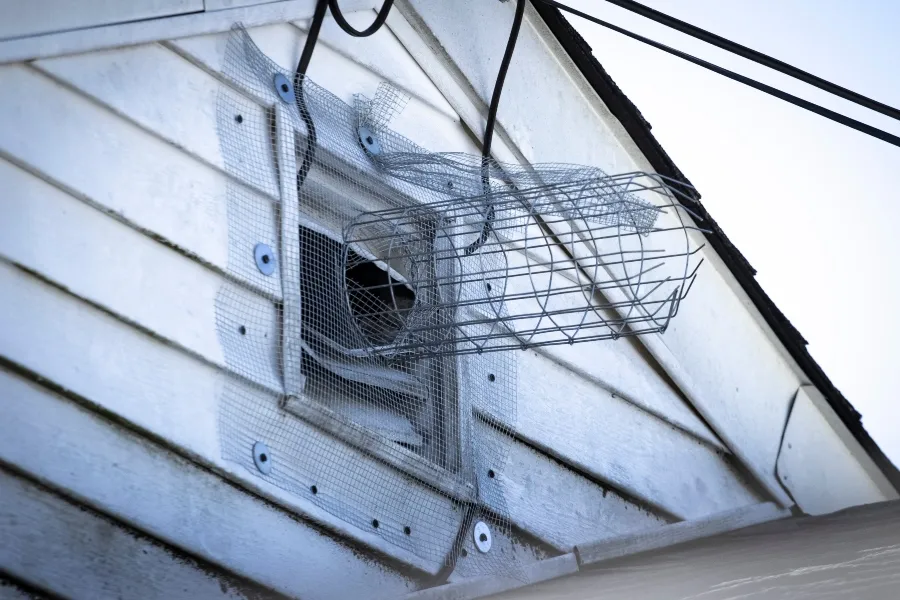
To solve a wildlife problem permanently, you must follow a systematic approach rather than reacting out of anxiety or panic. We’ve broken it down into a set of immediate actions to take as soon as you notice the problem – followed by a four-step process to evict the nuisance wildlife and prevent future issues from returning and surrounding regions.
Key Takeaways
- Following a structured four-phase remediation framework ensures pests are removed safely without accidentally trapping them inside walls or ceilings.
- Passive, humane exclusion tactics are vastly preferred over traditional trapping methods to clear intruders effectively.
- Long-term prevention requires permanently sealing every potential entry point with heavy-duty construction materials rather than temporary fixes.
- Attempting a DIY removal exposes homeowners to significant health, safety, and severe state legal risks (such as Rabies Vector Species relocation bans) that necessitate certified professional intervention.
Discovering an unwanted wild animal inside your home can be overwhelming. Beyond the immediate shock and middle-of-the-night noises, a wildlife intrusion carries serious risks: structural damage to chewed wiring, ruined insulation, bad odors, and health threats from parasites or disease.
Jump to a Section
- Immediate Action: What to Do As Soon As You Notice Nuisance Wildlife in Your Home
- The 4-Step Wildlife Removal Framework
- State-by-State Wildlife Laws & Regulations Overview
- Should You Call a Professional Wildlife Removal Company or Do-It-Yourself?
- Legal Considerations and Regulations Regarding Wildlife Removal
- Read Our Species-Specific Guides
Immediate Action: What to Do As Soon As You Notice Nuisance Wildlife in Your Home
When you first hear rustling in the attic or discover an intruder in a crawlspace, your immediate response dictates both your safety and how easy the animal will be to remove.
- Do Not Corner or Touch the Animal: Wild animals bite or scratch when feeling threatened. Even small mammals can transmit rabies, roundworm, or other pathogens.
- Isolate Pets and Children: Move domestic pets to a safe room or outdoor area. Keep children away from walls or ceilings where active scratching is heard.
- Gear Up Before Inspecting: If you must enter an attic, crawlspace, or basement to inspect, wear a minimum of an N95 respirator mask, heavy leather gloves, eye protection, and long sleeves to protect against dust, airborne spores, and parasites. When airborne fungal spores (Histoplasma capsulatum) or raccoon roundworm eggs (Baylisascaris procyonis) are present, you will require HEPA or P100-rated filtration.
- Do Not Block the Exit Immediately: If you catch an animal inside a living space, open an exterior door or window, close interior doors to confine it to that exit path, and leave the room so it can escape on its own.
The 4-Step Wildlife Removal Framework
Successfully resolving any wildlife issue follows a proven four-phase process. Skipping a step—such as sealing a hole before verifying all animals are out—frequently leads to dead animals rotting inside your walls or extensive structural damage as trapped pests attempt to chew their way back out.
Phase 1: Detection and Identification
Before choosing a strategy, gather clues to determine what type of animal has entered. We recommend using four primary factors to help identify the animal: time of activity, the noises they make, droppings and track marks, and smell and property damage.
| Target Species | Activity Time | Noise Profile | Evidence and Signs | Entry Point Size & Location |
|---|---|---|---|---|
| Raccoons | Night (Nocturnal) | Heavy thuds, slow pacing, loud chattering/crying | Large 2–3″ cylindrical droppings, torn insulation, heavy latrines, strong musk | 3″+ inches; damaged soffits, fascia, chimney flues |
| Tree Squirrels | Day (Diurnal) | Rapid scratching, scurrying, loud morning/afternoon chatter | Gnawed wood trim/PVC, scattered nut shells, shredded insulation nests | 1–2 inches; soffit corners, ridge caps, gable vents |
| Flying Squirrels | Night (Nocturnal) | High-pitched chirping, rapid scampering, nighttime ceiling thuds | Small oval droppings, multiple attic nests | ¼–1 inch; drip edges, fascia, roof intersections |
| Bats | Dusk and Dawn (Crepuscular) | Soft squeaking, faint rustling in walls before exit | Dark guano piles near exits, ammonia smell, oily rub marks | ¼ to ½ inch; unsealed ridge caps, gable trim gaps |
| Mice & Rats | Night (Nocturnal) | Light scampering, high-pitched squeaks, faint wall gnawing | Small rod-like droppings (¼” or smaller), chewed wires, greasy wall tracks | ¼” (mice) to ½” (rats); foundation gaps, pipe penetrations |
| Opossums | Night (Nocturnal) | Heavy dragging sounds, slow movement, faint clicking | Large variable droppings, dragged leaf/paper nesting materials | 3″+ inches; crawlspace vents, rim joists, deck foundations |
| Armadillos (FL, GA, LA) | Night (Nocturnal) | Scratching under floorboards, heavy thuds under decks | Shallow 3–5″ soil burrows, burrowing next to slab foundations | Ground-level foundation gaps, open crawlspace access |
| Snakes (FL, GA, VA, LA, IL, MD) | Variable | Silent, subtle rustling in insulation | Shed skins, faint slithering drag lines in dust/dirt | ¼ to ½ inch; crack in basement walls, foundation gaps |
Phase 2: Entry Point Assessment
Carefully inspect your home’s exterior to locate every potential access point. Small mammals and rodents can exploit minor construction gaps, entering openings as small as ¼ inch for mice, ½ inch for bats and rats, 1–2 inches for squirrels, or 3+ inches for raccoons.
Inspect both high-risk zones and these specific structural failure points:
- Roof Line and Drip Edge Gaps: Gaps along the roof edge where the fascia meets the decking—especially where drip edge flashing is missing or warped—provide prime entry for squirrels, bats, and mice into the attic soffits.
- Ridge Cap Terminations and Ridge Vents: The open ends of roof ridge caps and unmeshed ridge vents are high-frequency targets. Animals chew through plastic end caps or pry up flexible venting to enter attic spaces.
- Plumbing Stack Flashings and Roof Penetrations: Cracked, rotted, or unsealed rubber boots around plumbing vent stacks and exhaust fan roof hoods allow bats, mice, and rats direct access into wall cavities and attic spaces.
- Soffit Intersections and Gable Vents: The area where rooflines meet soffit returns is a major structural vulnerability. Raccoons easily pull apart aluminum or plastic soffit panels, while squirrels chew through gable vent mesh.
- Chimneys, Flues and Mortar Caps: Uncapped chimney flues, damaged mortared caps, or rusted chase covers offer direct vertical access to fireplaces and furnace vents for raccoons, birds, and squirrels.
- Foundation Penetrations and Crawlspace Vents: Gaps around HVAC lines, gas pipes, ground-level utility penetrations, and rusted wire mesh over crawlspace vents allow rodents, skunks, and opossums into subfloors.
Phase 3: Humane Eviction and Removal
Once entry points are identified, the objective is getting the animal out without trapping it inside.
- One-Way Exclusion Doors: The gold standard in humane wildlife control. These mounted funnel/door devices allow animals to exit through their primary hole to forage, but prevent them from re-entering.
- Eviction Fluids/Deterrents: In cases where a mother animal has nested with dependent offspring, specialized eviction scents (such as male predator pheromones) can encourage the mother to voluntarily relocate her young to an alternate exterior nest site.
- Live Trapping: Should be reserved for instances where exclusion devices cannot be mounted. Traps must be checked frequently (at least once every 8 to 12 hours depending on state regulations) to prevent animal distress or death.
Need a Wildlife Removal Estimate?
Important Warning About Regional Maternity Seasons:
Spring through summer is maternity season for most species. Before installing exclusion equipment during these months, inspect the space thoroughly for dependent young like newborn raccoons, squirrels, or bats. Trapping immobile offspring inside will lead to panicked mothers inflicting structural damage trying to reenter, or the litter dying within walls—resulting in biohazards, odors, and severe insect infestations.
- Bat Maternity Windows: Exclusions are legally prohibited during breeding periods:
- Florida: April 16 – August 14
- Georgia: April 1 – July 31
- Virginia: May 1 – August 31
- Maryland, Louisiana, & Illinois: Late April – Mid-August
If young are present, wait until they are fully mobile or hire a licensed Xceptional Wildlife Removal technician for professional relocation.
Phase 4: Permanent Exclusion and Cleanup
Never complete repairs until you are certain all wildlife has evacuated.
- Use Construction-Grade Materials: Expanding foam alone will not keep wildlife out; rodents easily chew through it. Use ¼-inch galvanized hardware cloth, heavy-gauge steel flashing, and concrete repair mortar.
- Repair Secondary Weak Spots: Reinforce surrounding areas that look worn or soft, as animals will try to chew back in near their original entrance.
- Neutralize Pheromones: Standard cleaners and bleach cannot break down animal pheromones. Treat nesting areas and exterior entry paths with an enzymatic cleaner to digest organic proteins and erase scent trails.
State-by-State Wildlife Laws & Regulations Overview
Wildlife management laws vary significantly across our service footprints. Review state-specific restrictions before attempting exclusion or trapping:
| State | Primary Wildlife Regulator | Rabies Vector Species (RVS) Relocation Rules | Key Bat Exclusion & Protection Rules |
|---|---|---|---|
| Virginia | Virginia Dept. of Wildlife Resources (DWR) | Illegal to relocate bats, raccoons, or skunks off-property (4VAC15-30-50). Must release on-site or euthanize. | Strictly prohibited to exclude or trap during maternity season (May 1–Aug 31). |
| Georgia | Georgia Dept. of Natural Resources (DNR) | Permitted operators may release on suitable private land within 72 hrs with owner consent. Bite cases subject to Dept. of Health. | Exclusion prohibited during maternity season (April 1–July 31). Lethal removal strictly illegal. |
| Florida | Florida Fish & Wildlife Comm. (FWC) | Prohibited to relocate nuisance wildlife off-property or across county lines without specific FWC permits. | FWC Rule 68A-9.010 bans all bat exclusions from April 16 to August 14. |
| Maryland | Maryland Dept. of Natural Resources (DNR) | Illegal to relocate raccoons, skunks, or foxes under COMAR 08.03.15.24. Release on-site or humanely euthanize. | All native bats protected. Exclusion banned during maternity period (May 1–August 15). |
| Louisiana | Louisiana Dept. of Wildlife & Fisheries (LDWF) | Relocation restricted; requires licensed trapper permits for release on designated management areas. | Native bat species protected. No exclusions during summer roosting seasons. |
| Illinois | Illinois Dept. of Natural Resources (IDNR) | Relocation off-property requires explicit IDNR permits. Unlicensed transport of wildlife across county lines is prohibited. | Protected under Illinois Wildlife Code. Exclusions prohibited May 15–August 15. |
Should You Call a Professional Wildlife Removal Company or Do-It-Yourself?
While minor exterior repairs can be handled by handy homeowners, certain situations present severe safety, legal, or health risks. Situations like these should always be handled by a professional wildlife control expert at Xceptional Wildlife Removal.
| Factor | DIY Approach | Professional Xceptional Wildlife Removal Service |
|---|---|---|
| Safety Risk | High risk of bites, falls from ladders, or exposure to pathogens without industrial PPE. | Low personal risk; technicians carry full safety gear, harnesses, and protective equipment. |
| Success Rate | Moderate; high risk of accidentally trapping animals inside or missing secondary entry holes. | Very High; backed by comprehensive home inspections and exclusion guarantees. |
| Handling Dependent Young | High failure rate; baby animals are often left behind in attics/walls to perish after adults are trapped. | High success rate; technicians inspect for litter nests and humanely relocate mothers with offspring. |
| Legal Compliance | Risk of unintentionally breaking state wildlife protection or relocation laws. | Full compliance with local city, state, and federal permits, trapping seasons, and release laws. |
| Biohazard Cleanup | Limited to basic household disinfectants, which may leave active spores or parasites behind. | Full restoration services, including industrial HEPA vacuuming, thermal fogging, and insulation replacement. |
Legal Considerations and Regulations Regarding Wildlife Removal
One big reason why homeowners and business owners often choose to work with Xceptional Wildlife Removal is the potential legal ramifications. Wildlife control is heavily regulated across VA, GA, LA, FL, MD, and IL. Before taking action, keep these general rules in mind:
- Protected Species: Certain animals—including all native species of bats, migratory birds, and threatened predators—are protected under federal and state statutes. Performing exclusions during designated maternity seasons (when flightless young are present) is strictly illegal and subject to heavy state fines.
- Relocation Laws: Most states in our service footprint (including MD, VA, FL, and IL) restrict or ban relocating trapped wildlife to public lands, state parks, or across county lines to prevent the spread of diseases like rabies and chronic wasting disease. In many jurisdictions, trapped rabies-vector animals must either be released on the exact same property or humanely euthanized by a licensed professional.
- Licensing Requirements: Professional wildlife control technicians hold specialized state wildlife agency permits (such as DNR or FWC permits) separate from standard structural pest control licenses.
Read Our Species-Specific Guides
Every wildlife problem is different. It all depends on your property and the specific species you’re dealing with. If you’re looking for a solution for a specific wildlife problem or need wildlife exclusion help in our service area – which includes Virginia, Georgia, Louisiana, Florida, Maryland, and Illinois – call or email us today.
For additional information, be sure to check out these species-specific wildlife pest guides:


