
Key Takeaways:
- Skunk spray is a highly effective, oil-based chemical defense designed for both immediate irritation and long-lasting odor.
- Skunks are non-aggressive animals that only spray as a last resort when they feel startled or trapped.
- The spray can cause physical distress like nausea and temporary blindness in both humans and pets.
- Avoiding a spray requires recognizing warning signs, keeping a safe distance, and removing yard attractants.
How Does Skunk Spray Work?
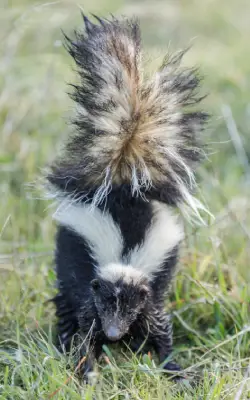
What’s the first thing you think of when you think of a skunk? If you’re like most people, it’s the spray. Despite looking disarmingly cute, these creatures are unwelcome pretty much everywhere they go due to the pungent chemical they spray when they’re frightened or anxious. But what is skunk spray, anyway?
A skunk’s signature spray is not merely an overpowering stench; it’s a natural defense system. Understanding the nature of skunk spray, its chemical makeup, and why they use it opens the door, perhaps, to an empathetic understanding of these misunderstood creatures’ lives.
Buckle up and hold your breath as we reveal the fascinating secrets behind the minor miracles of the biology of skunk spray.
What Is Skunk Spray Made Of?
Skunk spray is an oil produced by two of a skunk’s anal glands. In basic terms, it’s a cocktail of sulfurous compounds that are combined to create an immediate stink and a long-lasting effect. Skunks deploy it when they feel frightened or threatened. The powerful nature of the spray is intended as a message to whatever just got sprayed: leave me alone next time.
Skunk spray is made of three main ingredients:
- Thiols: An organic compound that contains sulfur and hydrogen. These irritating compounds are what you smell immediately – many describe them like a combination of rotten eggs and burnt rubber.
- Thioacetates: Chemically similar to thiols, thioacetates are where the skunk spray gets its “time release” effect. If you’ve ever wondered why your dog still stinks weeks after being sprayed, it’s the gradual effect of the thioacetates.
- Alkaloids: These compounds primarily act as a chemical irritant.
Why Do Skunks Spray?
Skunk spray is a defense mechanism to warn off predators – and a highly effective defense mechanism at that. A skunk will use its spray when it’s scared, startled, or under attack. Contrary to popular belief, skunks wish to avoid confrontation as much as possible. But when a predator looms, such as a voracious fox or an aggressive dog, and the skunk senses an immediate danger, it does not hesitate to use its sulfur-laden spray.
The smell is often enough to deter the most determined attackers, but if not, it can cause temporary blindness and create significant discomfort for the predator.
Dogs are the most common predators to get sprayed due to their enthusiasm often being perceived as aggression. Every year, countless dog owners go through a minor crisis, figuring out how to de-skunk their curious pets.
Here are some of the most common triggers that lead skunks to spray:
- Fear: Skunks will spray when they feel threatened and see no escape.
- Surprise: Startle a skunk, and it might respond with a spray.
- Aggression: If another animal acts aggressively toward a skunk, it will defend itself with a spray.
Need a Wildlife Removal Estimate?
How Effective Is Skunk Spray as a Defense Mechanism?
Statistically speaking, the effectiveness of skunk spray as a defense mechanism is remarkable. It’s estimated that the success rate of spray as a defense is around 90% for most skunk species. It’s quite a deterrent – causing would-be predators to think twice before engaging in a skirmish.
But how does the skunk’s defense mechanism stack up against other wildlife?
| Wildlife | Defense Mechanism | Effectiveness Rate |
| Skunk | Spray | 90% |
| Porcupine | Quills | 85% |
| Turtle | Shell | 80% |
| Snake | Poison | 75% |
From the table, it’s apparent that the skunk spray holds its own against other prevalent wildlife defense mechanisms. While all these animals use unique ways to protect themselves, the skunk’s spray is arguably the most multifaceted – it doesn’t just hurt, it stinks.
How Do Humans React to Skunk Spray?
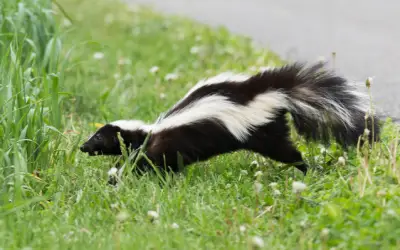
Humans typically find the scent of skunk spray overwhelmingly unpleasant, reminiscent of rotten eggs or garlic. Aside from being an olfactory nightmare — it’s consistently ranked as one of the smelliest substances in the world — skunk spray can also lead to numerous health issues.
It may cause temporary blindness if it gets into the eyes and induce nausea due to its powerful odor. If you get sprayed by a skunk, stay outside and rinse off. If possible, avoid going inside so the stink doesn’t spread indoors. Once you’re rinsed, take a shower and use a deodorizing solution.
How Do Pets React to Skunk Spray?
Pets are often more sensitive to getting sprayed than people. Similar to human reactions, pets may experience temporary blindness and nausea. Additionally, pets sensitive to the spray can manifest skin redness and even develop allergic reactions.
Being sprayed by a skunk can have long-term health impacts. These include persistent skin irritation, potential risk of anemia (as per research conducted by Veterinary Clinics of North America), and occasionally, rabies, a lethal viral disease transmitted via animal bites and saliva. A quick visit to the vet could save them from further discomfort or possible allergies.
How Does a Skunk Spray?
When a skunk decides to spray, muscles around the glands contract, forcing the chemicals out through nipples that direct the spray towards the attacker. The skunk can control the intensity, distance, and accuracy of the spray, depending on the threats it perceives.
Speaking of distance and accuracy, you might be amazed to learn that a skunk can accurately spray its pungent liquid up to 10 feet away! According to studies, skunks are known to hit a target as far away as 20 feet with a considerable degree of accuracy.
What Should You Do to Avoid Getting Sprayed?
If you have skunks in the area, understanding skunk behavior and biology is a crucial part of reducing your risk of getting sprayed. Here’s what we recommend:
- Learn the Warning Signs: Watch for front-paw stomping, hissing, or a raised tail. If the skunk curls into a “U-shape,” it’s aiming.
- Keep Your Distance: Skunks are accurate up to 10–15 feet. Stay at least 20 feet away to remain safely out of range.
- Don’t Startle Them: Use a flashlight and make noise (talking or whistling) when walking at night so they hear you coming.
- Back Away Slowly: If you come face-to-face, stand still and then back away slowly and calmly. Sudden movements trigger the spray.
- Remove Attractants to Your Yard: Do what you can to stop skunks from hanging out on your property. Secure trash cans, pick up outdoor pet food, and block off dark hiding spots under porches or sheds. For more information, read about what attracts skunks.
- Control Your Pets: Keep dogs on a leash, as their curiosity is the #1 cause of “skunking” incidents.
- Work with a Skunk Control Specialist: If you have spotted signs of skunks on your property, call a skunk removal company as soon as possible for safe and effective skunk trapping.
If you live in Virginia, the skunk removal team at Xceptional Wildlife Removal is ready to help. Give us a call for fast and effective skunk removal.
Back to Skunk Trapping and Removal


