
Key Takeaways
- Skunks are primarily drawn to properties that offer easy access to food like pet kibble, trash, and lawn grubs.
- Eliminating shelter is crucial, which involves sealing off dark, quiet gaps under porches, sheds, and decks.
- Relying on a dog for protection is risky because many skunks aren’t deterred by pets, leading to high-stress encounters and painful sprays.
- If standard cleaning and sealing don’t work, motion-activated lights or professional exclusion services are the most effective ways to break the cycle of returning skunks.
Is Something Attracting Skunks to Your Yard?
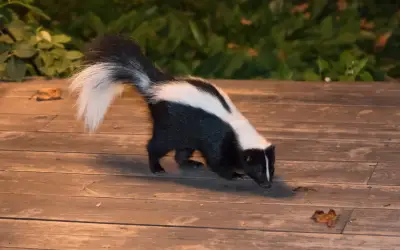
What’s that smell? It’s the stink of a skunk. Pee-ew, it’s unmistakable, and in many neighborhoods, all too common. But what can you do to limit your visits from Pepe Le Pew and company?
One of the easiest ways is to learn what attracts skunks to your yard in the first place. This will allow you to develop an informed plan to prevent future skunk intrusions on your property and understand exactly what attracts skunks to your specific neighborhood.
Why Are Skunks Attracted to a Property?
Skunks are opportunistic foragers that view your backyard as a giant, open-air buffet. If your property offers a reliable source of calories and a dry place to sleep, these nocturnal neighbors will likely decide to stick around.
Skunks are famously big fans of dog or cat food that’s been left out. But it doesn’t matter if it’s a bowl of kibble intended for a pet, fallen fruit from a tree, or an overflowing bird feeder: easy meals are the primary draw.
Some other things that might attract skunks to your property include:
- Grubs and Insects: Food again. Your lush, well-watered lawn is often home to beetle larvae and earthworms, which skunks consider a delicacy.
- Unsecured Waste: Standard trash cans are rarely a challenge for a hungry skunk looking to scavenge through last night’s leftovers.
- Accessible Shelter: Skunks look for dark, quiet spaces to raise their young, such as the gaps under your porch, deck, or storage shed.
Need a Wildlife Removal Estimate?
How Can You Prevent Skunks?
The most effective way to keep these critters at bay is to make your property less hospitable. By removing the “amenities” that draw them in, you encourage them to find a more suitable habitat elsewhere.
- Remove Food Incentives: Bring pet food indoors at night and clean up any fallen birdseed or rotting fruit from the ground.
- Secure Your Trash: Use heavy-duty garbage bins with locking lids or bungee cords to ensure skunks can’t tip them over or pry them open.
- Seal Entry Points: Use hardware cloth or heavy-duty mesh to block off the spaces beneath your deck, porch, or foundation.
- Manage Your Lawn: Treating your grass for grubs can significantly reduce the primary food source that lures skunks into your yard to dig.
Can Having a Dog Prevent Skunks?
While it might seem like a large, barking dog would be a natural deterrent, the reality is a bit more complicated. Some skunks may avoid a yard where a predator lives, but many are surprisingly bold and will continue to forage despite a dog’s presence.
The significant downside to relying on a pet for protection is the risk of an encounter. If your dog surprises a skunk or attempts to chase it, the skunk will likely deploy its primary defense mechanism. A direct hit from a skunk’s spray is not only incredibly difficult to wash out of fur, but the sulfurous compounds can also cause temporary blindness and intense nausea for your four-legged friend.
For more information, check out our full-length article >> What Is Skunk Spray?
What Can You Do If Skunks Keep Coming Back?
Sometimes, a resident skunk has already established a deeply entrenched den that requires more than just a tidy yard to vacate. If you have cleared away the food and blocked the holes but the skunks keep coming back, it is time to look at more advanced exclusion techniques.
- Install Motion-Activated Deterrents: Skunks are sensitive to light and sudden movement; a burst of water from a motion-sensing sprinkler or a bright LED floodlight can startle them enough to leave the area.
- Use Scent Repellents: Ammonia-soaked rags or specialized predator urine pellets placed near denning sites can create an environment that feels unsafe or unpleasant for them.
- Brighten Dark Spaces: Since these animals prefer to operate under the cover of total darkness, keeping your perimeter lights on or installing solar lights near low-lying structures can make your property less appealing.
- Consult Professional Wildlife Experts: When DIY methods fail and a skunk becomes a permanent fixture under your home, the safest and most effective solution is to enlist a professional skunk control expert help to ensure the animals are removed humanely and permanently.
Keep Skunks Away from Your Property with Xceptional Wildlife Removal
Don’t let a skunk take over your backyard. For professional, reliable, and effective wildlife management, call Xceptional Wildlife Removal today. We’ll help restore the peace — and the fresh air — to your home.
We understand the habits of wildlife and provide comprehensive wildlife control and exclusion services customized to your home or business. Our team doesn’t just treat the symptoms; we address the root cause by identifying entry points and implementing long-term barriers.
Back to Skunk Trapping and Removal


