
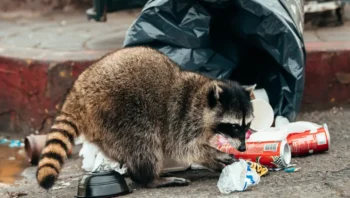
Key Takeaways in Keeping Raccoons Out of Your Trash:
- Keep your garbage bins in an enclosed area like a garage.
- Use motion-activated floodlights.
- Ensure your garbage can lid is strong, secure, and closed every time.
- Avoid throwing food scraps in the garbage, recycling, or compost bins.
- Use sealed bags for all garbage.
- Regularly clean your garbage cans.
- Rinse recyclable cans and bottles thoroughly.
- Strategically time when you put your bins out on garbage night.
- Get yourself a dog to keep raccoons.
- You need to protect your garbage because raccoons spread debris and disease.
- Call professional exterminators to remove and prevent them.
If you’re reading this, you’re probably very aware of your local “Trash Panda,” AKA raccoons, rooting through your garbage cans or dumpsters in search of tasty treats. It might seem cute for about a minute. But discovering these bandit-eyed critters prowling your property at night can quickly become unsettling and even startling!
Raccoons are creatures of habit, and without proper prevention, your trash will become their favorite late-night diner.
Listen to Our Podcast for Faster Info
Prefer to listen to these helpful tips? Our podcast above covers everything you need to know. You can also check out our video guide!
Need a Wildlife Removal Estimate?
10 Ways to Prevent Raccoons from Invading Your Garbage Cans
-
Keep your garbage bins in a garage or other enclosed area.
Storing garbage bins indoors is one of the simplest and most effective methods for keeping raccoons at bay. Out of sight (and smell!) means out of mind for raccoons. If you have space in a garage, shed, or storage area, always keep your bins secured inside until collection day.
-
Use movement sensor floodlights.
If indoor storage isn’t an option, installing motion-activated floodlights is a practical alternative. These lights will startle raccoons and discourage their nightly raids. Even renters can take advantage of portable, battery-operated, or solar-powered lights that don’t require permanent installation.
-
Make sure your garbage cans have a strong, secure lid.
Raccoons are dexterous creatures, capable of opening weak lids easily. Invest in trash cans with sturdy lids that lock firmly. Double-check that lids are securely fastened each time you use the bins — consistency is key to keeping raccoons frustrated and away from your trash.
-
Avoid accumulating food scraps around your garbage, recycling, or compost bins.
Food scraps are raccoon magnets. Dispose of leftovers appropriately and consider composting properly enclosed food waste or using a disposal. Keep the surrounding areas clean of spills and debris to remove any temptation.
-
Make sure your garbage is put in sealed bags.
Odors from food waste will attract raccoons from considerable distances. Sealed, heavy-duty garbage bags effectively contain smells and make your bins far less appealing. If raccoons don’t detect appealing odors, they’ll soon move on to easier targets.
-
Clean your garbage cans quarterly.
No matter how careful you are, garbage bags leak or tear occasionally, leaving residue in your cans. Regularly rinsing your garbage bins with a hose and using disinfectant quarterly removes built-up residue, further reducing odors that attract pests.
-
Fully rinse any recyclables.
Raccoons aren’t picky; even small amounts of food or drink residue in recyclables are enticing. Thoroughly rinsing containers eliminates odors and scraps that would otherwise attract these nocturnal invaders.
-
Be strategic about garbage night.
Timing matters. Raccoons forage predominantly at night, so placing bins outside as late as possible or early the following morning can significantly reduce their opportunity to access your garbage. Adjust your routine slightly, and raccoons will find fewer chances to dine at your expense.
-
Get a dog.
Having a dog on your property acts as a natural raccoon deterrent. Even the sound of barking can discourage raccoons from lingering.
-
Ask for help.
Persistent raccoon problems sometimes require professional intervention. Wildlife pest control experts understand local regulations and know the most effective humane methods to discourage raccoons from invading your space. Don’t hesitate to call in professionals for safe, effective solutions.
Why Do I Need to Protect My Garbage from Raccoons?
Raccoons are carriers of diseases such as rabies, leptospirosis, and raccoon roundworm, all of which pose significant health risks to humans and pets. Additionally, raccoons can become aggressive if cornered or sick. They can also spread fleas and ticks onto your property. Add it all together, and it’s easy to see why it’s essential to prevent their access to potential food sources.
Protecting your garbage is the first line of defense to protect your family’s health and maintain a clean, secure home environment.
What if I Need Help With Raccoon Control?
If your raccoon problem is becoming overwhelming, Xceptional Wildlife Removal is here to help! Our trained raccoon removal experts have extensive experience handling raccoon invasions humanely and efficiently, so your property remains safe and pest-free. Our licensed experts provide reliable, effective wildlife removal services.
Don’t let raccoons take over your property. Contact us today, and say goodbye to pesky nighttime garbage bandits!


