
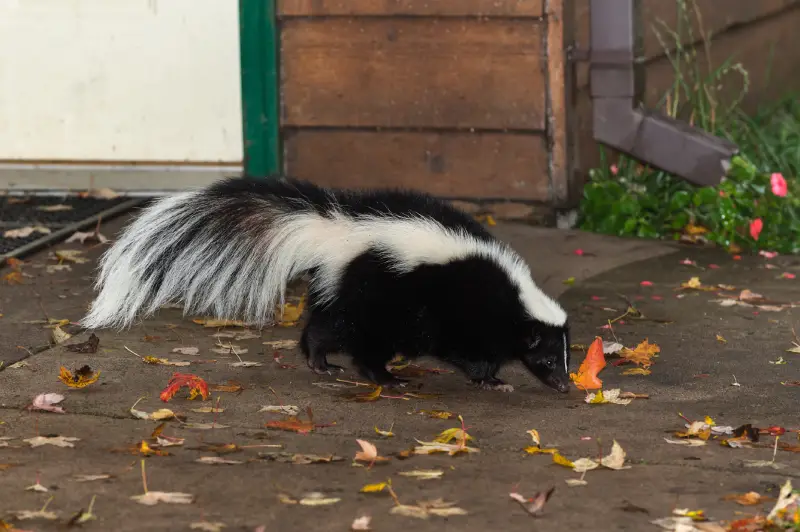
Key Takeaways:
- Raccoons and skunks do not hibernate; they enter “torpor,” a state where they rest but also remain active and search for food or mates throughout the winter.
- Cold weather and early mating seasons (starting in January/February) drive these animals to seek warmth and dens in attics, crawl spaces, and under porches.
- To protect your home, you should secure all food sources (like trash and pet food) and immediately seal any entry points caused by winter weather damage.
- Winter removal is extra difficult because animals are more aggressive and desperate, making it critical to hire professionals for exclusion and emergency removals.
Are Raccoons and Skunks Still Active in Winter?
Yes, raccoons and skunks are active year-round, including in the winter. You’ve probably seen that most animals disappear in the winter, dying off or going into hiding, but have you noticed that some – like raccoons and skunks – actually become more active? It’s true. For these animals, late winter and spring mark peak breeding seasons.
During this time of year, female raccoons and skunks seek safe, warm spaces to raise their young, often entering homes and causing property damage. Raccoons and skunks in winter also introduce specific health and safety hazards, such as behaving more aggressively when the cold forces them closer to human settlements.
Why Do Raccoons and Skunks Remain Active in the Wintertime?
1. Lack of Food in Their Environment
Winter presents a significant struggle for wildlife, as maintaining fat reserves becomes difficult due to the scarcity of food. This survival pressure often compels animals like raccoons and skunks to take greater chances, leading them to approach human residences.
Skunks enter a hibernation-like state, but they do not truly hibernate. They must awaken periodically to forage. Raccoons face similar food challenges, but their intelligence and nimble paws allow them to be especially adept at exploiting food sources found in human environments. As they grow bolder in winter, emergency raccoon removal is frequently needed when they manage to break into homes in search of sustenance.
2. Freeze-Thaw Cycles
Raccoons and skunks often become noticeably more active when winter temperatures hover around the freezing point. These shifts from freezing to thawing contribute to a sense of increased wildlife activity for a few key reasons:
- Replenishing Reserves: The animals must restore the fat reserves they depleted while burning calories to survive colder periods.
- Shelter Damage: Freeze-thaw cycles can harm or flood natural den sites, compelling wildlife to search for alternative shelter.
- Revealed Entry Points: These same weather patterns can damage or expose entry points into homes that were previously sealed off by ice or snow.
3. Den Sharing
Raccoons and skunks often remain active in winter due to the intense search for suitable dens. When natural spots are scarce, these animals compete for sheltered, dry spaces, sometimes ending up inside your home.
Skunks look for protection under porches, in sheds, or in crawl spaces, while raccoons favor higher locations such as attics and chimneys. This ongoing struggle for winter accommodation explains why both species are frequently on the move during the colder months.
4. Mating Season
Mating season is a key, often overlooked, reason why wildlife remains active during the winter. Raccoons, for instance, begin their mating season as early as January, leading males to significantly expand their territories and, thus, increase their activity.
Similarly, skunks’ mating season starts early in the year, around February.
Need a Wildlife Removal Estimate?
What’s the Difference Between Torpor and Hibernation?
Raccoons and skunks don’t truly hibernate; instead, they enter a state called torpor. This is different from the deep, months-long sleep of true hibernators, like groundhogs, who experience a dramatic drop in body temperature, heart rate, and breathing, making them almost impossible to wake up.
Torpor is more like an extended nap, taken primarily during the coldest weather. While raccoons and skunks utilize torpor during severe cold snaps, they wake up regularly, especially during winter’s common freeze-thaw cycles. Unlike true hibernation, their body temperature only drops slightly, allowing them to become fully active within a few hours when the weather improves.
How to Get Rid of Winter Wildlife
Here are some helpful tips that can help you eliminate and prevent raccoons, skunks, and other winter wildlife you may be dealing with:
- Eliminate Food Sources:
- Secure garbage with wildlife-proof lids.
- Bring all pet food indoors.
- Thoroughly clean barbecue grills after use.
- Seal Potential Entry Points:
- Inspect your home and property for gaps before animals find them. Or better yet, call a professional rodent and wildlife exclusion specialist to inspect your home and create a custom plan.
- Pay close attention to openings created by freeze-thaw cycles, such as loose roof shingles, gaps in siding, and spaces around foundation vents.
- Address Current Infestations Immediately:
- Removing animals in winter is particularly challenging. They are more desperate due to limited resources, and late winter is often when they have young, which complicates removal.
Winter Wildlife Exclusion & Removal Services
These animals are simply trying to survive a challenging season, not cause problems. However, their survival should not jeopardize the integrity of your home or the safety of your family.
Don’t wait for warmer weather to address potential wildlife problems. Winter is the time for action, whether you’re hearing mysterious noises in your attic, detecting unusual odors, or seeing visible wildlife activity. Effective winter raccoon control and wildlife control require expertise, proper equipment, and a deep understanding of seasonal behavior patterns.
Contact the wildlife professionals at Xceptional Wildlife Removal now to assess your Virginia property and develop an exclusion plan. For emergency removals, give us a call anytime!