
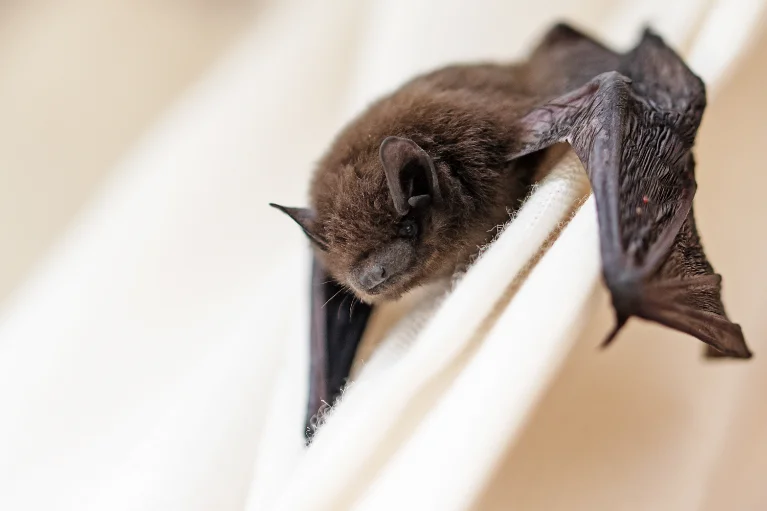
 Bats are frequently misunderstood, yet they play an important role in the ecosystem throughout Virginia. By feeding on nuisance insects such as mosquitoes, they help maintain a healthier balance in the environment.
While bats are beneficial outdoors, problems can arise when they decide to roost inside attics, chimneys, wall voids, or other parts of a building.
This guide explores common bat behavior in Virginia, why bats are attracted to homes, and how Xceptional Wildlife Removal provides safe, humane, and long-lasting bat removal and exclusion services.
Common Behaviors of Bats
Although many people find bats intimidating, they are fascinating, gentle mammals with several unique characteristics.
Echolocation
Bats are able to navigate and hunt in complete darkness using a remarkable ability called echolocation. As they fly, they emit high-frequency sounds that bounce off nearby objects and return to their ears. By interpreting these returning sound waves, bats can locate insects, avoid obstacles, and move through the night with incredible precision. This natural sonar system makes them highly effective nighttime hunters.
What Bats Feed On
Most bat species found throughout our local area are insectivores. Their diet includes mosquitoes, flies, moths, beetles, wasps, and other flying insects. A single bat can consume as many as 1,200 mosquitoes within a single hour, making them valuable allies in reducing insect populations.
Where Bats Rest
One of the most recognizable bat behaviors is their tendency to sleep upside down. Their lightweight skeletal structure and specialized tendons allow them to hang with very little effort. During winter, food sources become limited, making survival more difficult. Many local bat species cope by entering a state of hibernation, also known as torpor, which helps them conserve energy until insects become available again.
In natural environments, bats commonly roost in caves, rock crevices, and hollow trees. However, expanding urban development has provided alternative shelter options. Attics, chimneys, ceilings, and wall spaces offer the same combination of darkness, warmth, protection, and humidity that bats seek in the wild.
Need Bat Control?
Social Habits and Colony Formations
Bats are highly social creatures that frequently live together in large groups known as colonies. Several species found locally, including the Mexican Free-Tailed Bat, the Little Brown Bat, and the Big Brown Bat, commonly form maternity colonies. A maternity colony consists of female bats gathering in a protected location to give birth and raise their young. These colonies require warm, secure conditions, which is why attics can be attractive nesting locations.
Because dozens or even hundreds of bats may occupy the same space, their presence can quickly lead to significant property concerns.
Problems Caused by Bats Inside Homes
While bats are beneficial wildlife outdoors, they can create serious issues when they begin roosting inside residential structures:
- Large Accumulations of Guano: Bat droppings, also called guano, can build up rapidly when a colony occupies an attic or wall void. Over time, guano can damage insulation, stain building materials, and create strong odors that spread throughout the property. Beyond the unpleasant smell, guano accumulation creates important health risks.
- Health Concerns: As bat droppings decompose, they can support the growth of fungal spores. When disturbed, these spores may become airborne and potentially be inhaled by people. Exposure to certain fungal spores can result in Histoplasmosis, a serious respiratory illness.
- Rabies Concerns: Healthy bats generally avoid people and are most active during the evening and nighttime hours. A bat that is active during daylight, unable to fly properly, crawling on the ground, or behaving unusually may be ill and could potentially carry rabies or another disease. Bats should never be handled without proper protective equipment and training.
The Importance of Professional Bat Removal and Exclusion
Scratching sounds in walls, unusual attic odors, or visible bat activity around your home are signs that professional assistance may be needed. Because bats are protected wildlife, bat control and removal must always be handled properly and legally.
At Xceptional Wildlife Removal, we follow a humane and effective process designed to remove bats, while preventing future infestations.
- Inspection: Every service begins with a thorough inspection of the property. We identify active roosting areas, locate entry points, and determine the extent of the activity.
- Removal: Our approach focuses on safely removing bats without harming them. One-way exclusion devices are installed to allow bats to exit the structure naturally and prevent them from returning.
- Exclusion: Once all bats have vacated the structure, we seal and secure potential entry points to help prevent future bat activity.
- Cleanup and Restoration: After the removal process is complete, we’ll treat any affected areas using specialized biological enzyme products that break down organic matter, eliminate bacteria, and help remove lingering odors associated with bat activity.
Need Help With a Bat Infestation?
Learning about bat behavior can help homeowners better appreciate these important animals. However, when bats begin using your home as a roosting site, professional intervention is necessary.
Protect your property and your family’s health by working with the wildlife professionals at Xceptional Wildlife Removal. We provide safe, effective solutions that respect both your home and the local bat population.
Contact us or call 800-929-7163 today to request a service quote for your property.
Frequently Asked Questions
Are bats dangerous to people?
In most situations, bats prefer to avoid human interaction. However, accumulated guano can contribute to respiratory health concerns, and bats are capable of transmitting rabies through bites. For safety reasons, bats should never be handled without professional assistance.
Do bats drink blood?
No, not the bat species commonly found in Virginia. Local species such as the Little Brown Bat and Big Brown Bat primarily feed on insects, including mosquitoes, moths, flies, and beetles.
There are three known species of vampire bats that feed on blood, but they are found in parts of Mexico, Central America, and South America.
Can I remove or poison bats on my own?
No. Bats are protected wildlife, so harming them can violate local laws and state regulations. Professional bat exclusion is the safest and most effective option for resolving an infestation.
Why do bats keep coming back to my house?
Bats often return to familiar roosting locations year after year. Simply removing them is not enough. A complete exclusion process that seals entry points is necessary to prevent recurring activity and keep bats from re-entering the structure.


